
By

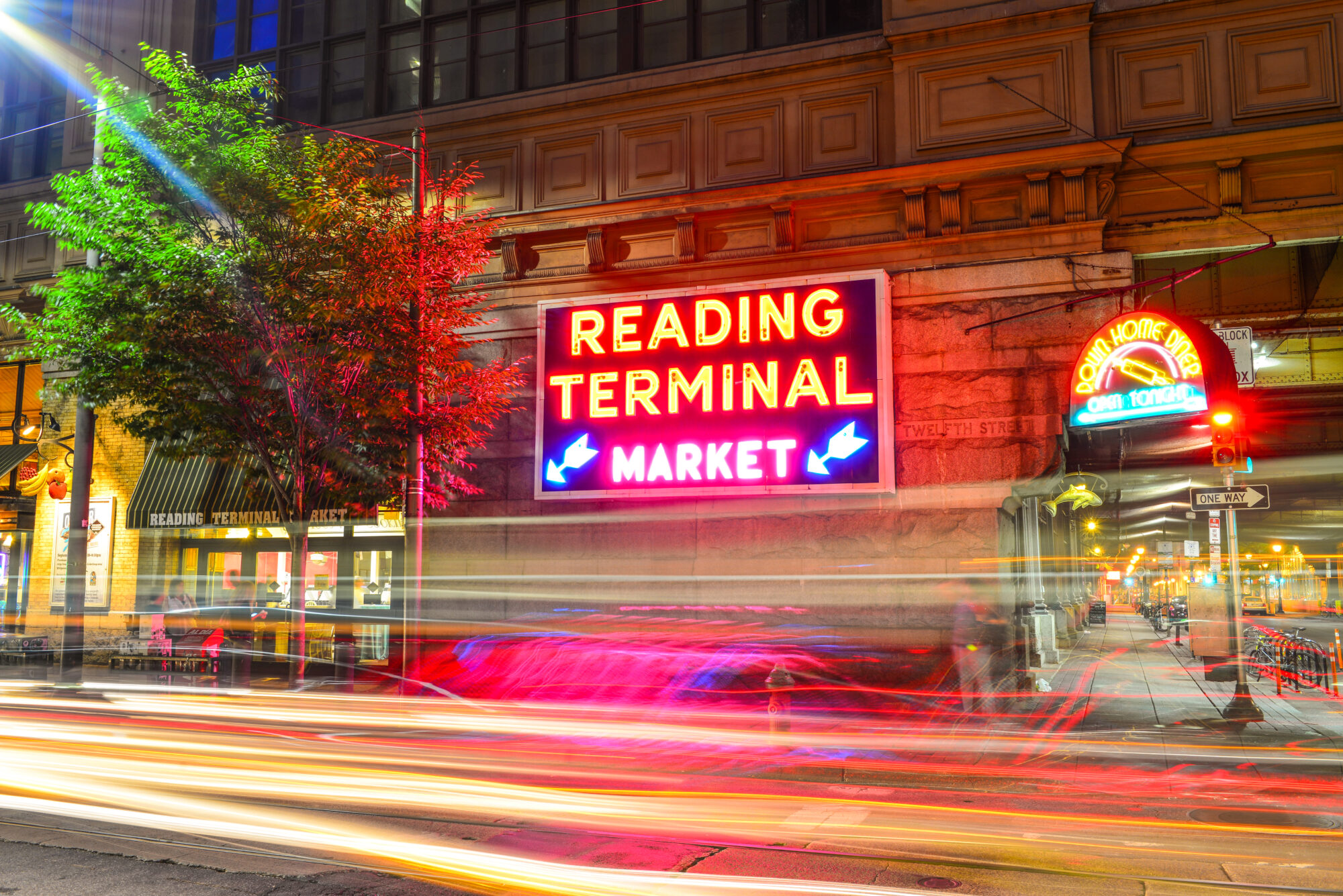
Image source: Russ Brown Photography
What’s to be done with that abandoned warehouse or spacious historic building after a business moves away? For some communities, the answer is nothing short of delicious.
Food halls, a creative twist on the shopping mall food court, have become a popular redevelopment option that creates a tourism destination as well as a “third space” for residents to meet and connect. These modern foodie paradises are an offshoot of the more traditional public markets, which offer prepared foods along with the work of local craftspeople and purveyors of fresh produce, meats, cheese, and fish.
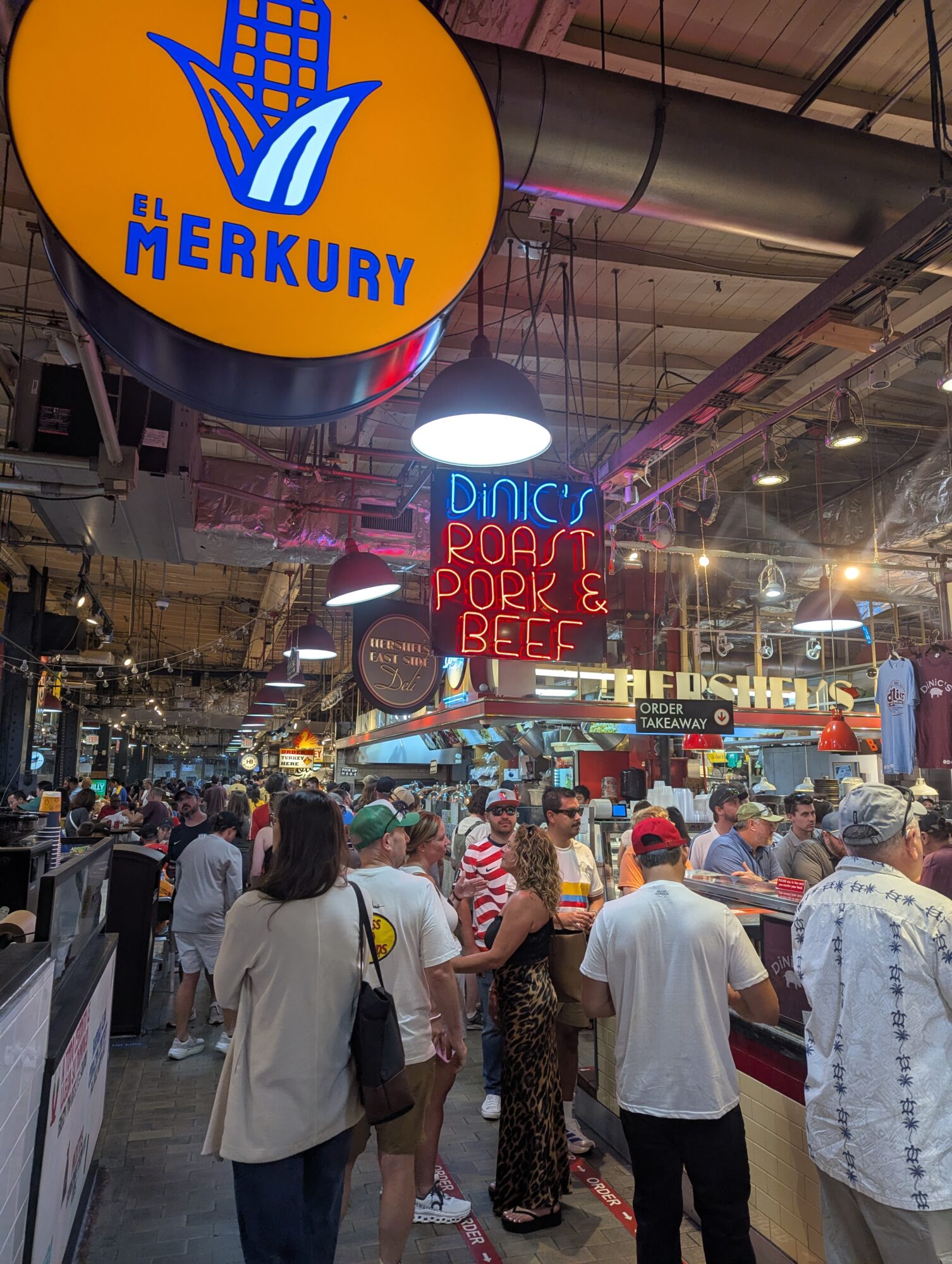
Image Source: Johnny Crosskey
Public markets, the older counterpart to food halls, often have long histories and independent stands that have operated for generations. Both bring in good-paying jobs that buoy local economies.
“We’re an ecosystem of employment on every level. It’s a mixture of all walks of life who come here to work, eat, and support the community,” said Cody Charland, the events and venue manager for the Transfer Co. Food Hall & Gathering Place in Raleigh, North Carolina. “Every food hall is different. I love being able to translate this into a space for community events, nonprofits, and programming.”
Transfer Co. Food Hall opened in 2019, just in time for the pandemic to shift the concept temporarily from a gathering space to a centralized takeout hub. Now back in full action, it boasts ten vendors and a full schedule of events.
They’re not alone in their success. The number of food halls across the nation grew from 2019 to 2023 by 55%, with the latest count at 360 and growing. These mostly for-profit ventures provide incubator space for small kitchens looking to test concepts.
Public markets are generally more robust structures. Typically ran by non-profit boards, they include small kitchens. There are around 240 public markets operating in North America, according to the website Markets of the World.
Public markets have been part of American civic life since before the country itself. Colonial-era markets in cities like Philadelphia, Boston, and New Orleans served as regulated gathering points where farmers, butchers, and fishermen sold directly to residents, and local governments used them to enforce quality standards, set fair prices, and maintain public order.
By the mid-1800s, nearly ever American city of any size operated a municipal market and many of them, like Baltimore’s Lexington Market (founded in 1806) or Seattle’s Pike Place Market (established in 1907) became defining landmarks of their communities.
Other historic public markets, including Boston’s Faneuil Hall Marketplace and New Orleans’ French Market, similarly took root as civic anchors. The rise of supermarkets and suburban sprawl in the postwar decades gutted most of these institutions, and hundreds of public markets closed or deteriorated through the 1960s and ‘70s.
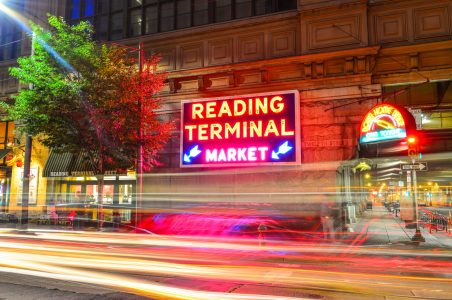
One of the survivors is Philadelphia’s Reading Terminal Market, which opened in 1893 beneath the Reading Railroad’s train shed and has served as a central food hall for the city’s residents. By the 1970s and ‘80s, both the railroad and the market had fallen into serious decline, and the building faced possible demolition. What saved it was a public-private effort in the early 1990s tied to the construction of the adjacent Pennsylvania Convention Center, which repurposed the train shed as part of the convention facility and reinvested in the market as a complementary anchor.
Today, Reading Terminal Market employs 700 people and draws more than six million visitors annually across roughly 80 vendors, blending legacy merchants with newer food entrepreneurs.
“In this digital world, people are really looking for that authentic, in-person connection,” said Annie Allman, the CEO and general manager of Reading Terminal Market. “The Reading Terminal Market really belongs to people who have been here for generations or who went on their first date here or whose grandfather took them here. People love this place.”
Public markets tend to value history over innovation. New business owners interested in a stall must submit their business plan to the leasing committee, which reviews the request to determine the space needed and whether the business competes with or complements current offerings. The result is a particular kind of texture, imperfect, layered, and deeply local. “New food halls are beautiful with great products, but maybe they’re a little too perfect,” Ms. Allman said. “Public markets tend to be a little grittier. It’s the link between rural and urban, and keeping that is really important.”
“Setting up a food hall is certainly easier than starting a public market,” Ms. Allman said.
“People don’t wake up and say they want to be a butcher or a fishmonger,” she explained. “It also starts with a historic building they want to repurpose and keep vibrant.”
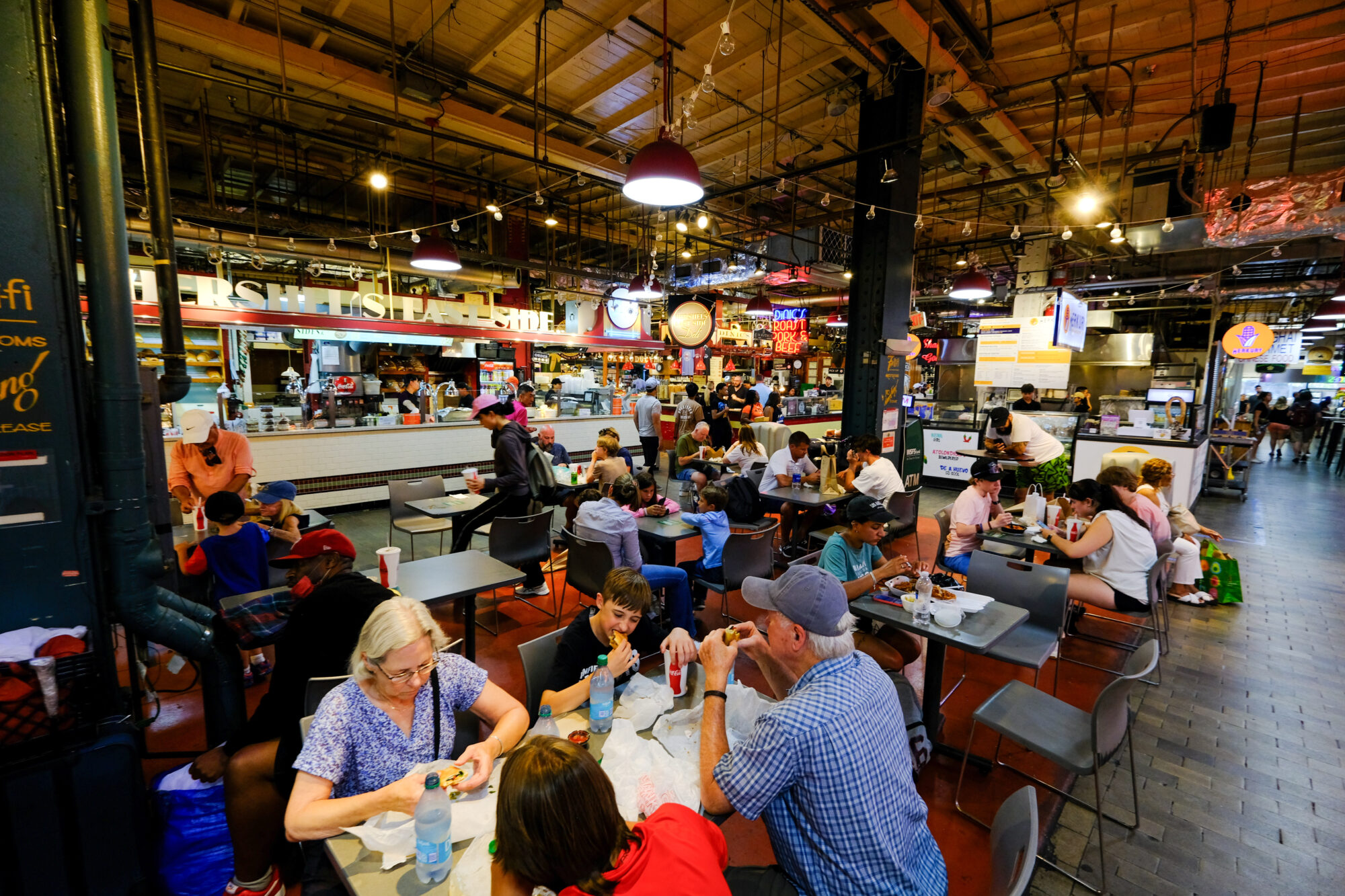
Image source: Russ Brown Photography
Food halls have a few common features. Many are designed with a centralized bar selling craft beers, wine, cocktails, and non-alcoholic concoctions. Restaurants have their own kitchens and prep areas but share communal seating areas and patios. There isn’t any wait staff; it’s normally a self-service model that lets customers place orders at counters and pick up their food when their pagers buzz. If public markets prize legacy and longevity, food halls are built for momentum. “Food halls can be incubators for entrepreneurs to have a satellite location and then keep growing,” Mr. Charland said.
“A lot of places have shorter-duration contracts that may be government-subsidized. We want you to get established and get your own space.”
Both models share a commitment to curating a diverse and distinctive vendor mix, featuring innovative concepts and emerging culinary trends rather than fast food chains or large franchises.
In Raleigh, the Transfer Co. Food Hall is on the larger end with 50,000 square feet of indoor and developed outdoor areas available for vendors and programs. “This was the Carolina Coach garage, one of the biggest bus transfer stations in theSoutheast,” Mr. Charland explained. “We preserved as much as we could about that history.”
After decades of hosting travelers, the building was parceled into different warehouses in the late 1950s. Located in an impoverished area, it fell into disrepair until the city purchased it. Eventually sold to a private team of visionaries, the building was redeveloped into its current foodie haven. The investment paid off: Instead of potential crime magnets, the building is now surrounded by new homes, small businesses, and schools.
In 2025, a developer invested in a new high-end condo building right next door in Raleigh’s Olde East neighborhood. The entire area is under “intense development pressure for the first time in decades … fueled by private revitalization,” according to the city’s 2030 comprehensive plan.
That’s typical of trickle-down redevelopment and real estate sales surrounding food halls nationwide. While the national average to build out a food hall costs around $400 per square foot (according to commercial real estate firm CBRE), it can generate 10 times the sales of a traditional restaurant.
While economic impact studies are rarely done by for-profit businesses, it’s clear that food halls and public markets make a positive impact on surrounding real estate prices. The Findlay Market in Cincinnati, for example, helped spur $505 million in capital investment across 53 developments in the surrounding area. That led to nearly $600 million in indirect economic impact.
A food hall’s hotbed of commercial activity can serve as an epicenter for what’s known as “urban suburbs,” or secondary city centers. One study found that food hall diners spend 35 more minutes browsing nearby shops than non-dining visitors. They have to digest that tasty meal somehow!
That wasn’t the only community benefit, either. Mr. Charland says the food hall hosts different events almost every day of the year. Recently, on a Saturday night, they hosted an event in association with the Raleigh Comedy Festival called the “Giant Robot Fight Club.” One of the comedy scripts had participants line up for a “Nerd Communion” of a single Dorito and a sip of Mountain Dew.
Twelve hours later, on Sunday morning, a real church used the space for a traditional version of the ritual.
“It’s so fun to see what happens here on any given weekend,” he said. “Three to five food tours come through the food hall a week, and I work closely with Visit Raleigh and the convention bureau.”
The food hall is just a short walk from the convention center, making it a popular destination for tourists to grab a meal together. It’s featured on the Visit Raleigh website and included in their list of attractions. Plus, the tourism board works directly with Mr. Charland to fill his space with public, private, and nonprofit events.
Back in Philadelphia, Ms. Allman said Reading Terminal Market is also a hot spot for tourism and energy for the city. It’s been featured in numerous movies and television shows in its 133-year history. They plan special entertainment around sporting events, national celebrations, and citywide events. They saw six million visitors to the national historic landmark building last year alone. “People just love the market,” she said. “It’s a great magnet for people.”
These businesses — run by for-profit or nonprofit organizations — are complex and often require support from local government officials to thrive. Flexible parking policies, reliable waste management, and street closures during loading times can all make a big difference in day-to-day operations.
Some markets even operate as a department within the city. West Side Market in Cleveland, for example, was municipally-operated for years before transferring to nonprofit oversight in 2024. Of course, grants and other financial incentives are also welcome. “We have received $5.5 million to date in [state] grants, but they are structured so that they don’t cover soft costs like management or architectural fees. We don’t receive any operating funds. For a historic public market, that’s where we struggle,” Ms. Allman said. “There’s only so much you can pass on to small family businesses operating in the heart of the city to keep it authentic.”
The building’s age makes upkeep and maintenance a challenge; heat pumps, air conditioning units, doors, and plumbing are expensive.
Big warehouses that are perfect for food halls can have different problems. They are often located outside municipal service and redevelopment areas. Local government officials can work to restructure boundaries to make favorable tax rates, grant dollars, and collective marketing opportunities accessible to these popular businesses.
The Transfer Co. Food Hall, for example, is just two blocks outside the Raleigh municipal service district of the downtown area. Mr. Charland said the food hall is included among the attractions advertised by the Downtown Raleigh Alliance, but it misses out on other benefits.
Whether housed in a 19th-century train shed or a repurposed bus garage, food halls and public markets succeed because they do something a supermarket or a chain restaurant cannot: they gather people. But these spaces don’t thrive on good intentions alone. They need city councils willing to redraw service district boundaries, public works departments willing to coordinate on loading zones and waste pickup, and economic development offices willing to channel grants toward the unglamorous costs — the architectural fees, the management salaries, the aging plumbing — that keep historic markets running and new food halls open. The return on that investment shows up in surrounding development, quality jobs, and visitor traffic that lifts nearby businesses. For local officials looking at an aging warehouse or a fading landmark, the experience of cities like Raleigh, Philadelphia, and Cincinnati offers a promising blueprint for what the next chapter could look like.