
Image credit: SFC Art Department
By

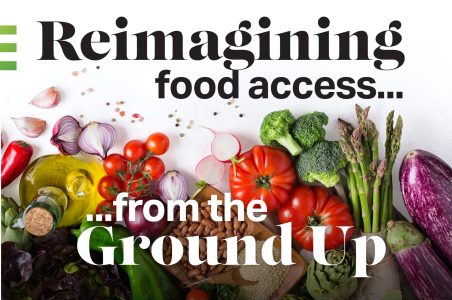
For many, it’s challenging to imagine not being able to get fresh fruits and vegetables, yet according to USDA data, more than 50 million people face some level of limited access to healthy food.
In Detroit; Memphis; Durham, North Carolina; and Jackson, Mississippi; residents aren’t waiting for retail stores to come back. They’re rolling up their sleeves and building something even better.
Detroit’s urban agriculture story is one of the most documented in the country. Over the past decade, the movement grew from a handful of community gardens to a network of approximately 2,200 gardens and farms engaging nearly 20,000 residents as of 2023 — the result of decades of organizing by Black-led organizations that understood food access as a matter of justice.
In 2023, Detroit established an Urban Agriculture Division and appointed the city’s first urban agriculture director, a genuine shift toward integrating community-led efforts into official city planning. Council Member Angela Whitfield Calloway has been an outspoken champion.
“I grew up in a city where residents could easily walk to grocery stores, and neighbors maintained abundant gardens,” she says. “Today, too many of our local gas stations have evolved into mini markets. That shift is unacceptable, and it’s why I support our movement toward becoming a food-sovereign city. Everyone deserves access to nutrient-dense, affordable food.”
Calloway has also advocated for sustained public investment in the infrastructure behind these efforts. “I am proud to champion continued funding support for urban farmers, and I am encouraged that my colleagues are joining me in sustaining that investment into the next fiscal year,” she adds. “Through Eastern Market and our broader food systems work, we are strengthening Detroit-based agriculture, expanding opportunities for local growers, and helping scale knowledge and resources across our communities.”
D-Town Farm, the Detroit Black Community Food Sovereignty Network (DBCFSN), and Keep Growing Detroit helped build the infrastructure that anchors the movement. Keep Growing Detroit now supports more than 1,550 gardens citywide, providing seeds, transplants, workshops, and market access to residents.
For Dr. Shakara Tyler, Executive Director of the Detroit Black Community Food Sovereignty Network, the movement goes beyond just growing food. “We see building a circular food economy that’s based in community and culture and care as a power building process,” she says, “where people have more ownership and control over how their food is grown, how it’s processed, distributed, and ultimately sold and then recycled back into the system.”
One distinctive model to emerge is the Michigan Urban Farming Initiative, a three-acre farm in the North End neighborhood that calls itself America’s first “sustainable urban agrihood.” It grows what the neighborhood locals are looking for, from hot peppers to collard greens, in a community where the nearest fresh produce store is about four miles away.
Yet Tyler reminds us that policy momentum alone won’t close the gap. “The hidden costs of the food system are highly invisibilized,” she says. “Someone’s labor had to be exploited for the price to be made as such, so we do a lot of political education with folks around what it really takes to get things from seed to fork.”
It’s that kind of ground-level reckoning, she argues, that turns residents from passive consumers into active participants in building a truly sovereign food system.
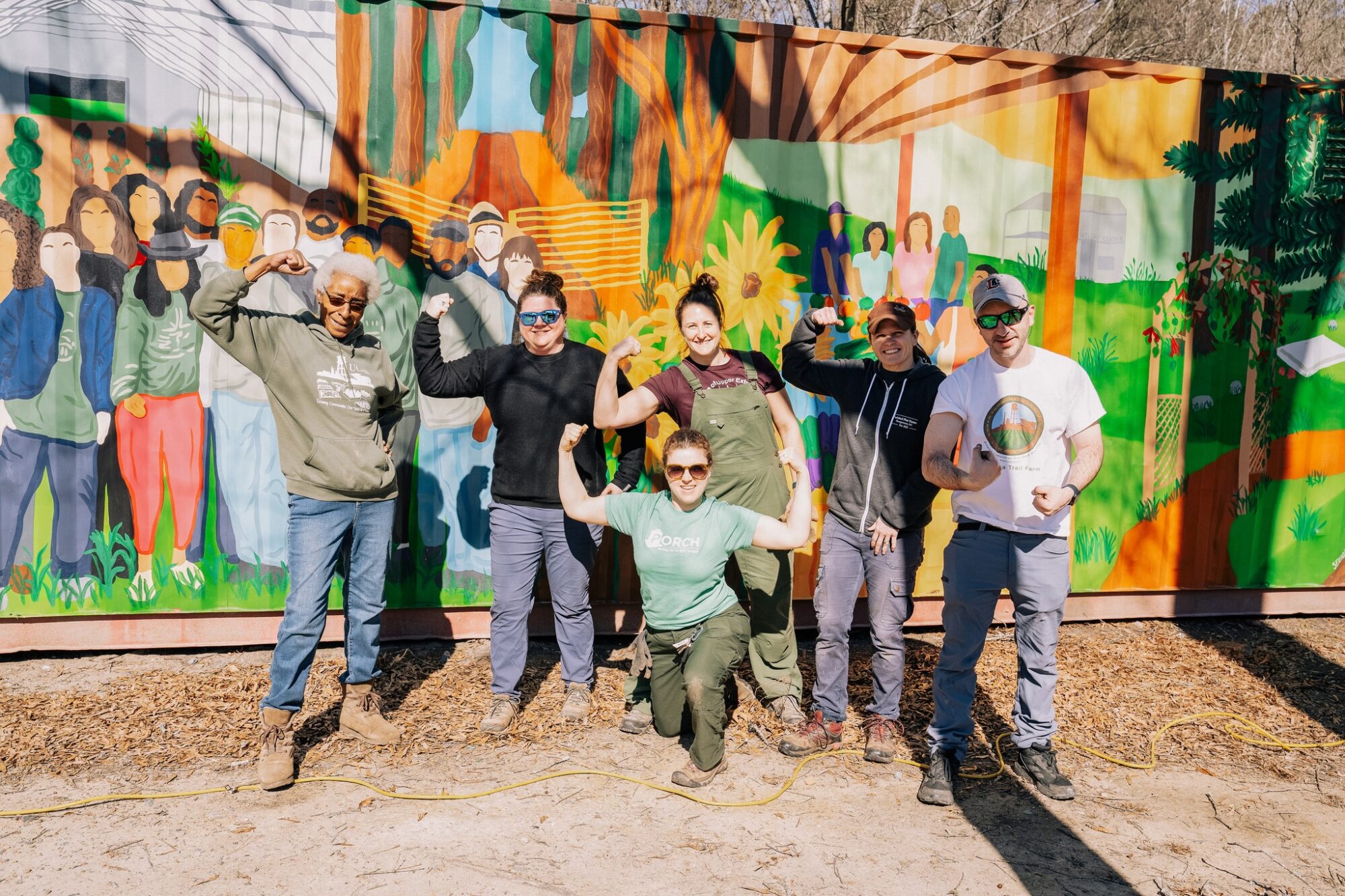
Image Credit: UCAN
The USDA has identified five food desert areas in Durham, with 16 to 63% of residents in those zones lacking reliable supplies of fresh fruits and vegetables. In Northeast Central Durham, a 302-block area with one of the city’s highest poverty rates, more than 20,000 residents have historically had access to just one small grocery store.
“Families living on a working minimum wage have to choose between healthy food and non-healthy food,” says Delphine Godley Sellars, co-founder of Urban Community AgriNomics (UCAN).
“Food access really centers around the lack of access to healthy, nutritious foods, those things that don’t just put calories in your body but add to your body’s health,” she adds.
UCAN, founded in 2016, operates Catawba Trail Farm — a historic farmstead six miles from downtown Durham. Through a partnership with Triangle Land Conservancy, UCAN has received full ownership of the entire 176-acre property, one of the largest transfers of land trust land to a Black-led nonprofit in the region.
The organization has donated over 100,000 pounds of produce to date and, in 2025, served 2,337 people through monthly distributions of locally grown vegetables, fruits, and eggs. “Our purpose is to teach people to grow their own food, how to prepare a healthy meal with limited resources,” Ms. Sellars says. “Once you have knowledge, nobody can take that away from you.”
“You can write a grant and get money,” Sellars says, “but to have volunteers who want to come out and help you bring that vision to fruition, that you cannot purchase.”
In 2010, Dr. Cindy Ayers Elliott, a former investment banker and CEO of the Delta Foundation, founded Foot Print Farms in Jackson, establishing a 68-acre urban farm that has grown into Mississippi’s largest and most prominent urban growing operation.
Today, Foot Print Farms operates as a worker cooperative, growing specialty crops year-round in ten high-tunnel greenhouses and selling everything from kale to callaloo at the Mississippi Farmers Market.
“It’s all about access,” says Dr. Elliott. “Having access to a farm right in your community, where you can know how it’s grown, who grows it, where it’s grown, changes the dynamics of any community, but especially in urban areas.”
The farm also introduces young people to agriculture and creates pathways to entrepreneurship. “We always ask our young people: how many in your family are diabetics or take insulin?” Dr. Elliott says. “You’re going to get hands up. We’re all about prevention.”
Foot Print Farms is not alone. Grow Jackson’s community gardens produced thousands of pounds of food in 2024, which was distributed through free giveaways, community dinners, and nutrition classes. Its urban agriculture workforce program pays young people ages 16 to 21 for summer jobs, pairing pre-apprenticeship and agricultural training with financial literacy education. In 2025, the organization’s School Garden Program is set to reach more than 1,500 students across Jackson County.
Midtown Partners used a 2024 USDA Farm to School grant to install a garden, orchard, and hydroponics lab at Midtown Charter School, though that funding has since been threatened, underscoring how vulnerable these programs remain when federal priorities shift.
The Mississippi Food Justice Collaborative, formed in 2016, has brought together Black, Indigenous, and Asian American food systems stakeholders around racial equity and food sovereignty as organizing principles.
City Council President and Ward 4 Councilman Dr. Brian Grizzell is working to move those principles into policy. “Our approach to food sovereignty is grounded in both necessity and strategy,” he says. “Food sovereignty in Jackson is not just about access; it is about empowerment. It is about ensuring that communities have a voice in how food is grown, distributed, and sustained within their neighborhoods.”
Dr. Elliott says the departure of grocery chains is actually opening new doors. “Big brick and mortar is not happening, and it’s not coming back, especially to food deserts where they pulled out and left vacant buildings,” she says.
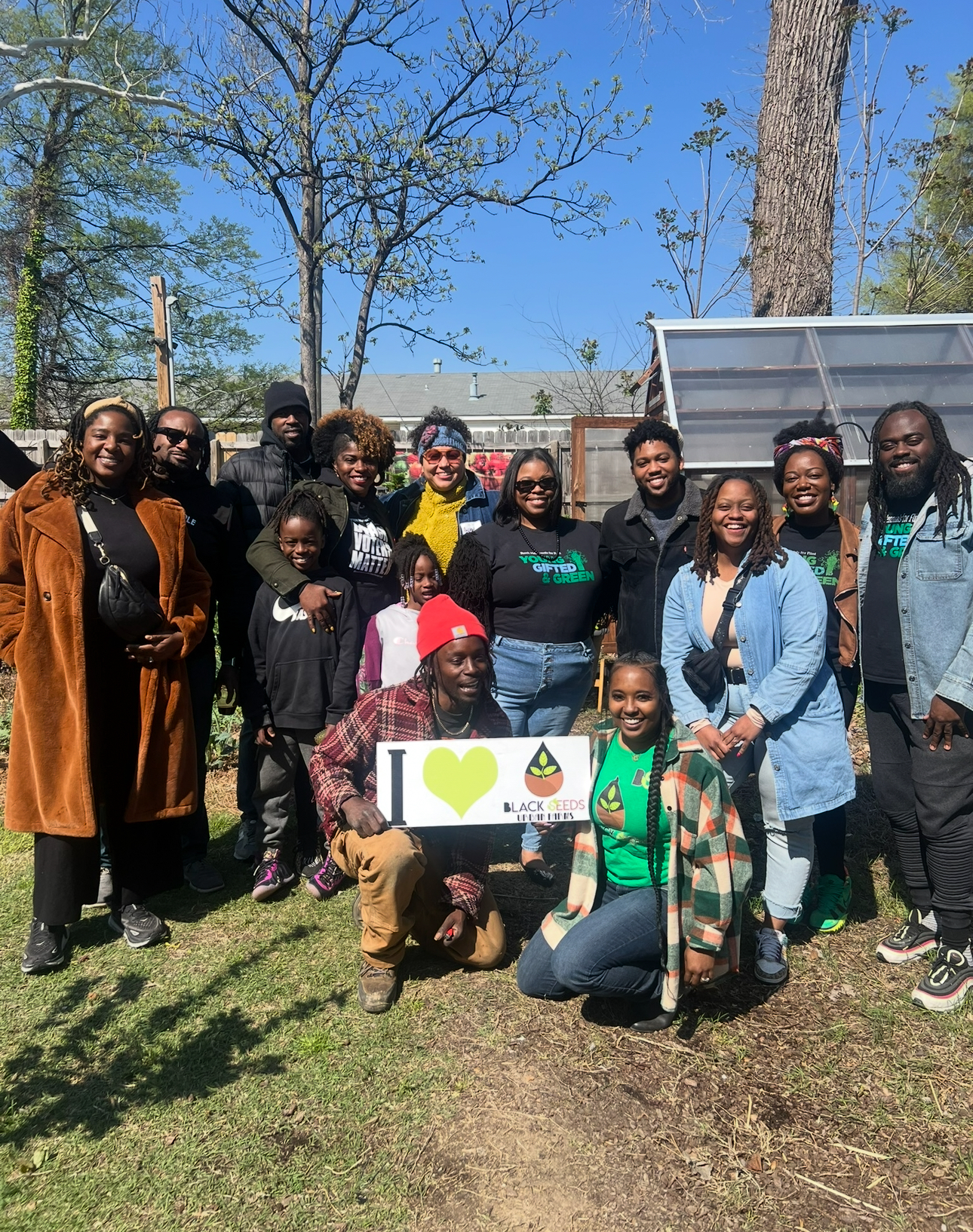
Image Credit: Bobby and Derravia Rich
Memphis carries one of the most severe food insecurity burdens of any major American city. USDA data indicate that 32% of residents are low-income and live in areas with insufficient grocery access, the highest share among all metro areas with more than 1 million people.
Feeding America estimates that more than 103,400 people in Shelby County are food insecure, including over 45,000 children, according to a 2021 report. Across the county’s census tracts, life expectancy ranges from as low as 65 years to nearly 85, a gap of almost 20 years between the poorest and wealthiest communities. The gap is not accidental: decades of redlining and disinvestment stripped majority-Black neighborhoods of supermarkets, leaving them saturated with fast food and convenience stores.
Into that void stepped Black Seeds Urban Farms. When Bobby and Derravia Rich returned to Memphis from Nashville in 2015, they found their late grandfather’s garden overtaken by weeds. Bobby, a firefighter who had seen the city’s food deserts up close, restored it and found a calling. Through the City of Memphis Community Redevelopment Agency’s Lots Re-Imagined program, the Riches converted a vacant Uptown lot into an active urban farm.
Black Seeds now operates multiple growing spaces in Uptown Memphis, all at full capacity, and has served more than 600 families through food distribution and educational programming over the past year. “Food insecurity in the communities we serve is both persistent and complex,” CEO Derravia Rich says. “Traditional systems often focus on distribution, while our communities need solutions that also build knowledge, ownership, and long-term sustainability.”
Alongside food production, Black Seeds runs workshops that equip residents with the skills to grow and prepare their own food, partnering with local universities and community organizations. “Urban farms play a critical role in providing direct access to fresh food while also serving as spaces for education and community engagement,” Bobby says. “The most measurable impact is increased access to healthy food, hands-on learning, and the ability to build self-sufficiency.”
The Riches are deliberate about what they need from city government.
“Effective collaboration looks like investing in community-led initiatives, providing access to land and funding, and listening to those closest to the work,” Derravia says.
Bobby adds: “Making underutilized land available for community-based farming can immediately expand food production and strengthen neighborhood resilience.” Black Seeds has already identified additional land for expansion and plans to open neighborhood storefronts to put fresh produce within walking distance of everyday life.
What connects these four cities is their approach: gardens are job training sites, farms are classrooms, and vacant lots become anchors for neighborhood stability. Food access is treated as a community development question.
These programs are rooted, self-determined efforts that have been building for years, and there’s evidence that the infrastructure is real and the results are measurable. And in four places where the national food system has consistently failed, residents are proving that another model is possible, one seed at a time.
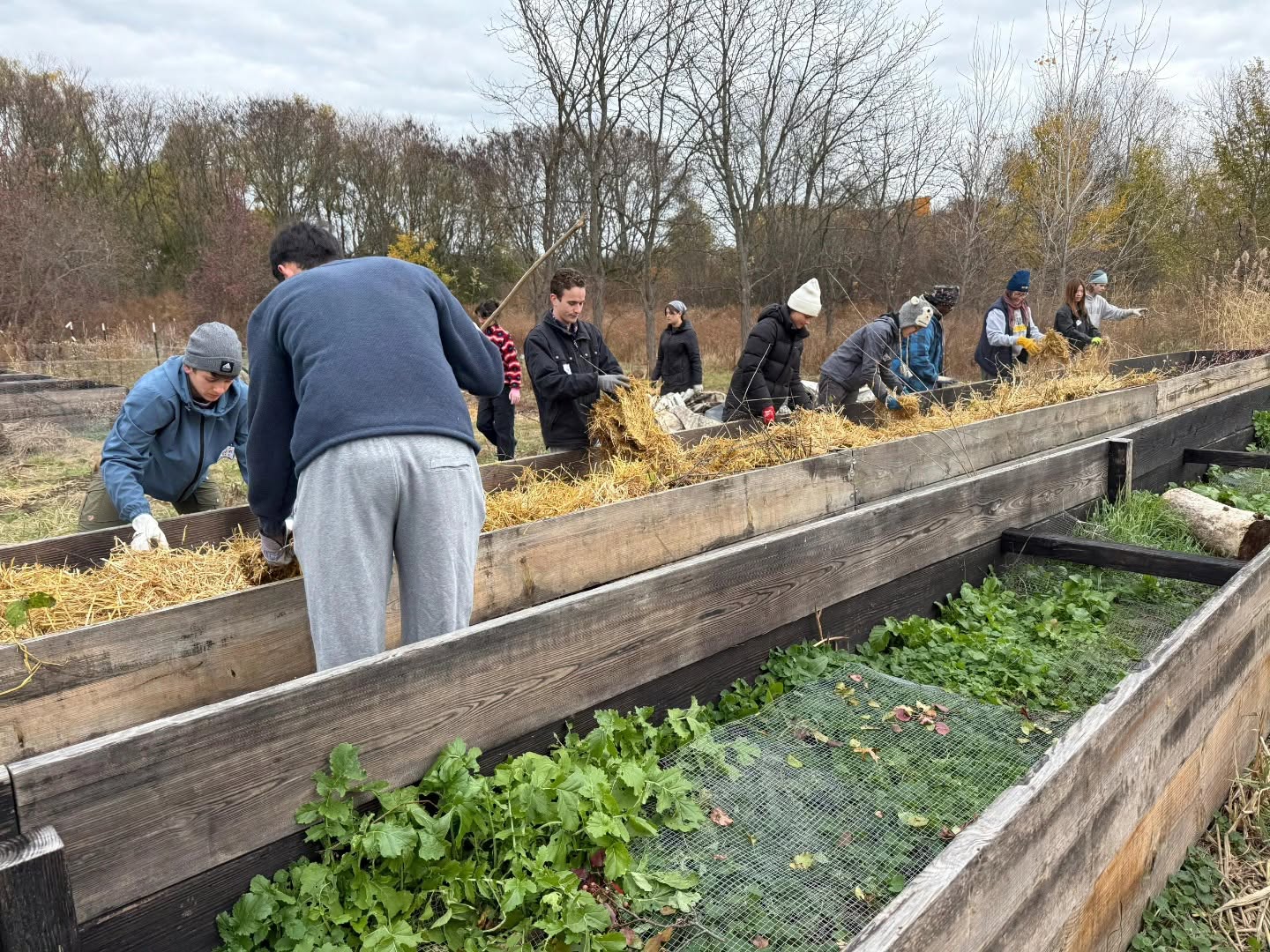
Image Credit: Detroit Black Community Food Sovereignty Network