Skip to content
playmaker logo 1
Facebook Linkedin Instagram
SUBSCRIBE
  • Articles
    • Feature Stories
    • Trends / Innovation
    • Human Interest
    • Quality of Life
    • Community Planning
    • Economic Development
    • Community Operations
    • News
  • Community Spotlights
  • Playmakers
  • Magazine
    • Past Issues
    • Current Issue
  • Community of the Year
  • Articles
    • Feature Stories
    • Trends / Innovation
    • Human Interest
    • Quality of Life
    • Community Planning
    • Economic Development
    • Community Operations
    • News
  • Community Spotlights
  • Playmakers
  • Magazine
    • Past Issues
    • Current Issue
  • Community of the Year
Facebook Twitter Instagram
  • Economic Development

Skin In The Game

Public-Private Partnerships Reduce Financial Risk For Communities And Drive All Parties To Help Facilities Reach Their Full Potential

By

Matt Swenson
playmaker favicon
August 6, 2026 9:00AM EST
sports complex opening day 2019 199

Image Credit: The Sports Facilities Companies

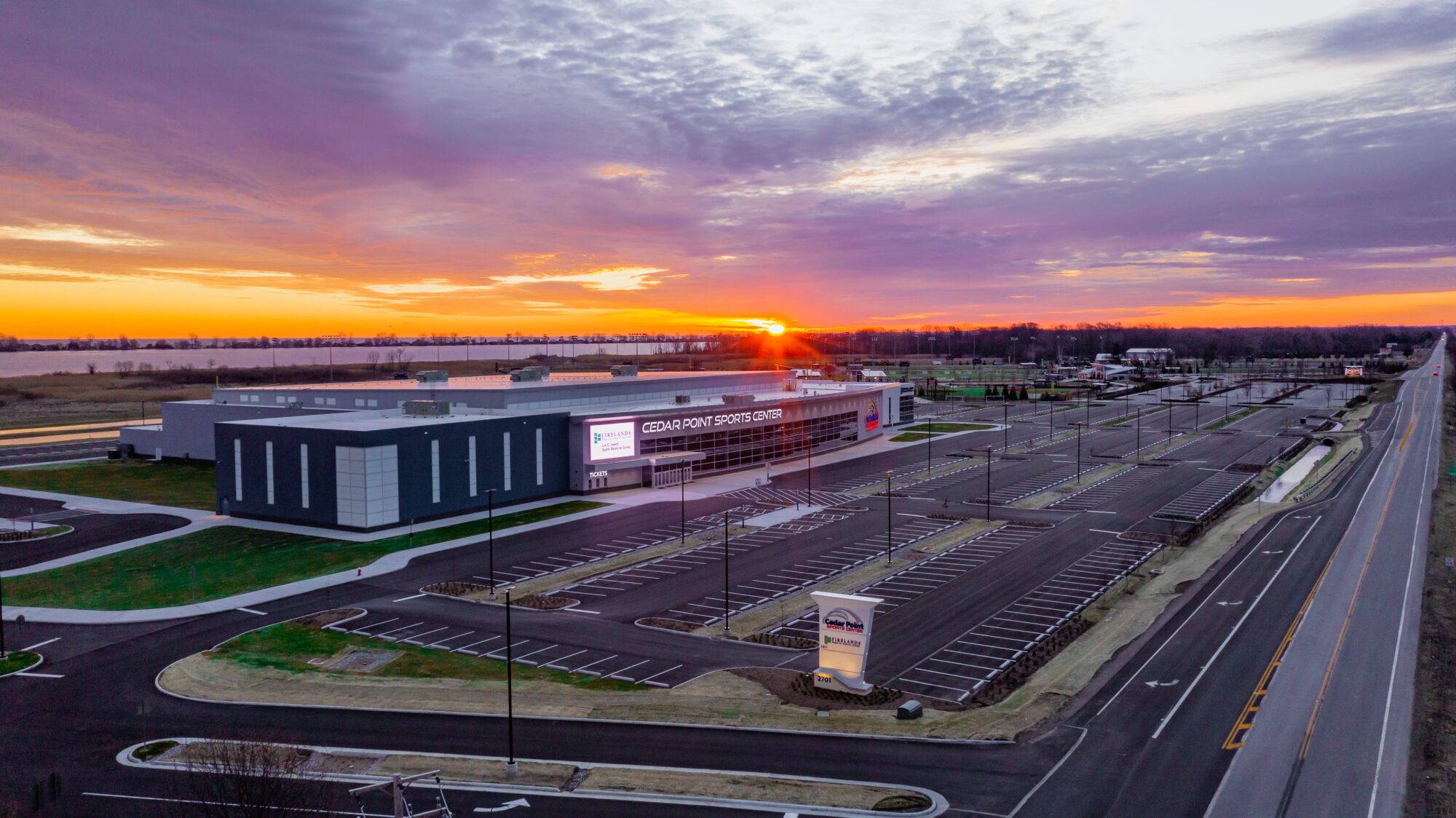
When Cedar Point Sports Center (CPSC) was planned, before its January 2020 opening, the idea was to develop a facility that could draw visitors during Cedar Point’s (aka The Roller Coaster Capital of the World) offseason. “We wanted to put a roof over the snow,” explainsErie County Commissioner Pat Shinigo, a champion of Sandusky, Ohio’s sports tourism industry before it existed.

And while Sandusky already has a long-established tourism brand, it has become a role model for cities across the country seeking to fill hotel rooms, restaurants, and retail stores to increase local employment and generate revenue to improve the quality of life among citizens. However, economic impact is only part of the story.

The success of CPSC is due in large part to the initial project structure, Shinigo notes. Cedar Fair Entertainment (owners of Cedar Point), Lake Erie Shores & Islands Convention and Visitors Bureau, and Firelands Regional Health System partnered in what’s known as a “P3 development,” which involves sharing risks, responsibilities, and rewards between public and private entities.

“You’ve got to put some skin in the game” to be an effective partner, says Shinigo.

Lowering the Burden

At its core, a public-private partnership is a framework to align public priorities like economic development and community impact with private capital and expertise that can help deliver and operate the project more effectively, says Anthony Adair, director of business development at ARCO National Construction, an award-winning design-build firm headquartered in St. Louis, Missouri, focused on sports-centered development.

“Most municipalities don’t struggle with vision; they struggle with execution,” Adair says. “The biggest barrier is funding, and more specifically, the gap between what they can fund publicly and what the project actually costs.”

In most cases, the city already has part of the project covered, whether that’s land, infrastructure, or a dedicated tax stream, but typically there’s a shortfall in the 20– 50% range of the total project cost, says Adair. “On a $40 million project, you’re usually looking to solve for roughly $8 million to $20 million,” he notes.

To cover the difference, government entities can include land contributions or revenue streams such as hotel taxes or a Community Improvement District. Private capital can come in the form of a developer, operator, or capital partner who’s willing to help close that gap if there’s an incentive to ground lease, revenue share, or establish an operating agreement, Adair adds. Naming rights, sponsorships, grants, and tax credits also aid the effort.

The worst-case scenario for a community building an events center is that it becomes a “white elephant,” a term for a site that lies dormant and degrades due to inactivity. Not only are such empty venues an eyesore, but they often become symbols of wasteful government spending.

Tax Districts to Defray Costs

By splitting the cost among multiple partners, communities lessen the burden on taxpayers and reduce the political and economic risks of crippling financial overruns.

Understanding the risks involved, Mattoon, Illinois, developed a long-term, creative funding plan for Emerald Acres Sports Connection, a 150-acre mixed-use project developed as a partnership between the city and local agricultural giant Rural King, which first brought the idea to Mattoon’s leadership. “It was never about having a sports complex,” says Kyle Gill, city manager of Mattoon.

“It was to bring people here as an economic driver.”

In its first foray into sports tourism, Mattoon was concerned about placing taxpayers at risk through traditional municipal bonding. Local leaders took several steps to limit the burden on residents, including forming a nonprofit entity that owns the sports complex and land. The Sports Facilities Companies (SFC) was brought on board to operate the facility and lure tournaments.

Funding for Phase One of the project, an indoor sports facility opened in 2024, relied on the creation of a business district that imposed an additional 1% sales tax, projected to earn about $100,000 in revenue per month ($1.2 million annually). The business district covers both new development and existing retailers, including stores like Walmart and Home Depot, as well as restaurants. The city structured repayment over 23 years or until bonds were paid off, whichever came first. Early projections suggest payment will be complete in 19 years.

Payment for the outdoor fields, which are under construction, comes from a TIF district covering the 50 acres of Emerald Acres dedicated to business development in the form of strip malls, restaurants, and new hotels. Rural King helped recruit initial interest from retailers to place storefronts on-site. Chick-fil-A and Texas Roadhouse are examples of restaurants to open at Emerald Acres. “I truly believe we would not have those businesses if we didn’t have a sports complex,” Gill says.

A Fairfield Inn recently opened, and a Hampton Inn is slated to open soon. Negotiations are occurring to bring in a third property.

Local businesses and residents also contributed nearly $12 million in pledges, exceeding the original $10 million fundraising goal, adds Gill.

Like the business district, the TIF collects 1% in tax revenue from on-site attractions. The money is earmarked to pay for construction and create funds for future maintenance, like replacing the turf fields. Gill says Mattoon has 23 years to repay debts but expects to do so in 19 years, like the business district.

Mixed Funding

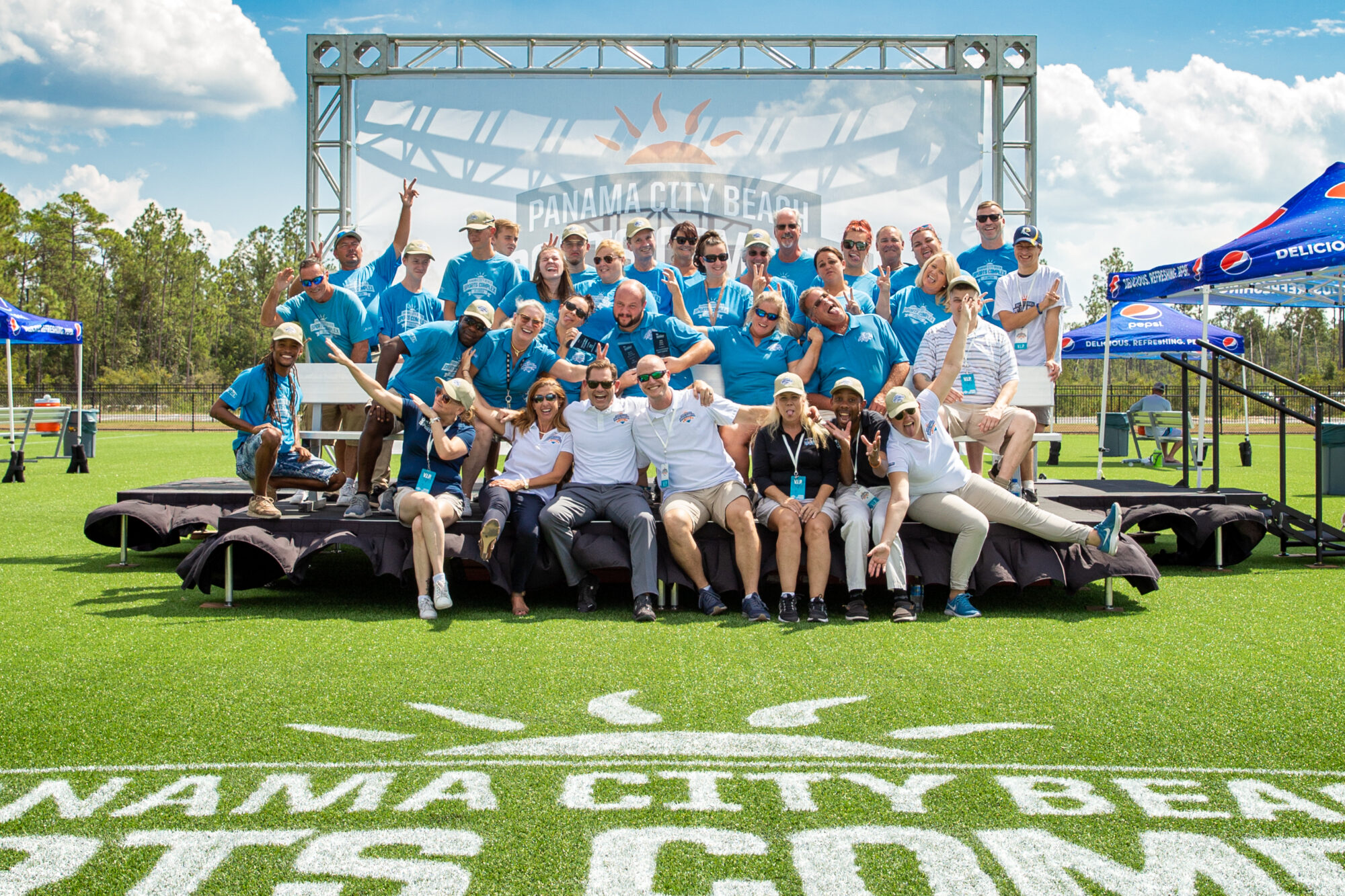
Down south, Panama City Beach, Florida, used a combination of federal and state grant funds tied to the 2010 BP oil spill, tourism dollars from their CVB, and private funds to construct the home run that is Publix Sports Park. The 160-acre outdoor site, which opened in 2019, has a mix of diamond and rectangular fields and has extended an already robust tourism effort. Publix came aboard as the title sponsor in 2022.

The destination has gone from a spring break hub to a year-round mecca for youth sports, all due to the complex. In spring 2026, an estimated 46,000 athletes attended a slate of marquee sporting events in Panama City Beach, generating significant economic impact for the destination. Through the first three months of 2026, Publix Sports Park generated an estimated $41.2 million in economic impact with $25.9 million in direct spending, 49,674 room nights, and $415,285 in bed-tax revenue. The venue has been so successful that there is a concerted effort to build an indoor facility to complement the outdoor complex.

In the case of Cedar Point, sound financial planning has spurred additional development.

Cedar Fair acquired the land on which the facility was built, a former airport, for $3 million. The company also provided $3 million for interior furnishings at the venue. Firelands Regional Medical Center added an $11 million sports medicine center attached to the sports complex.

Public funding came in the form of a bed tax applicable to hotels, motels, bed-and-breakfasts, and more. The region already had approximately 8,000 hotel rooms due to the amusement park’s demand.

Originally, there was a 2% bed tax even though the state’s maximum rate was 3%, Shinigo says. Erie County successfully lobbied to increase the allowable tax to 4%, creating new revenue streams. The extra two percent was split equally to pay bonds used for the outdoor baseball site and the indoor facility, while the original amount remains earmarked for tourism ventures involving the Shores & Islands Convention and Visitors Bureau and the hospitality community. In 2020, that tax generated $1.1 million, says Shinigo, and has doubled to $2.1 million.

Shinigo, a Realtor by trade, says it was vital that the project avoid real estate tax loopholes. By generating those tax dollars, the sports development is directly responsible for an ongoing project known as The Landing, a new 27-acre waterfront park that will open up Sandusky’s back bay in 2027. The Landing will feature trails, boardwalks, kayak launches, a pavilion, playground, and bridges through natural wetlands, according to the City.

That outgrowth is proof of Cedar Point Sports Center’s success, says General Manager Justin Kijowski. “Our facility was designed to be a supplement to the already booming tourist industry. The goal is keeping businesses open, keeping hotels busy, and providing full year-round employment.”


Image Credit: The sports Facilities Companies

An Emerging P3 Trend

In a typical P3 arrangement, capital from the private sector is often allocated toward the facility’s hard and soft costs. Naming rights and sponsorship deals add additional revenue streams. Meanwhile, the municipal partner is typically responsible for infrastructure improvements, including roads, Adair explains.

However, Adair describes the operations at Cedar Point as a reflection of an evolution in public-private partnerships. While they will always offer political cover to get lawmakers on board with large projects and alleviate taxpayer concerns, a practical benefit is that communities “can assemble a full ecosystem” run by experts in the field to support every phase of facility development and operations.

The City of Hoover, Alabama, outside of Birmingham, invested $80 million in 2016 for its 124-acre sports complex and indoor event center. The Sports Facilities Companies, the city’s operating partner for the Hoover Met Complex, ensures the facility maintains its appeal through upgrades like improvements to the baseball stadium’s training equipment, the concourse, and seating. It also added private suites, a popular tool for local businesses to woo clients. In large part due to the enhancements, the Southeastern Conference renewed its contract to hold the annual baseball championships there.

Through connections and a strong reputation within the industry, SFC’s team also builds out a strong events calendar, including soccer, basketball, lacrosse, and other tournaments. As a result, the city’s financial commitment pays off thanks to partnership and expertise from sports tourism officials. Hoover is banking on future growth, as evidenced by the addition of six new hotels to match interest in the complex and destination.

Structure the Deal, Shape the Outcome

The through line from Sandusky to Panama City Beach to Hoover is consistent: the communities seeing the greatest return from sports facilities are the ones that structured the deal right from the start. A well-designed P3 doesn’t just reduce financial risk—it creates accountability. When private partners have capital on the line, and operators have performance incentives tied to outcomes, facilities don’t sit idle. They generate room nights, tax revenue, and follow-on development that compounds over time. For community leaders evaluating their next major project, the question isn’t whether to pursue a public-private partnership. It’s whether they can afford not to.

Latest News

PLMKR Web Features Issue10 RegulateAi

Feature

The Race to Regulate

  • August 6, 2026
RLB 1661 3

Discovery

Food Halls And Public Markets Keep Cities Satisfied

  • August 6, 2026
sports complex opening day 2019 199

Discovery

Skin In The Game

  • August 6, 2026
PLMKR Web Features Issue10 ComeOneComeAll

Discovery

Come One Come All

  • August 6, 2026
PLMKR Web Features Issue10 Food

Feature

Reimagining Food Access from the Ground Up

  • August 6, 2026
AdobeStock 452426127 Editorial Use Only

Discovery

It’s Getting Hotter In Here

  • August 6, 2026
MayorJohnHorhn (10)

Playmaker

Mayor John Horhn: A New Chapter For A City Ready To Rise

  • August 6, 2026
PLMKR Web Features Issue10 Decade

Feature

The Playmaker Decade

  • August 6, 2026
PLMKR Web Features Issue10 Libraries

Feature

Libraries Reimagined

  • August 6, 2026
Sunrise over Cincinnati Skyline

Spotlight

Simply Cin-sational

  • July 22, 2026

Share This Article

More Discoveries

RushmoreFireworks07 03 20cc0304

The Economic Impact of America 250 Celebrations on Cities

  • July 1, 2026
aerial pic

The New Job of Public Parks: Climate Defense, Connectivity, and Community Growth

  • June 24, 2026
AdobeStock 191593183

Teen Takeovers 2026: What Cities Are Doing and What Yours Should Do Before It’s Too Late

  • June 18, 2026
AdobeStock 505018289

Suburbs Go for Gold: World Cup Windfall Spills Beyond Stadium Cities

  • June 10, 2026

SUBSCRIBE

Be among the first to read the latest Community Playmaker magazine!

WEEKLY NEWS & LATEST PLAYMAKER STORIES:

SUBSCRIBE & BE INSPIRED

playmaker logo 1
Facebook Twitter Instagram

Community Playmaker is a platform dedicated to providing solutions and ideas for visionary local government leaders, AKA ‘Playmakers’.

Facebook Linkedin Instagram

topics

  • Feature Stories
  • Community Spotlights
  • Playmakers
  • About
  • News
  • Magazine
  • Community of the Year

Magazine

  • August 2026
  • January 2026
  • July 2025
  • January 2025
  • October 2024

Playmaker Events

  • Summits 2024

Connect with playmaker

  • Advertising
    sales@communityplaymaker.com
  • Stories
    chiefeditor@communityplaymaker.com
  • News
    news@communityplaymaker.com
  • General Inquiries
    info@communityplaymaker.com

© 2026 Community Playmaker. All Rights Reserved.

  • Privacy Policy
  • | Terms of Service
  • | Disclaimer
  • | Cookie Policy
playmaker logo 1
Facebook Instagram Linkedin

Main Navigation

  • Articles
    • Feature Stories
    • Trends / Innovation
    • Human Interest
    • Quality of Life
    • Community Planning
    • Economic Development
    • Community Operations
    • News
  • Community Spotlights
  • Playmakers
  • Magazine
    • Past Issues
    • Current Issue
  • Community of the Year
  • Articles
    • Feature Stories
    • Trends / Innovation
    • Human Interest
    • Quality of Life
    • Community Planning
    • Economic Development
    • Community Operations
    • News
  • Community Spotlights
  • Playmakers
  • Magazine
    • Past Issues
    • Current Issue
  • Community of the Year

features

The Race to Regulate

Reimagining Food Access from the Ground Up

The Playmaker Decade

  • 3 Grants to Help Close the Digital Divide
  • Will The Pickleball Bubble Burst?
  • From Brownfield To Brewery: How Delaware Is Revitalizing Through Redevelopment

playmakers

Mayor John Horhn: A New Chapter For A City Ready To Rise

North Miami City Manager Theresa Therilus Turns Complexity Into Community Outcomes

Jamie Furbush Leads Frankenmuth, Michigan, to a Future Rooted in History

  • Mayor Stan Hogeland – City Of Gardendale, AL
  • Glenn Weiss – Boynton Beach, FL

Community spotlight

Simply Cin-sational

Irvine, CA: A City with a Plan

​​Community Playmaker’s 2025 Community of the Year: Hays, Kansas

  • What Makes Naples The Pickleball Capital Of The World?
  • How One YouTuber Transformed A Small Town Through Quilting

Contact Us

  • Advertising
  • Stories
  • News
  • About

Latest news

VIEW ALL
PLMKR Web Features Issue10 RegulateAi

Feature

The Race to Regulate

  • August 6, 2026
PLMKR Web Features Issue10 Food

Feature

Reimagining Food Access from the Ground Up

  • August 6, 2026
MayorJohnHorhn (10)

Playmaker

Mayor John Horhn: A New Chapter For A City Ready To Rise

  • August 6, 2026
PLMKR Web Features Issue10 Decade

Feature

The Playmaker Decade

  • August 6, 2026

Subscribe

Stay In The Know

PLYMKR COY 2026 WebsiteHeader