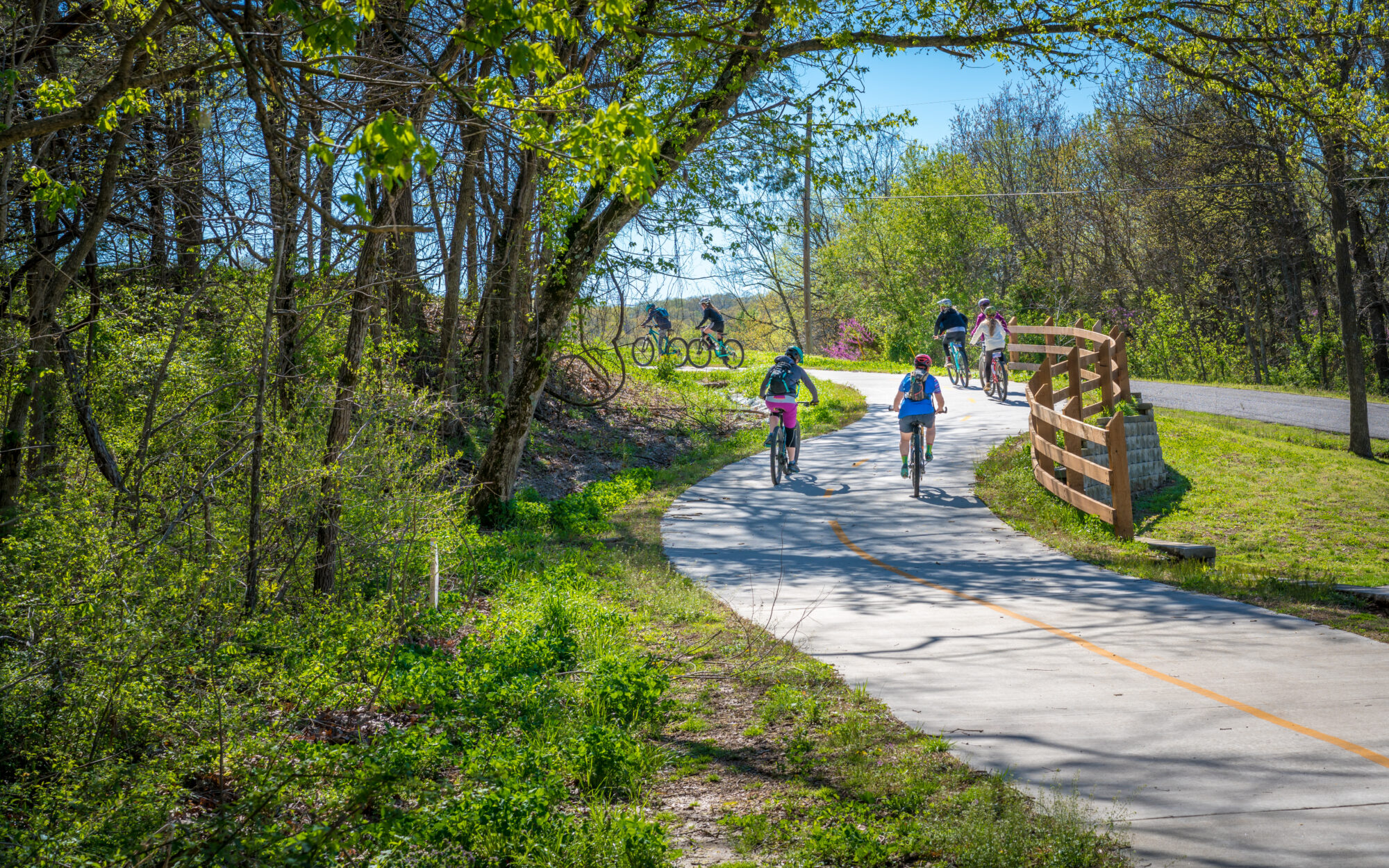
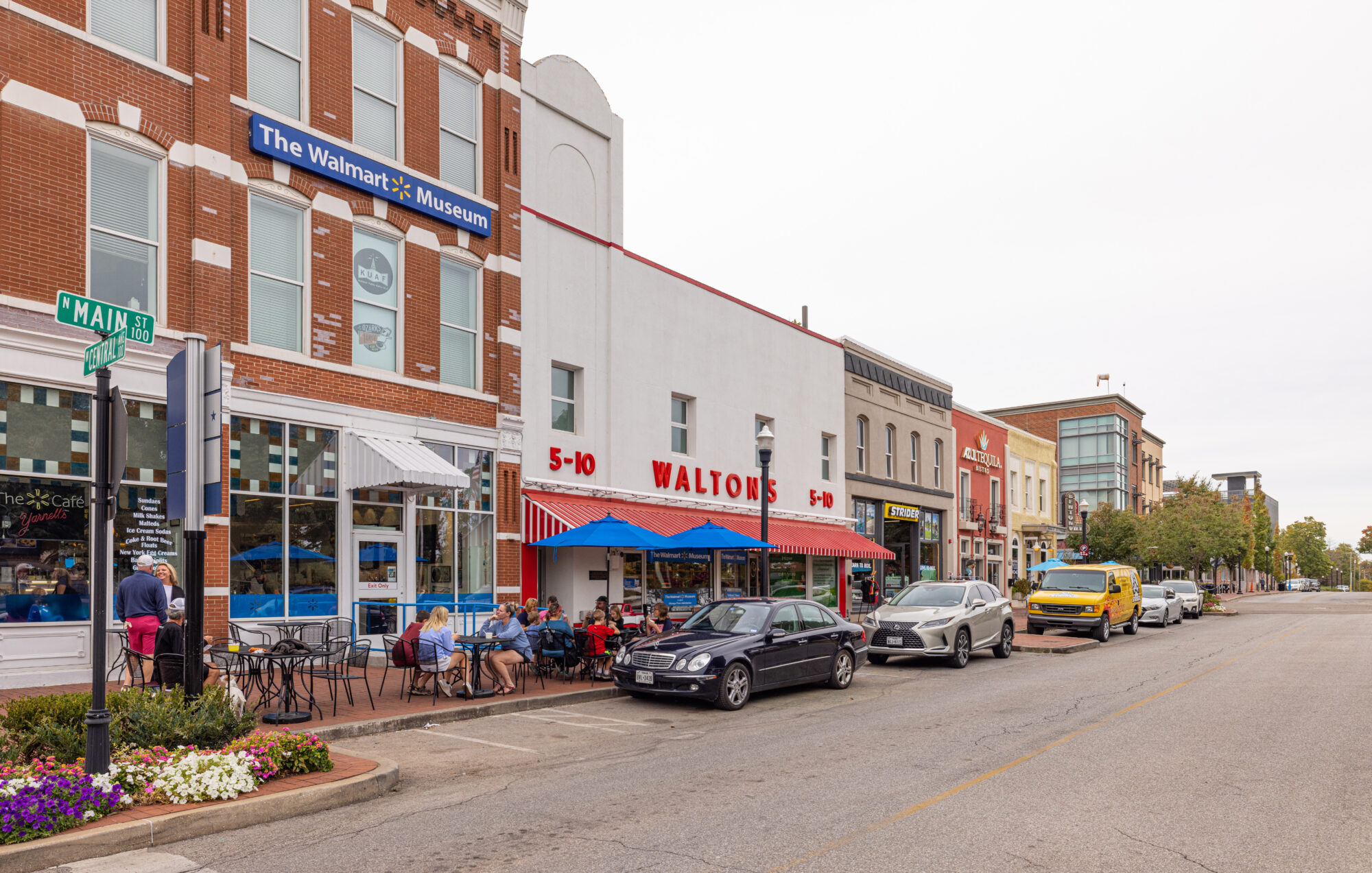
Today, Bentonville regularly hosts biking conferences and national events. It serves as the headquarters for USA Cycling’s mountain bike team. And it’s a partner with Unbound, the world’s premiere gravel trail event. What started as a smart play for outdoor recreation has evolved into a niche industry hub and a true biking community, woven into the fabric of daily life. Effectively, biking has become Bentonville’s new identity. “You look around today at all the development that’s been done and all the efforts, and it’s just mind blowing how much has changed in 10 years,” says Ross, who now works in business development with Runway Group. “The care that went into really developing this with the cyclist in mind is on another level.”
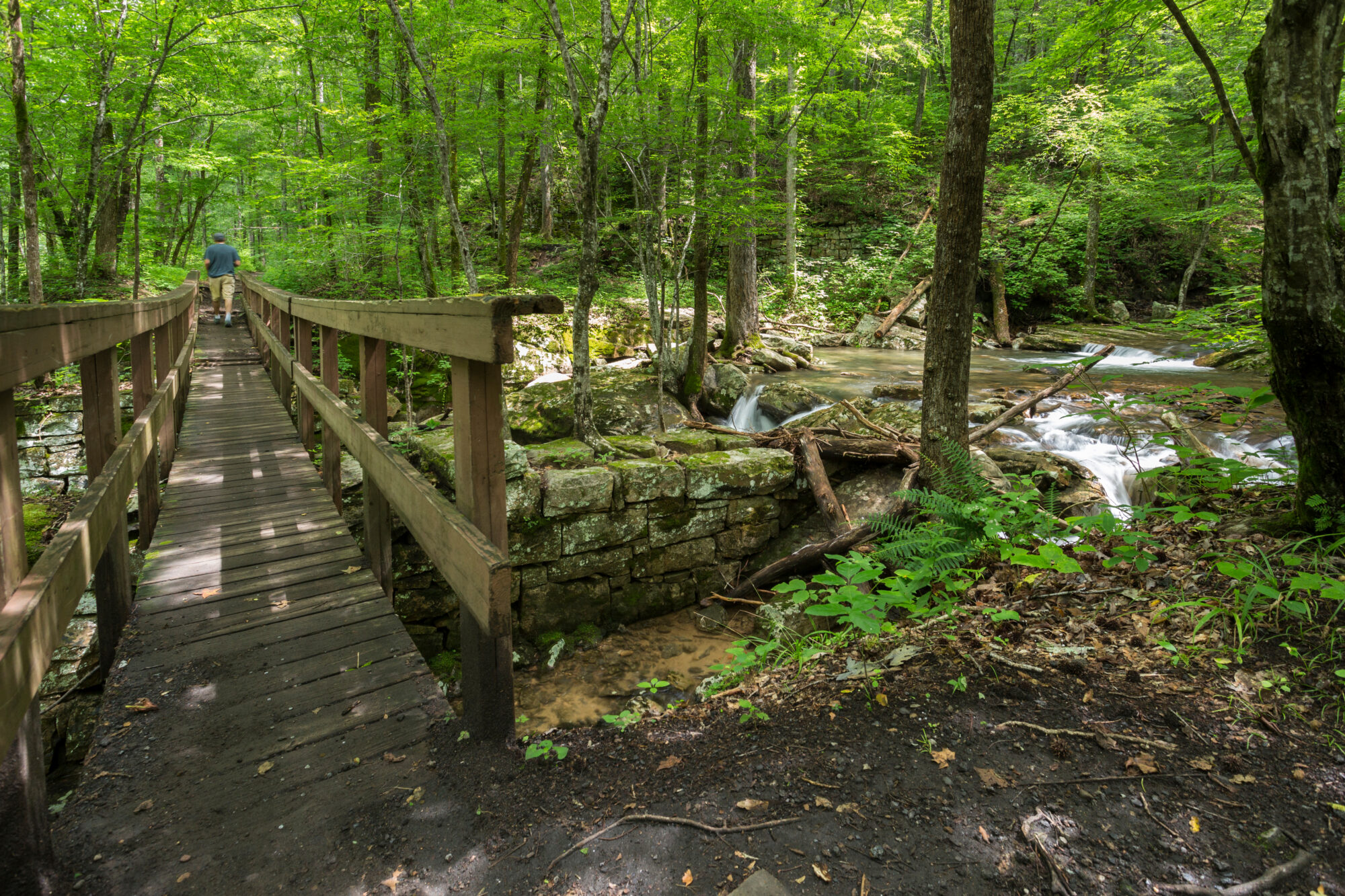
This kind of transformation is happening in small towns across the country. From whitewater rafting and mountain biking to rock climbing and trail running, adventure and outdoor sports are attracting millions of visitors and billions in spending to cities and rural areas alike. As communities invest in trails, waterways, and multi-use outdoor spaces, they’re not only promoting wellness and tourism—they’re tapping into a high-growth sector that fuels local businesses, boosts hotel stays, and generates critical tax revenue. And with adventure tourism projected to surpass $1 trillion globally by 2030, its economic potential for American cities is just getting started.
The Unexpected Catalyst
The sudden surge can be traced, in part, to the pandemic, a period of mass isolation and social distancing that helped fuel interest in getting out of the house. According to the U.S. Census Bureau, both existing enthusiasts and new recreationalists took advantage of open-air opportunities, with 6.9 million more people engaging in outdoor activities in 2021 than 2019. But the growth can also be attributed to a number of cities making wise, forward-thinking investments in themselves, turning into attractive destinations ready to capitalize on this renewed appreciation for fishing, biking, rafting, and more.
Look no further than Dayton, Tennessee. In 2013, the economically distressed city didn’t seem like a ripe area for growth until Dennis Tumlin had an idea to transform the area into a fishing destination. The former Coca-Cola sales manager had recently joined Dayton’s economic development team and knew the city’s Lake Chickamauga had a bevy of largemouth bass that could draw locals and tourists alike. After cleaning up and restoring an old docking facility on “Lake Chick,” Tumlin drew upon his corporate contacts and arranged for Dayton to host a Walmart FLW tour event, which resulted in an increase of $1.5 million in sales tax. The next year, the city hosted 33 fishing tournaments in 33 weekends. “We were lining up events as fast as we could because the mayor and I both felt that events were a fast way to inject visitors into the community and inject dollars into the community,” Tumlin says. “We came in really, really quickly and wanted to activate the low-hanging fruit.”
Over the next couple years, Tumlin, now Chief Customer Officer for the Tennessee Department of Tourist Development, saw Dayton’s economy explode as hotels, restaurants and other businesses moved into the fishing hotspot. The key, he says, was to establish Dayton as an event hub, build a reputation among the professional and amateur ranks, and put the community onto the national stage. “What happens is it puts a flag in the ground,” Tumlin says. “Those things don’t happen at first. They don’t happen organically. We sell our venues. We sell our fishery. We sell our community’s hospitality. We actively have to recruit.”
Tumlin has taken things a step further throughout the state with a branding effort called Bill Dance Signature Lakes, a 14-lake network that has been stocked with 13.1 million fish. In the next year, Tumlin plans to create an app with a loyalty program, allowing visitors to check in and earn rewards. “The lake-based economy is all that so many of these counties have,” Tumlin says. “We’re able to inspire visitation to many of these rural counties, but through that recreation economy, they’ll see tax dollars that support local education, police, fire, and community services.”