By
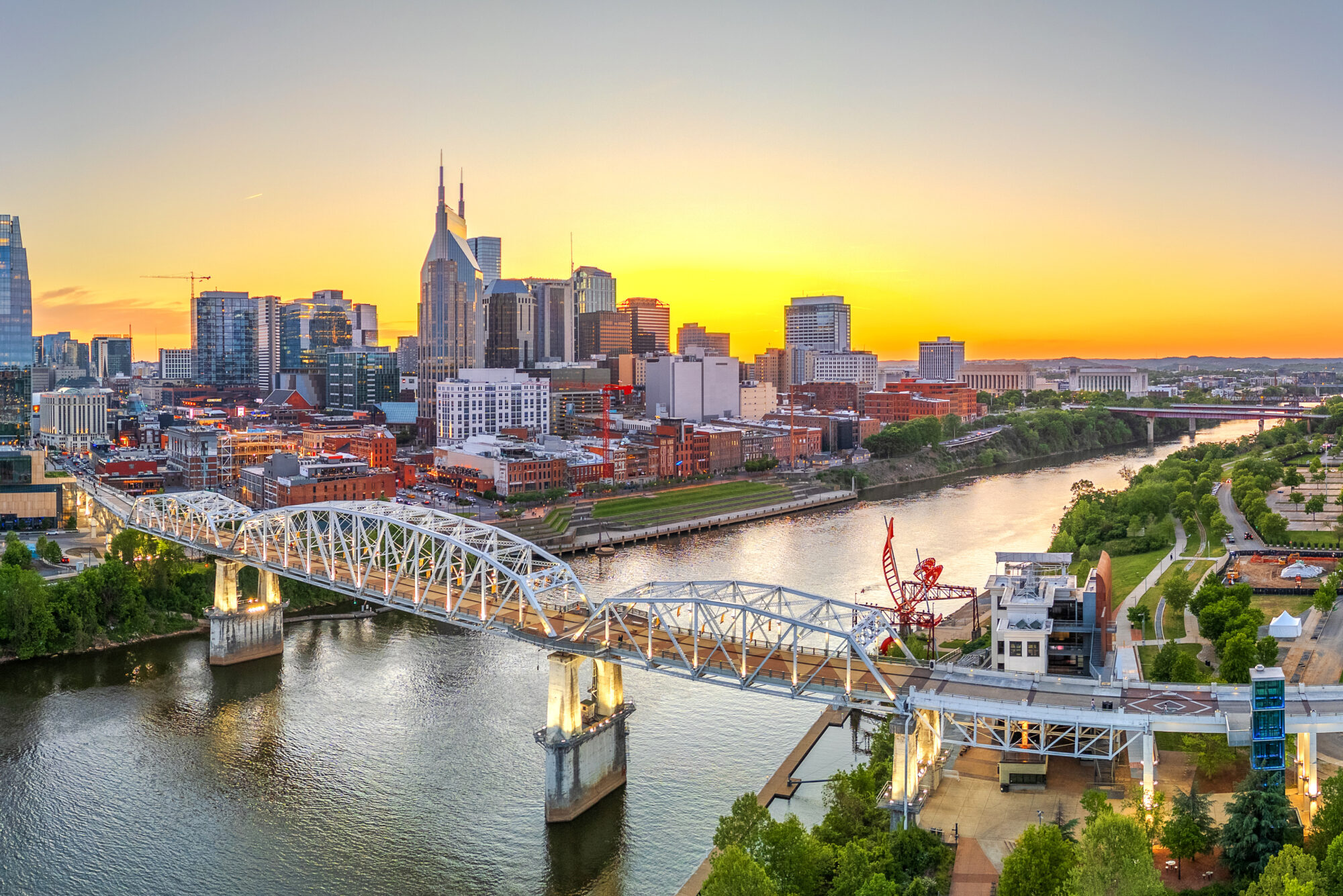
Nashville, TN, Image Source: Adobe Stock
For decades, cities followed a familiar formula: grow outward, build fast, and measure success by scale. Highways expanded, suburbs stretched farther from urban cores, and downtowns became places people commuted to rather than lived in. The result was a landscape designed for movement and growth — but not always for connection or long-term sustainability.
Today, that model is being reexamined. Across the country, cities are entering a new phase — one shaped less by how well they function. Quality of life, resilience, affordability, and experience are becoming central priorities, even as communities continue to grapple with the long-term consequences of earlier decisions.
“We were focused on economic development at all costs. Success was measured by how much growth occurred, even when that growth may not have all been good,” explained Matt Bucchin, AICP, LEED Green Associate and Placemaking Solutions Leader at Austin, Texas-based Halff, an infrastructure consulting firm. “Historically, the heart of the city was a place to work, not to live. That’s a mindset we’re starting to correct.”
The growth Bucchin is referring to often came in the form of low-density development, single-use zoning, and car-centric infrastructure — choices that defined much of the post-war era. While they enabled rapid expansion, they also left cities with rising housing costs, congestion, and aging infrastructure systems now requiring significant reinvestment.
“We’re dealing with decades of land use and infrastructure decisions that created massive, deferred maintenance and funding gaps,” he said.
That reality is reflected nationally. The American Society of Civil Engineers’ most recent Infrastructure Report Card gave the United States a “C” grade — its highest ever — but still identified a roughly $3.7 trillion gap in needed infrastructure investment. The report underscores a central tension: decades of underinvestment continue to shape what communities can build — and what they must first fix.
An example of how long these patterns take to unwind is Detroit. As Bucchin explained, decades of industrial-era expansion left the city with an oversized infrastructure system after population decline reduced its tax base by roughly 60%. The result was years of deferred maintenance and gradual reinvestment.
“Only in the past decade has Detroit’s downtown begun to see a meaningful recovery, with renewed population growth, private investment and improvements to public infrastructure,” Bucchin said.
If the late 20th century was defined by decline in many American cities, the early 21st century told a different story.
“The real story of the past few decades is the rise of the knowledge economy and the creative class, and how it fueled the comeback of cities,” explained Richard Florida, a leading urbanist, researcher, and author.
As jobs shifted toward ideas, creativity, and collaboration, proximity regained value. Talent, especially younger workers, gravitated toward dense, walkable, culturally vibrant places, and companies followed.
But even that model is evolving. Remote and hybrid work have begun to untether jobs from geography. Florida calls it “the great untethering of work from place,” reshaping where people choose to live.
Some cities that thrived in the last cycle are now facing new pressures. As housing costs surged in major metros, many residents moved to more affordable regions. Mid-sized cities like Nashville, Austin, Miami, and Raleigh initially absorbed that migration, but are now experiencing similar affordability strains.
“Rust Belt cities like Detroit, Cleveland, and Pittsburgh are becoming viable again in a way they haven’t been in decades,” Florida said. “Remote work is making that possible because people can build a real life there at a cost they simply cannot find in superstar cities.”
Cleveland illustrates this shift. According to Newmark’s “Downtown Office Conversions Report,” released in the fall of 2025, roughly 8.7 million square feet of office space in downtown Cleveland has been converted, is under renovation, or proposed for conversion since 2013. That wave of adaptive reuse has helped fuel residential growth, with downtown population rising roughly 12% since 2019 to about 21,000 residents.
Additionally, cities are no longer functioning as isolated economies. The Meta City, as Florida describes it, reflects a shift toward interconnected urban networks.
“In the United States, we are seeing three distinct Meta City formations emerge: a far-flung global one anchored by New York, a polycentric West Coast anchored by San Francisco and Los Angeles, and a weaker, looser Midwest one anchored by Chicago,” Florida explained. “The cities that understand their position in this network, and play to it, are the ones that will win.”
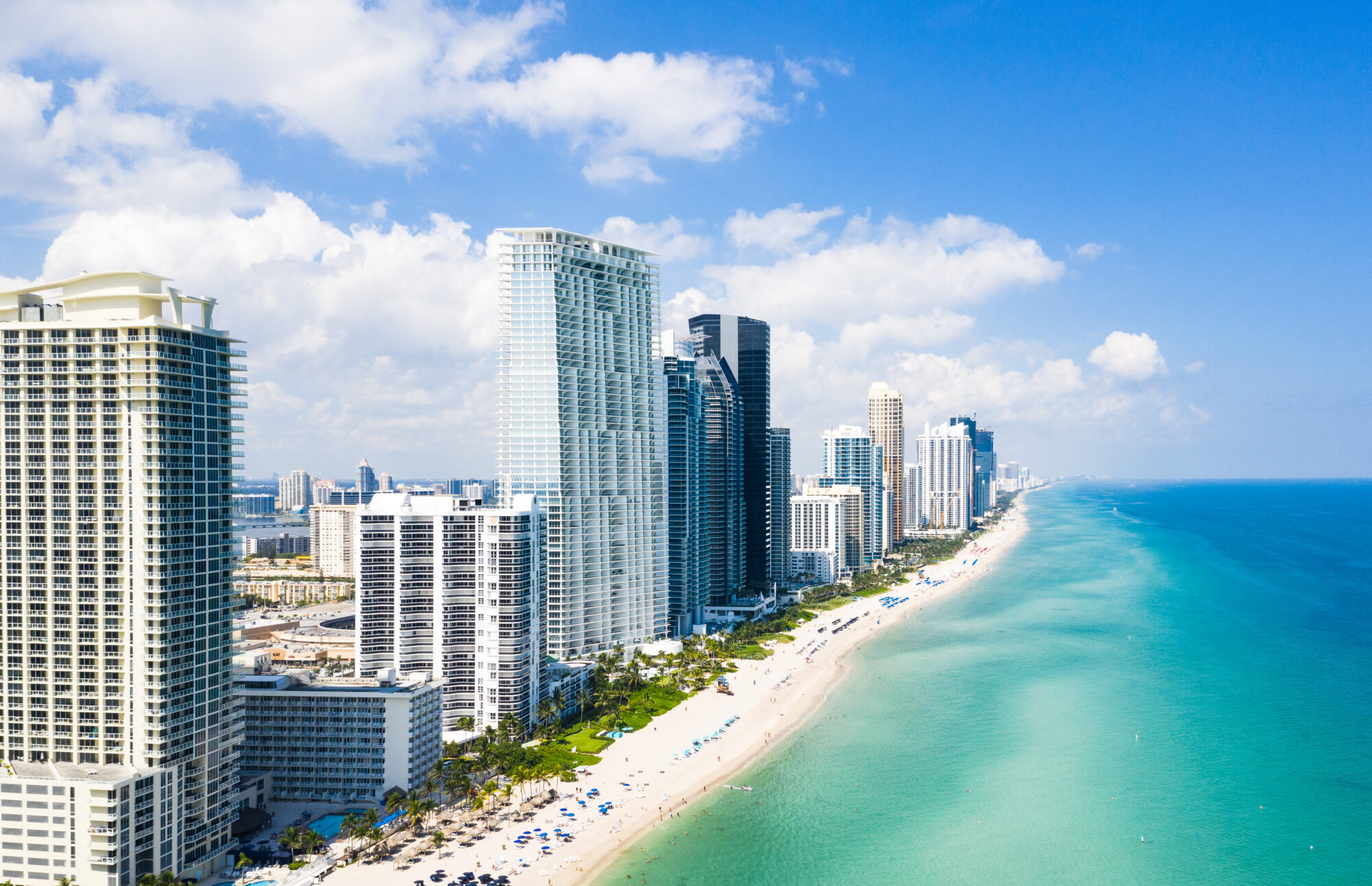
Miami, FL, Image Source: Adobe Stock
For smaller and mid-sized communities, that means identifying a role within a broader system rather than competing directly with global hubs. Some communities may position themselves as more affordable alternatives for remote workers priced out of larger metros, while others may lean into specialized industries, universities, tourism, logistics, or quality-of-life advantages, according to Florida.
Those network dynamics are already reshaping migration and economic patterns across the country. Research tied to Florida’s Meta City framework has pointed to examples such as Miami functioning increasingly as an extension of New York’s finance and real estate economy, while Austin has become closely tied to the Bay Area’s technology sector through talent migration and remote work patterns.
In practice, “playing to” a city’s position in the network can take many forms — investing in walkable downtowns that attract talent, strengthening transportation and digital connectivity, supporting entrepreneurship, or creating destinations centered around culture, recreation, and entertainment. The goal, Florida suggested, is less about replicating another city’s growth model and more about identifying where a community already has momentum and building from it.
Nowhere are these changes more visible than in downtowns. Once anchored by office workers, many city centers are still adjusting to reduced daily foot traffic. But rather than signaling decline, that shift is forcing reinvention. Mixed-use, walkable districts are becoming the foundation of that effort, bringing together housing, retail, entertainment, and public space in ways that keep areas active throughout the day and into the evening.
“Getting back to mixed-use, mixed-income, walkable districts served by multimodal mobility is solving a lot of the historical problems that have been building up over the last 75 years,” Bucchin said. “We now have a diversification of uses, creating all-day viability that is better aligned with the kind of demand we’re seeing in a post-commuter world.”
Florida describes a similar shift toward what he calls the “visitor economy,” where activity is driven less by workers and more by residents and visitors. In many downtowns, workers now account for about 25 percent of activity, residents 10-15 percent, and visitors roughly 60 percent.
“Downtowns now live on energy, on entertainment, on people coming in to experience something,” Florida said.
This shift is playing out in major downtowns across the country, where cities are rethinking how to attract people beyond the traditional 9-to-5 workday. For years, sports and entertainment development were often criticized as isolated investments that did little to support broader urban vitality. But now, instead of standalone venues surrounded by parking, newer developments are being integrated into walkable districts that include housing, transit, and public gathering spaces.
“That shift is already playing out in cities like Nashville and Chicago. In Nashville, a new Titans stadium is anchoring the transformation of the East Bank into a 500-acre mixed-use district, while in Chicago, the $7 billion ‘1901 Project’ is turning the United Center’s surrounding parking lots into a dense, walkable neighborhood built around housing, entertainment, and public space,” Bucchin shared.
“Beyond major metros, smaller cities are applying similar principles at a different scale by investing in parks, trails, and civic infrastructure that enhance quality of life and create a stronger sense of place,” he added, pointing to Round Rock, Texas, as an example of a city that has focused on this strategy.
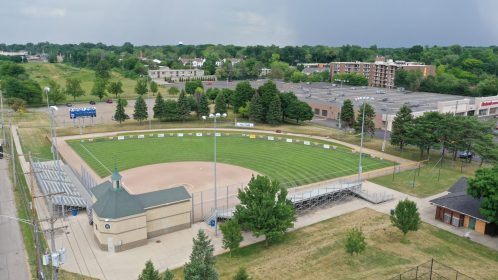
Around 2000, the city set a target to become the “Sports Capital of Texas,” leveraging its expansive parks and trails system as core civic infrastructure that supports everyday recreation, regional sports tourism, and community health. The city invested heavily in a minor league sport facility (Dell Diamond, home of the Round Rock Express), trail connectivity and riverfront access along Brushy Creek (Heritage Trail), and park‑based sports facilities (Old Settlers Park).
“These investments enhance quality of life for residents while attracting tournaments and visitors from across Central Texas,” Bucchin explained, adding that in 2019, Round Rock broadened its motto to “Go Round Rock!” to emphasize a broader appeal beyond sports.
While development patterns are evolving, so are the tools cities use to manage them. Technology, particularly artificial intelligence (AI), is beginning to play a more practical role in urban operations. The American Planning Association’s “2026 Trend Report” identified AI as a major emerging force shaping current and future planning and infrastructure systems.
When it comes to a newer approach to infrastructure, Bucchin notes how cities are increasingly connecting roads, utilities, and public systems to digital networks that provide real-time feedback. Sensors embedded within infrastructure can monitor performance, track usage, and identify issues before they become larger failures, allowing cities to move from reactive maintenance to more proactive asset management.
Fort Worth, Texas, illustrates this approach. Along the McCart Avenue corridor, the city partnered with Halff to explore how machine learning and real-time monitoring could improve stormwater inspections and better prioritize infrastructure repairs.
The corridor also serves as a testing ground for connected infrastructure, integrating roadway and drainage improvements with fiber networks, connected traffic signals, and pedestrian detection technology. Rather than treating innovation as a standalone “smart city” initiative, Bucchin said the city has focused on embedding technology directly into long-term infrastructure and capital improvement projects.
But technology’s impact extends beyond public assets. Because most urban development occurs on private land, Bucchin said cities must modernize zoning and development codes while also building the digital infrastructure that allows systems to connect. By doing both, cities create conditions for private-sector innovation by enabling more efficient, adaptable, and cost-effective development at scale.
As cities navigate affordability pressures, infrastructure demands, shifting work patterns, and climate uncertainty, the challenge ahead is less about reacting to any single trend and more about adapting to multiple forces at once. Increasingly, success will depend on how well communities understand their place within broader regional and global networks — and how quickly they can adjust as those networks evolve.
“The cities on top today are not necessarily the ones that will be on top in twenty years. The real question is whether they can move when the map shifts underneath them,” Florida concluded.