Skip to content
playmaker logo 1
Facebook Linkedin Instagram
SUBSCRIBE
  • Articles
    • Feature Stories
    • Trends / Innovation
    • Human Interest
    • Quality of Life
    • Community Planning
    • Economic Development
    • Community Operations
    • News
  • Community Spotlights
  • Playmakers
  • Magazine
    • Current Issue
    • All Issues
    • Advertise
    • Subscribe
  • Events
    • Summit: SC
  • Articles
    • Feature Stories
    • Trends / Innovation
    • Human Interest
    • Quality of Life
    • Community Planning
    • Economic Development
    • Community Operations
    • News
  • Community Spotlights
  • Playmakers
  • Magazine
    • Current Issue
    • All Issues
    • Advertise
    • Subscribe
  • Events
    • Summit: SC
Facebook Twitter Instagram
  • Community Operations, Economic Development, Trends / Innovation

Building Tech Corridors: Attracting Tech to Your City

By

Ally Azzarelli
playmaker favicon
June 2, 2026 2:00PM EST
AdobeStock 379844625

Image Credit: AdobeStock

Move over, San Francisco and Austin, you’re not the only cities attracting big tech talent and investment dollars these days. Across the nation, small and mid-sized cities like Peachtree Corners, Georgia, Boulder, Colorado, and Omaha, Nebraska, are proving they, too, can build a thriving tech ecosystem. All it takes is the perfect combination of strong institutions, collaboration, smart infrastructure, an ideal quality of life, and a vision.

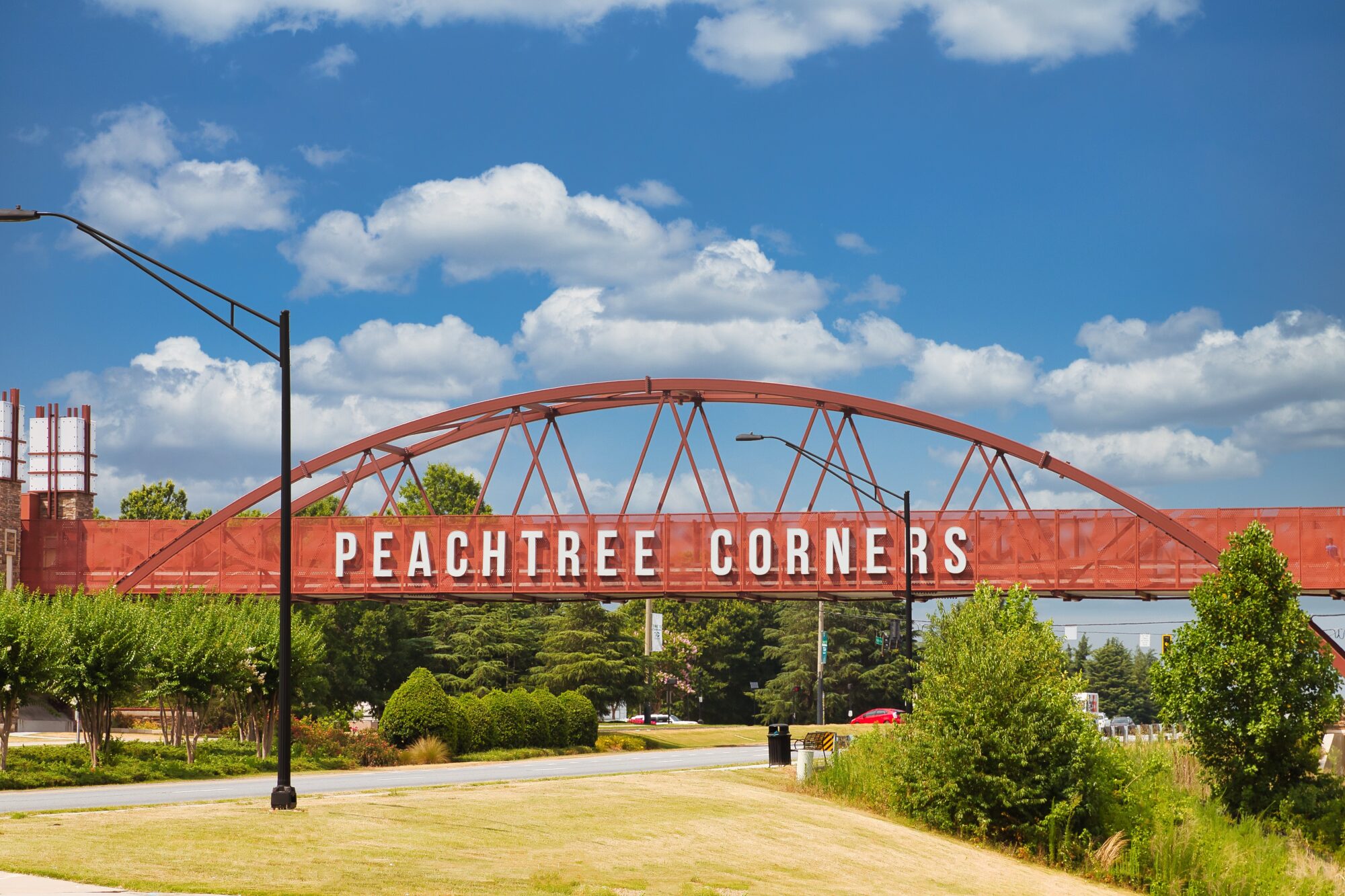
Peachtree Corners, Georgia: The Smart City as a Business Model

The City of Peachtree Corners is home to Technology Park Atlanta, Georgia’s first technology park and where innovations like the modem and the color printer were first developed, giving Peachtree Corners a legacy of invention that predates the smart city era by decades.

To capitalize on that history, the city implemented a strategy to continue to invite companies to the city by creating Curiosity Lab. The city of roughly 50,000 residents just outside Atlanta employed a new approach by opening its public infrastructure to tech companies looking to test or develop smart city technologies, including autonomous vehicles, sensors, and drones, making innovation something residents live alongside every day.

“We are in very close proximity to Atlanta. How can we capitalize on this legacy of technology and the assets we have within the tech park to increase vibrancy, attract jobs, and make it a better place for people to live, work, and play?” says Emily Heintz, Curiosity Lab Executive Director. “That’s how Curiosity Lab got started.”

Curiosity Lab works directly with the tech community. This living lab features an autonomous-vehicle lane throughout the city, intelligent traffic cameras, and smart infrastructure that companies can plug into for real-world deployment. That combination has made it particularly attractive for international companies looking to establish a presence in the U.S. market, a soft landing environment, as Heintz describes it, where a completed deployment in a Georgia city carries real business development value.

Peachtree Corners Magazine reports that Curiosity Lab has supported over 150 companies in testing smart city technology, contributed to the creation of 2,700 jobs, and supported 84 startups. This award-winning community has earned recognition as #SiliconOrchard, the innovation heart of the metro-Atlanta region, and that reputation continues to draw new partners and investment.

Cities don’t have to wait for private developers to build innovation campuses. They can own and operate the proving ground and set the terms of engagement themselves.

Image Credit: AdobeStock

That trust didn’t happen by accident. “The fact that we’re being intentional from the start is how you kind of build public trust; it’s not just some tech company that came to us and caught us by surprise,” Ms. Heintz explains. “There’s definitely a science and an art to it. You have to build pathways that make sense both to the startup community and to local government.”

“There is a real advantage to being a city our size,” says City Manager Brian Johnson. “Companies want a city that can say ‘yes’ quickly and provide access to real infrastructure. And what makes all of that sustainable is trust. We were intentional about setting the terms from the start, and residents have been with us every step of the way.”

Boulder, Colorado: The Startup Lab of the Rockies

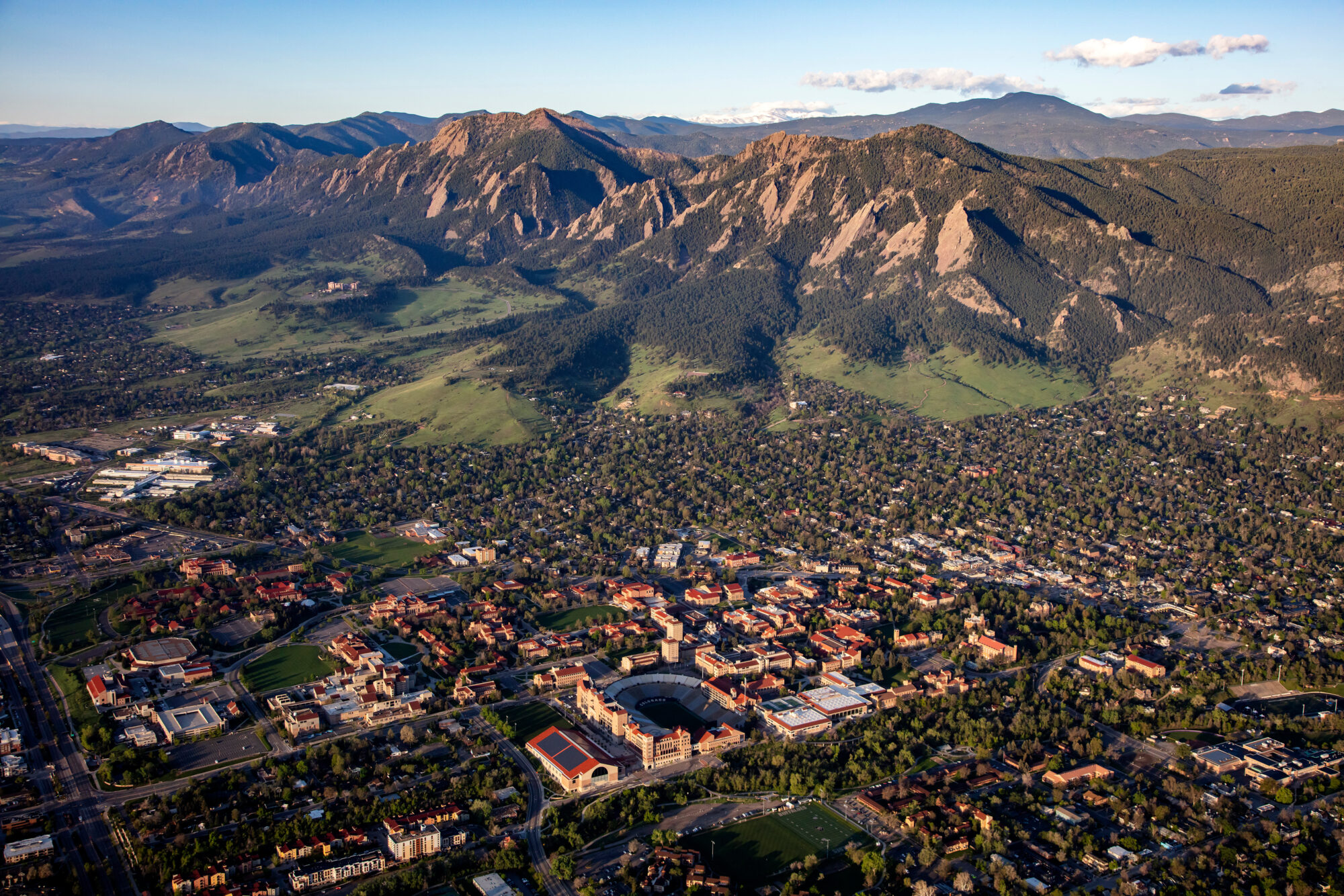
Boulder is a city of about 105,000 people that has had a tech hub reputation for quite some time, thanks to decades of deliberate civic decisions, starting long before anyone used the phrase “innovation ecosystem.”

Central to that story is the University of Colorado Boulder, which has evolved from a regional institution into one of the country’s most productive engines of startup creation. In 2024 alone, CU Boulder launched 35 companies based on university innovations, breaking its own record.

“The university’s success in launching new companies has a lot to do with all the research they’re doing to develop and advance new technologies,” says Jennifer Pinsonneault, economic vitality manager, City of Boulder.

“They’ve continued to grow and refine their expertise. There are a lot of initiatives across the university that also bring researchers and industry together — and we see that throughout the community,” she adds.

Techstars, the global startup accelerator founded in Boulder in 2006, recently relaunched its Boulder accelerator and announced a new partnership with CU, linking the university’s innovation pipeline to Techstars’ global network of mentors and investors. It’s a partnership that reflects a broader aspect of how Boulder operates: the public and private sectors here actively build together.

“The strengthening of that relationship between Techstars and CU is a reflection of the collaboration you see here between the public and private sectors,” explains Ms. Pinsonneault. “By having both, there’s the ability to tap into more resources, different perspectives, and different connections, and that seems like a big advantage for founders.”

That collaborative culture was intentionally built over generations, Ms. Pinsonneault states. Community leaders once pooled resources to establish the first state university in Colorado.

In the late 1950s, residents raised funds to attract Department of Commerce research labs when those institutions were looking to move inland. In the 1970s, citizens voted to tax themselves to preserve open space and fund multimodal transportation.

That same civic instinct has continued in the form of school funding initiatives and infrastructure investment ever since. What looks like a thriving tech scene today is, in large part, the result of the compounded returns from decades of community contributions.

“It’s the collaboration, but it’s also that sense of place,” describes Ms. Pinsonneault. And that helps maintain the feeling of community as the city continues to grow.

“We’ve got arts and culture, entertainment, and great schools. It’s a great place to live. You pair that with a world-class research university and national labs, a high concentration of high-tech businesses, and a well-educated workforce. It just makes for a place that’s attractive to both businesses and potential employees,” she adds.

Boulder’s tech identity is rooted in decades of civic investment in institutions, infrastructure, and quality of life, creating the conditions for innovation to take hold. For cities looking to replicate it, the lesson is to ask what your community is willing to invest in today that won’t pay off for a generation.

Boulder, Colorado

Image Credit: AdobeStock

Omaha, Nebraska: Building the Midwest’s AI Infrastructure

There’s a certain Midwestern restraint to the way Omaha builds things, steady, deliberate, and without much fanfare. That same instinct is now being applied to artificial intelligence, and the city is further along than most people realize.

“We like to characterize ourselves as big enough, small enough. Big enough to have an identity as a tech destination, but small enough to work together to make things happen. There’s virtually no ego here,” says Alec Gorynski, Greater Omaha Chamber Senior Vice President of Economic Development.

Anchoring the effort is Scott Data, a foundation-owned, nonprofit data center that has earned a reputation for its civic model: revenue generated by the data center flows back as scholarships for University of Nebraska at Omaha students, creating a full-circle investment in the local talent pipeline.

The inaugural OMA x AI conference recently brought together civic, academic, and business leaders at KANEKO in downtown Omaha to discuss workforce development and innovation, a clear signal of how seriously Omaha’s leadership is taking this moment.

“That’s the byproduct of philanthropy and collaboration,” Mr. Gorynski says of Scott Data. “The university engages with it — they have a sandbox, effectively — and big companies and small companies are partnering with them.”

The University of Nebraska–Lincoln, through its Rake School, has partnered with Scott Data to provide students with access to advanced GPU computing resources, enabling them to build AI capabilities in a low-barrier, hands-on environment.

The broader startup ecosystem is equally well-supported. Nebraska Angels brings together individual investors to connect with startups from across the region, offering the kind of accessible, relationship-driven capital that institutional funds often can’t provide.

The Omaha Data Sciences Academy trains developers to build the large language models and agentic AI tools that enterprises and startups alike need. Meanwhile, AI degree programs at UNO and a FinTech concentration with an AI focus at Creighton University are helping ensure that the workforce emerging from local institutions is prepared for tomorrow’s economy.

The early returns are encouraging, says Mr. Gorynski. He explains that roughly 60 percent of Creighton students, most of whom arrive from out of state, stay in Omaha after graduation. The city’s strongest net population migration now comes from people in their mid-to-late thirties who are relocating from Austin, Los Angeles, and Denver.

Mr. Gorynski’s theory: Omaha’s mix of professional opportunity, affordable housing, and 19-minute average commute times is increasingly hard to dismiss. The city is also investing heavily in its urban core, with a goal of growing both its resident population and downtown workforce by 30,000 each, aiming to cultivate an environment that attracts younger talent before they ever think of leaving.

For cities looking to follow Omaha’s lead, Mr. Gorynski has one piece of advice: “Don’t let ego get in the way. You can’t go it alone. It truly takes a community that is all in, and where everyone can come together and play their unique role in contributing to something common and shared. That is a defining characteristic of Omaha.”

Omaha is making a calculated investment in becoming an AI destination rather than reacting to one. Cities with strong financial and logistics sectors may want to consider how AI infrastructure investment can serve as both an economic attractor and a talent development platform.

What These Cities Have in Common

Though none of these cities tried to become the next Silicon Valley, each found its own angle: university-driven startup creation, AI infrastructure investment, smart city deployment, and committed to it with the right resources and leadership.

Each built strong connections between universities and the private sector, turning research into companies and keeping graduates closer to home. And each made a convincing case that quality of life isn’t just about weather or the cost of living, but also about arts and culture, walkable neighborhoods, open space, and a community that actually knows your name.

The tech corridor is being written city by city, by communities that decided to stop waiting and start building.


Latest News

AdobeStock 379844625

Discovery

Building Tech Corridors: Attracting Tech to Your City

  • June 2, 2026
AdobeStock 403103567

Discovery

Communities Unlock AI’s Potential

  • May 29, 2026
AdobeStock 1831150529

Discovery

The Evolution and Future of Cities

  • May 28, 2026
AdobeStock 527167421

Listicle

When Companies and Cities Grow Together

  • May 27, 2026
AdobeStock 341775267

Discovery

Eyes in the Sky: How Cities Are Using Advanced Air Mobility to Work Smarter, Faster, and Safer

  • May 12, 2026
Paradise Coast Sports Complex 2024 DJI 20240820200600 0016 D 2

Discovery

Inside Paradise Coast Sports Complex’s Year-Round Revenue Model

  • April 27, 2026
MBSC EXT 35

Discovery

Game On

  • April 24, 2026
AdobeStock 329655783

Discovery

Cities Become Street Smart

  • April 23, 2026
DSC 4032

Discovery

When, Not If.

  • April 7, 2026
AdobeStock 266588524

Discovery

Trails, Tournaments, and Tax Revenue: How Adventure Sports Are Energizing Small Towns

  • February 26, 2026

Share This Article

More Discoveries

All Wheel Park Opening 4704

Where Play Meets Place: How Outdoor Recreation Sports Are Shaping the Next Generation of Cities

  • February 6, 2026
FY26 Ceramics Bonsaid planters

Combating Loneliness

  • February 5, 2026
Anywhere 3 Credit Anywhere Film + Jonathan Shahan

How Cities Are Becoming the New Hollywood

  • January 22, 2026
AdobeStock 533209425

Relocation Incentives: U.S. Cities & States That Will Pay You to Move There

  • January 22, 2026

SUBSCRIBE

Be among the first to read the latest Community Playmaker magazine!

WEEKLY NEWS & LATEST PLAYMAKER STORIES:

SUBSCRIBE & BE INSPIRED

playmaker logo 1
Facebook Twitter Instagram

Community Playmaker is a platform dedicated to providing solutions and ideas for visionary local government leaders, AKA ‘Playmakers’.

Facebook Linkedin Instagram

topics

  • Feature Stories
  • Community Spotlights
  • Playmakers
  • About
  • News
  • Magazine
  • Community of the Year

Magazine

  • January 2024
  • April 2024
  • July 2024
  • October 2024

Playmaker Events

  • Summits 2024

Connect with playmaker

  • Advertising
    sales@communityplaymaker.com
  • Stories
    chiefeditor@communityplaymaker.com
  • News
    news@communityplaymaker.com
  • General Inquiries
    info@communityplaymaker.com

© 2026 Community Playmaker. All Rights Reserved.

  • Privacy Policy
  • | Terms of Service
  • | Disclaimer
  • | Cookie Policy
playmaker logo 1
Facebook Instagram Linkedin

Main Navigation

  • Articles
    • Feature Stories
    • Trends / Innovation
    • Human Interest
    • Quality of Life
    • Community Planning
    • Economic Development
    • Community Operations
    • News
  • Community Spotlights
  • Playmakers
  • Magazine
    • Current Issue
    • All Issues
    • Advertise
    • Subscribe
  • Events
    • Summit: SC
  • Articles
    • Feature Stories
    • Trends / Innovation
    • Human Interest
    • Quality of Life
    • Community Planning
    • Economic Development
    • Community Operations
    • News
  • Community Spotlights
  • Playmakers
  • Magazine
    • Current Issue
    • All Issues
    • Advertise
    • Subscribe
  • Events
    • Summit: SC

features

AI’s Expanding Footprint

Building the Third Place: How Modern Recreation Facilities Are Turning Visitors into Residents

Show U the Money

  • 3 Grants to Help Close the Digital Divide
  • Will The Pickleball Bubble Burst?
  • From Brownfield To Brewery: How Delaware Is Revitalizing Through Redevelopment

playmakers

North Miami City Manager Theresa Therilus Turns Complexity Into Community Outcomes

Jamie Furbush Leads Frankenmuth, Michigan, to a Future Rooted in History

Standing Tall- Mayor Steven Reed, Montgomery, Alabama

  • Mayor Stan Hogeland – City Of Gardendale, AL
  • Glenn Weiss – Boynton Beach, FL

Community spotlight

​​Community Playmaker’s 2025 Community of the Year: Hays, Kansas

Boise Rising: Insights on its Decades-long Transformation

Dumfries, VA, Dreams Big

  • What Makes Naples The Pickleball Capital Of The World?
  • How One YouTuber Transformed A Small Town Through Quilting

Contact Us

  • Advertising
  • Stories
  • News
  • About

Latest news

VIEW ALL
AdobeStock 527167421

Listicle

When Companies and Cities Grow Together

  • May 27, 2026
TT Official Photo July 2025

Playmaker

North Miami City Manager Theresa Therilus Turns Complexity Into Community Outcomes

  • February 17, 2026
PLMKR Web Features Issue09 AIImpact

Feature

AI’s Expanding Footprint

  • January 22, 2026
PLMKR Web Features Issue09 CoY2025

Spotlight

​​Community Playmaker’s 2025 Community of the Year: Hays, Kansas

  • January 22, 2026

Subscribe

Stay In The Know

PLAYMAKER Community of the Year nomination