Skip to content
playmaker logo 1
Facebook Linkedin Instagram
SUBSCRIBE
  • Articles
    • Feature Stories
    • Trends / Innovation
    • Human Interest
    • Quality of Life
    • Community Planning
    • Economic Development
    • Community Operations
    • News
  • Community Spotlights
  • Playmakers
  • Magazine
    • Current Issue
    • All Issues
    • Advertise
    • Subscribe
  • Events
    • Summit: SC
  • Articles
    • Feature Stories
    • Trends / Innovation
    • Human Interest
    • Quality of Life
    • Community Planning
    • Economic Development
    • Community Operations
    • News
  • Community Spotlights
  • Playmakers
  • Magazine
    • Current Issue
    • All Issues
    • Advertise
    • Subscribe
  • Events
    • Summit: SC
Facebook Twitter Instagram
  • Community Planning, Trends / Innovation

Should Parking Go away in American Cities?

By

Andrew Cohen
playmaker favicon
April 25, 2024 3:12PM EST
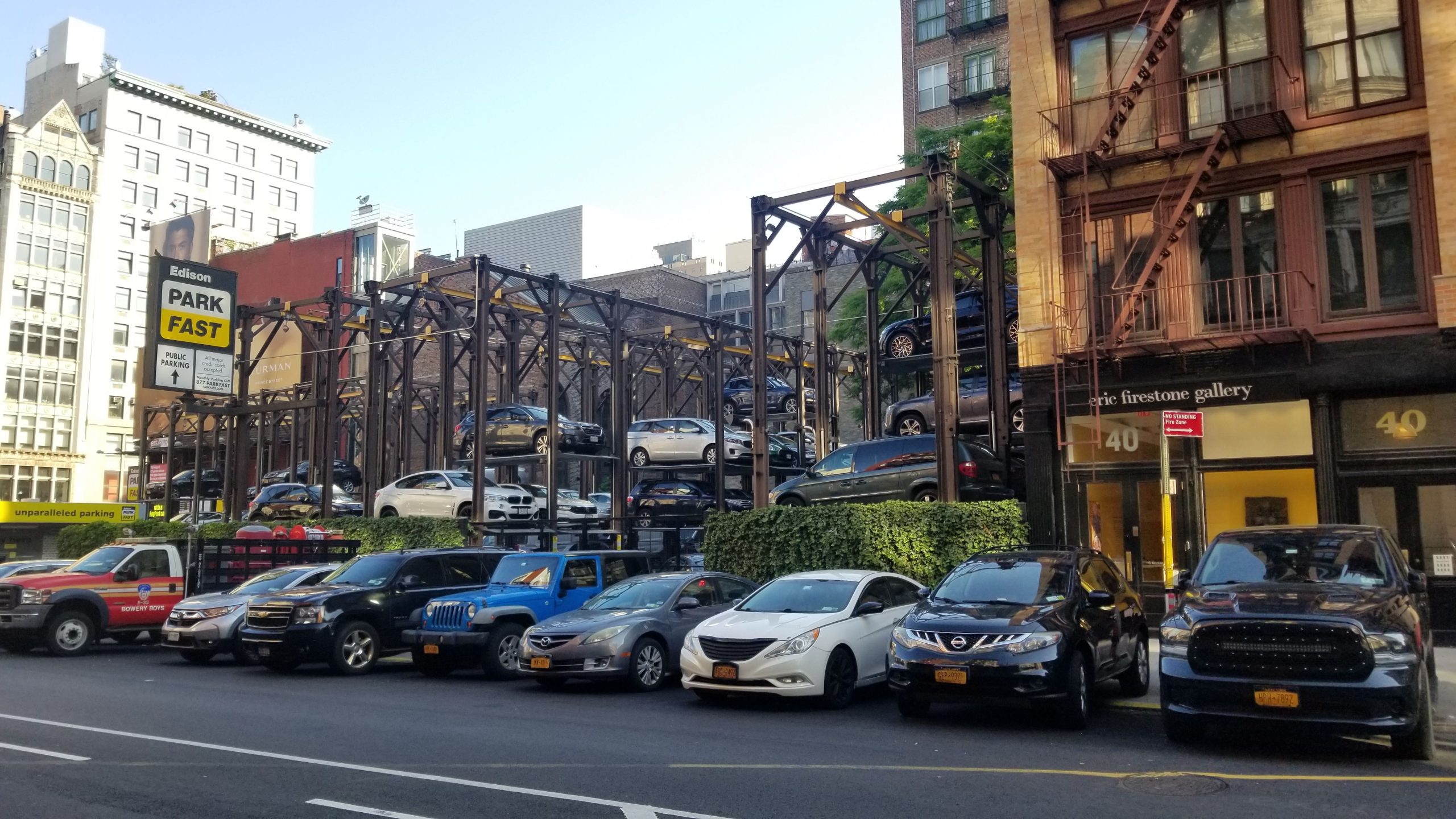
20220530 074821

Image Source: Gernot Wagner

With World War II in America’s rearview, cities grew and grew. Two other things grew in tandem the amount of cars and the need for places to park them in urban settings.

Governments introduced minimum parking requirements in the 1950s as car ownership skyrocketed. However, that’s all changing. Many cities are cutting these parking mandates to combat their affordable housing shortages.

Historically, zoning regulations required developers to build a certain number of parking spaces per the space of their buildings, leading some cities to have disproportionate numbers of available parking. Des Moines, Iowa for example has been found to have about seven parking spots for each resident while parking spaces in Jackson, Wyoming outnumber homes 27 to 1.

The Case for Eliminating Parking Requirements

Buffalo, New York, became the first major U.S. city in 2017 to eliminate parking minimums, which supporters say helps reduce carbon emissions, improve walkability, and opens space to build homes. Since then, more than 50 U.S. cities have now taken steps to remove parking minimums, including Minneapolis, Minnesota, Hartford, Connecticut, Santa Monica, California, Anchorage, Alaska, Raleigh, North Carolina, and Gainesville, Florida.

“We eliminated parking minimums to help reduce the cost of building housing, retail, and commercial spaces with the goal of building more walkable communities,” said Raleigh Mayor Mary-Ann Baldwin. “These mixed-use centers can share parking. We also hope to see this used more heavily along our Bus Rapid Transit corridors and near our transit center downtown.”

A study of 12 U.S. cities conducted by UCLA Urban Planning Professor Donald Shoup found that the average construction cost per parking space is $34,000.
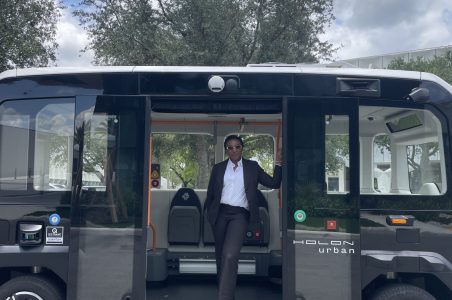

Image Source: AdobeStock

According to Raleigh’s Planning and Development Director Patrick Young, eliminating parking minimums not only provides a cost savings to apartment builders, it allows them to create more units. In talking further about the impact of this move, “Having enough housing to meet demand is the only way to manage or mitigate our housing crisis that we have in all of our major cities.”

Small businesses can also be hurt by archaic parking mandates. A coffee shop in Dallas delayed its opening in 2023 because the owner was required to build 18 parking spots. Dallas requires at least one parking space for every 100 square feet for restaurants, per the city code introduced in 1965.

“Parking mandates are arbitrary, outdated and they lead to restrictions on how our communities can develop,” said Parking
Reform Network President Tony Jordan. “A lot of the cost is really what isn’t there as a result of the parking. Your business district is more spread out, so there’s less opportunity for someone to go into one store and then another store.”

Drastic Times = Drastic Measures

Some cities such as Branson, Missouri, and Cambridge, Massachusetts have not only eliminated parking minimums but also adopted parking maximums to limit how much parking could be provided in city zoning districts. The pandemic’s acceleration of remote work has also supported the feasibility of reduced parking in cities with less people driving to a traditional office.

“All of our endeavors related to transportation planning have been trying to transition people to sustainable modes of transportation—more biking or walking and less people driving alone,” said Iram Farooq, Cambridge’s assistant city manager for community development. “We are relatively transit rich and parking is so expensive to build, so [parking mandates] were a particular concern for affordable housing. More space for humans to sleep is more important than space for cars to sleep.”

Asphalt traps heat and creates rainwater runoff, so parking construction also comes at a cost of the environment. A 2008 study from nonprofit Transportation Alternatives found that New York drivers created 366,000 excess vehicle miles driven per year and produced 22 tons of CO2 emissions per block just during their time spent “cruising” or searching for a parking spot on a 15-block area of the Upper West Side.

New York City is planning to introduce congestion pricing that would charge drivers a $15 toll to enter midtown Manhattan. Paris voters have approved to triple the parking fee for SUVs and other large cars as major cities around the world target cars in the fight against climate change. The German city of Koblenz is now charging parking fees based on the size of the vehicle.

“Parking minimum [bans], parking fees based on size of vehicle, and so on—it is simply what one might call a shift in norms that seems to be happening as we speak,” said Gernot Wagner, climate economist at Columbia Business School. “It is one of these socio-economic tipping points.”

Image Source: City of New York

The Challenge in Raleigh

In the mid-size Sun Belt city of Raleigh, Mayor Baldwin faces challenges from private real estate financers—lenders, bankers, and REITs—who don’t want to fund projects without the expectation of certain parking space totals. While developers are building commercial and residential units with less parking, the city hopes to one day see new projects open with no parking in areas and strong public transit options.

“I would say one of the big challenges is that financiers still require a certain amount of parking. We are hopeful that this will change as they see for themselves that large amounts of parking do not help build a community. Rather, it has negative impacts,” said Baldwin. “If we want to encourage people to take transit, ride their bikes, and walk, limited parking makes sense and is a better use of space.”

*This article is featured in Issue 4 of our digital publication. If you would like the full experience, you can read the enhanced version HERE

Latest News

FY26 Ceramics Bonsaid planters

Discovery

Combating Loneliness

  • February 5, 2026
Anywhere 3 Credit Anywhere Film + Jonathan Shahan

Discovery

How Cities Are Becoming the New Hollywood

  • January 22, 2026
AdobeStock 533209425

Discovery

Relocation Incentives: U.S. Cities & States That Will Pay You to Move There

  • January 22, 2026
PLMKR Web Features Issue09 AIImpact

Feature

AI’s Expanding Footprint

  • January 22, 2026
PLMKR Web Features Issue09 CoY2025

Spotlight

​​Community Playmaker’s 2025 Community of the Year: Hays, Kansas

  • January 22, 2026
PLMKR Web Features Issue09 ThirdPlace

Feature

Building the Third Place: How Modern Recreation Facilities Are Turning Visitors into Residents

  • January 22, 2026
PLMKR Web Features Issue09 ShowUMoney

Feature

Show U the Money

  • January 22, 2026
JFurbush1 2023 ors

Playmaker

Jamie Furbush Leads Frankenmuth, Michigan, to a Future Rooted in History

  • January 22, 2026
PLMKR Web Features Issue09 GameDay

Feature

Game Day Cities: How Communities Prepare for America’s Biggest Sporting Events

  • January 22, 2026
South Broad Stadium Progression Photos September 2025 HD 1 (1)

Discovery

Over the Rainbow

  • January 22, 2026

Share This Article

More Discoveries

SMTN Drone 2

From Vision to Validation: Why Feasibility is Vital for Sports, Recreation, and Event Venues

  • January 22, 2026
Arthur M Blank Hospital Ribbon Cutting with Kids

The Power of the Home Team

  • January 22, 2026
PLMKR CoY Hays27

​​Community Playmaker’s 2025 Community of the Year: Hays, Kansas

  • January 22, 2026
young elects 3

The “Young Electeds”: Generation Z Enters Local Government

  • January 16, 2026

SUBSCRIBE

Be among the first to read the latest Community Playmaker magazine!

WEEKLY NEWS & LATEST PLAYMAKER STORIES:

SUBSCRIBE & BE INSPIRED

playmaker logo 1
Facebook Twitter Instagram

Community Playmaker is a platform dedicated to providing solutions and ideas for visionary local government leaders, AKA ‘Playmakers’.

Facebook Linkedin Instagram
  • Privacy Policy

topics

  • Feature Stories
  • Community Spotlights
  • Playmakers
  • About
  • News
  • Magazine
  • Community of the Year

Magazine

  • January 2024
  • April 2024
  • July 2024
  • October 2024

Playmaker Events

  • Summits 2024

Connect with playmaker

  • Advertising
    [email protected]
  • Stories
    [email protected]
  • News
    [email protected]
  • General Inquiries
    [email protected]

© 2026 Community Playmaker. All Rights Reserved.

playmaker logo 1
Facebook Instagram Linkedin

Main Navigation

  • Articles
    • Feature Stories
    • Trends / Innovation
    • Human Interest
    • Quality of Life
    • Community Planning
    • Economic Development
    • Community Operations
    • News
  • Community Spotlights
  • Playmakers
  • Magazine
    • Current Issue
    • All Issues
    • Advertise
    • Subscribe
  • Events
    • Summit: SC
  • Articles
    • Feature Stories
    • Trends / Innovation
    • Human Interest
    • Quality of Life
    • Community Planning
    • Economic Development
    • Community Operations
    • News
  • Community Spotlights
  • Playmakers
  • Magazine
    • Current Issue
    • All Issues
    • Advertise
    • Subscribe
  • Events
    • Summit: SC

features

AI’s Expanding Footprint

Building the Third Place: How Modern Recreation Facilities Are Turning Visitors into Residents

Show U the Money

  • 3 Grants to Help Close the Digital Divide
  • Will The Pickleball Bubble Burst?
  • From Brownfield To Brewery: How Delaware Is Revitalizing Through Redevelopment

playmakers

Jamie Furbush Leads Frankenmuth, Michigan, to a Future Rooted in History

Standing Tall- Mayor Steven Reed, Montgomery, Alabama

Next Generation Mayor: Peter Urscheler of Phoenixville, Pennsylvania

  • Mayor Stan Hogeland – City Of Gardendale, AL
  • Glenn Weiss – Boynton Beach, FL

Community spotlight

​​Community Playmaker’s 2025 Community of the Year: Hays, Kansas

Boise Rising: Insights on its Decades-long Transformation

Dumfries, VA, Dreams Big

  • What Makes Naples The Pickleball Capital Of The World?
  • How One YouTuber Transformed A Small Town Through Quilting

Contact Us

  • Advertising
  • Stories
  • News
  • About

Latest news

VIEW ALL
PLMKR Web Features Issue09 AIImpact

Feature

AI’s Expanding Footprint

  • January 22, 2026
PLMKR Web Features Issue09 CoY2025

Spotlight

​​Community Playmaker’s 2025 Community of the Year: Hays, Kansas

  • January 22, 2026
PLMKR Web Features Issue09 ThirdPlace

Feature

Building the Third Place: How Modern Recreation Facilities Are Turning Visitors into Residents

  • January 22, 2026
PLMKR Web Features Issue09 ShowUMoney

Feature

Show U the Money

  • January 22, 2026

Subscribe

Stay In The Know

PLAYMAKER Community of the Year nomination