Skip to content
playmaker logo 1
Facebook Linkedin Instagram
SUBSCRIBE
  • Articles
    • Feature Stories
    • Trends / Innovation
    • Human Interest
    • Quality of Life
    • Community Planning
    • Economic Development
    • Community Operations
    • News
  • Community Spotlights
  • Playmakers
  • Magazine
    • Past Issues
    • Current Issue
  • Articles
    • Feature Stories
    • Trends / Innovation
    • Human Interest
    • Quality of Life
    • Community Planning
    • Economic Development
    • Community Operations
    • News
  • Community Spotlights
  • Playmakers
  • Magazine
    • Past Issues
    • Current Issue
Facebook Twitter Instagram
  • Community Operations, Quality of Life

The Rise of Kino Sports Complex

How the Departure of Major League Baseball in Tucson Became the Catalyst for One Nation’s Premier Youth Sports Venues

By

Michael LoRé
playmaker favicon
April 15, 2025 12:00PM EST
Kino Sports Complex

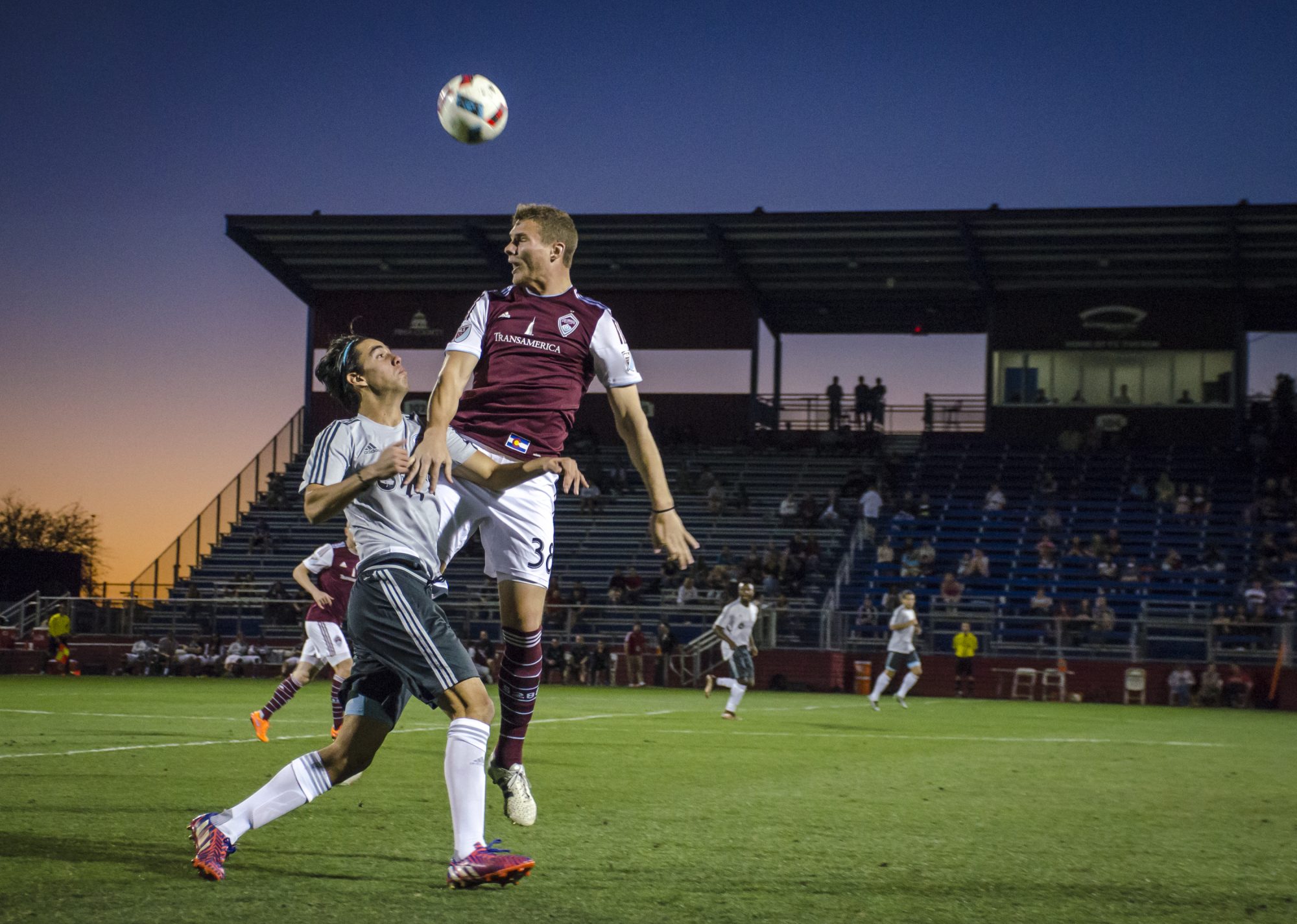
Image Source: Sporting Kansas City II on Flickr

For more than a decade, the Colorado Rockies, Arizona Diamondbacks, and Chicago White Sox called Tucson their home away from home.

The three Major League Baseball organizations would flock to southern Arizona for spring training as members of the Cactus League—the Rockies and Diamondbacks, each since their inception in 1993 and 1998, respectively, and the White Sox since relocating from Sarasota, Florida in 1998.

But with the other 12 Cactus League teams competing in a two-to-three-hour bus ride away in the Greater Phoenix Area, the White Sox bought out their lease in Tucson for $5 million in 2008 and headed northwest on I-10 to Glendale. 

Their relocation started an exodus as the Rockies and Diamondbacks had clauses in their leases that enabled them to leave the city unless at least three MLB teams called Tucson home for spring training. Lacking a new third organization and following suit, the Rockies and Diamondbacks told city and county officials the following year they planned to relocate their respective offseason operations from Hi Corbett Field and Tucson Electric Park after 2010.

While Major League Baseball’s departure from Tucson may have initially caught Pima County officials looking, they stepped out of the box, readjusted, and proceeded to hit one out of the park.

“From my observation, it was an uncertain time when spring training baseball departed,” said Carmine Debonis, deputy county administrator of Pima County. “It took the wind out of our sails. People weren’t confident that the facility would be able to be repurposed and put to use at the level it is today.”

“ … Proudly, today, that facility is in use on a year-round basis with the exception of major holidays. The level of activity and the scale of usage far exceeds what was there in spring training. Not to say that we don’t miss having Major League Baseball spring training in the community, but given the circumstances, we had to pivot and have done that quite successfully.”

Image Source: Pima County Communications

The Kino Sports Complex Story

The current Kino Sports Complex can trace its roots to a plot of land at the intersection of E. Ajo Way and S. Country Club Rd., where a community center located within the Sam Lena Recreation Area opened in 1996.

Two years later, the $38 million Tucson Electric Park opened across the road and became home to the Diamondbacks and the White Sox, while the Rockies set up shop at Hi Corbett Field across town. Professional baseball was enjoyed in Tucson for a decade before the White Sox sought to settle elsewhere. Following the departure of spring training in Tucson and the end of the venue naming rights agreement with Tucson Electric Power, the 11,000-seat ballpark was renamed Kino Veterans Memorial Stadium in 2011.

Not wanting to be reliant on a single sport as it was with spring training baseball, Pima County officials met with consultants and developers to strategize the best way to transform, expand, and monetize the existing facilities and venues.

The Kino Sports Complex Transformation

Investing millions of dollars since 2012, the Kino Sports Complex has blossomed from a single-sport facility into a multi-sport and multi-use complex. Spanning 300 acres, the entire complex can be divided into three areas: the Main Complex, the North Complex, and the South Complex. 

Anchored by Veterans Memorial Stadium, the Main Complex features seven full-sized regulation baseball fields (four with lights), two half-sized (infield-only) baseball fields, 33 pitching mounds, two lighted soccer fields, full-service clubhouses with locker rooms and weight rooms, and approximately 3,500 free parking spaces.

As the first expansion of the Kino Sports Complex in 2013, the North Complex boasts eight soccer fields (two regulation sized with lights and permanent seating), two lighted softball fields, two full-service clubhouses, an outdoor pavilion, indoor meeting space for 25 to 1,000 people, snack bar/concession stands, and a portion of the 137-mile Chuck Huckelberry Loop.

The $31.2 million Phase 1 expansion project of the 167-acre South Complex introduced 12 lighted natural grass long fields for rugby, football, soccer, and lacrosse, a 20-course pickleball facility, concessions, conference room, ticket office, and free parking for more than 700 vehicles when it opened in January 2020.

With fields, courts, facilities, and parking lots aplenty, the Kino Sports Complex hosts regular recurring events across baseball, softball, soccer, lacrosse, football, ultimate frisbee, rugby, dog agility, concerts, gem shows, Australian rules football, bike races, auto races, autonomous vehicle testing, CDL testing, microchip clinics, job fairs, beer festivals, baby showers, birthday parties, and corporate/team building events.

“Literally anything that you can think of, we can find a space to make it work,” said Sarah Horvath, Kino Sports Complex and Stadium district director. “… We have that type of flexibility. It’s just a phenomenal resource for our community.”

Hardly resting on their laurels, Pima County officials have their sights set on the next phase of the area’s development with the Mosaic Quarter, a privately-owned 90-acre facility adjacent to the Kino Sports Complex on the north side of I-10. Phase 1, which includes a three-rink iceplex and fieldhouse, is expected to generate $8.3 billion of new local spending in addition to $917.7 million in tax revenue for the State of Arizona, the City of Tucson, and the Regional Transportation Authority.   

“It’s really been exciting to see [the area] become used in an extraordinary way by the community, by others and now become an economic driver for the entire community rather than just empty land,” Pima County Administrator Jan Lesher said.

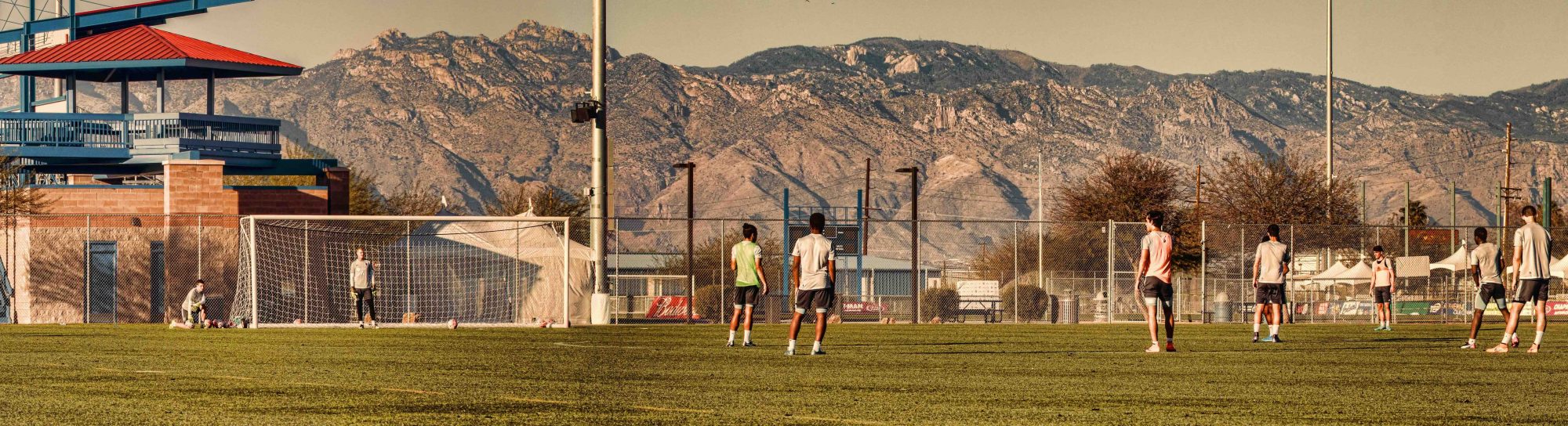
Image Source: Sporting Kansas City II on Flickr

Funding and the Impact of Kino Sports Complex

Funding the renovations, additions, and expansion has been as multifaceted as the Kino Sports Complex itself.

Residential property taxes have been used to help pay for public-use facilities and amenities in and around the Kino Sports Complex including the Sam Lena Recreation Area, Willie Blake Community Park, and the complex’s aquatic center. Phase 1 of the South Complex addition was funded by Kino Stadium District Tax Revenue funds, which include car rental surcharges and hotel bed taxes. Additional revenue from renting the facilities offers another pot to pull from for funding. Phase 1 of the $425 million Mosaic Quarter is being funded by a public partnership.

Being utilized by community residents as well as youth and amateur sports tourism visitors, the Kino Sports Complex’s impact on Tucson and Pima County is immeasurable, and only growing as the county continues to invest in its facilities and amenities. Already home to FC Tucson of USL League Two, Kino will host World Baseball Classic Qualifiers between Brazil, Germany, China, and Colombia, spurring a $400,000 investment for a complete resodding and releveling of the field at Veterans Memorial Stadium.

Even though Tucson lost three MLB spring training teams each February and March by 2011, in less than a decade the Kino Sports Complex has grown and evolved into a year-round, multi-purpose sports, entertainment, and events complex serving as the vibrant anchor for the community.

That doesn’t mean Tucson wouldn’t welcome back professional baseball.

“We would love to still be providing the space for spring training today,” Lesher said. “A lot went on to try to encourage the teams to stay in this neck of the woods. I think we would be doing it today but when you have an area like the Phoenix metro area where we lost those teams to, I think it’s a testament to Carmine, my predecessor (Chuck Huckelberry), and others who saw the vision to pivot it.”

“There was a lot of lamenting the loss of the teams, but it’s become the rebirth of that entire part of the community.”

Latest News

AdobeStock 188934763

Discovery

How AI Is Helping Cities Beat the Heat

  • August 26, 2026
056A2129 3

Spotlight

Port St. Lucie, FL: A Jobs Corridor Built 20 Years Ahead of Schedule

  • August 25, 2026
PLMKR Web Features Issue10 RegulateAi

Feature

The Race to Regulate

  • August 6, 2026
RLB 1661 3

Discovery

Food Halls And Public Markets Keep Cities Satisfied

  • August 6, 2026
sports complex opening day 2019 199

Discovery

Skin In The Game

  • August 6, 2026
PLMKR Web Features Issue10 ComeOneComeAll

Discovery

Come One Come All

  • August 6, 2026
PLMKR Web Features Issue10 Food

Feature

Reimagining Food Access from the Ground Up

  • August 6, 2026
AdobeStock 452426127 Editorial Use Only

Discovery

It’s Getting Hotter In Here

  • August 6, 2026
MayorJohnHorhn (10)

Playmaker

Mayor John Horhn: A New Chapter For A City Ready To Rise

  • August 6, 2026
PLMKR Web Features Issue10 Decade

Feature

The Playmaker Decade

  • August 6, 2026

Share This Article

More Discoveries

RushmoreFireworks07 03 20cc0304

The Economic Impact of America 250 Celebrations on Cities

  • July 1, 2026
aerial pic

The New Job of Public Parks: Climate Defense, Connectivity, and Community Growth

  • June 24, 2026
AdobeStock 191593183

Teen Takeovers 2026: What Cities Are Doing and What Yours Should Do Before It’s Too Late

  • June 18, 2026
AdobeStock 505018289

Suburbs Go for Gold: World Cup Windfall Spills Beyond Stadium Cities

  • June 10, 2026

SUBSCRIBE

Be among the first to read the latest Community Playmaker magazine!

WEEKLY NEWS & LATEST PLAYMAKER STORIES:

SUBSCRIBE & BE INSPIRED

playmaker logo 1
Facebook Twitter Instagram

Community Playmaker is a platform dedicated to providing solutions and ideas for visionary local government leaders, AKA ‘Playmakers’.

Facebook Linkedin Instagram

topics

  • Feature Stories
  • Community Spotlights
  • Playmakers
  • About
  • News
  • Magazine
  • Community of the Year

Magazine

  • August 2026
  • January 2026
  • July 2025
  • January 2025
  • October 2024

Playmaker Events

  • Summits 2024

Connect with playmaker

  • Advertising
    sales@communityplaymaker.com
  • Stories
    chiefeditor@communityplaymaker.com
  • News
    news@communityplaymaker.com
  • General Inquiries
    info@communityplaymaker.com

© 2026 Community Playmaker. All Rights Reserved.

  • Privacy Policy
  • | Terms of Service
  • | Disclaimer
  • | Cookie Policy
playmaker logo 1
Facebook Instagram Linkedin

Main Navigation

  • Articles
    • Feature Stories
    • Trends / Innovation
    • Human Interest
    • Quality of Life
    • Community Planning
    • Economic Development
    • Community Operations
    • News
  • Community Spotlights
  • Playmakers
  • Magazine
    • Past Issues
    • Current Issue
  • Articles
    • Feature Stories
    • Trends / Innovation
    • Human Interest
    • Quality of Life
    • Community Planning
    • Economic Development
    • Community Operations
    • News
  • Community Spotlights
  • Playmakers
  • Magazine
    • Past Issues
    • Current Issue

features

The Race to Regulate

Reimagining Food Access from the Ground Up

The Playmaker Decade

  • 3 Grants to Help Close the Digital Divide
  • Will The Pickleball Bubble Burst?
  • From Brownfield To Brewery: How Delaware Is Revitalizing Through Redevelopment

playmakers

Mayor John Horhn: A New Chapter For A City Ready To Rise

North Miami City Manager Theresa Therilus Turns Complexity Into Community Outcomes

Jamie Furbush Leads Frankenmuth, Michigan, to a Future Rooted in History

  • Mayor Stan Hogeland – City Of Gardendale, AL
  • Glenn Weiss – Boynton Beach, FL

Community spotlight

Port St. Lucie, FL: A Jobs Corridor Built 20 Years Ahead of Schedule

Simply Cin-sational

Irvine, CA: A City with a Plan

  • What Makes Naples The Pickleball Capital Of The World?
  • How One YouTuber Transformed A Small Town Through Quilting

Contact Us

  • Advertising
  • Stories
  • News
  • About

Latest news

VIEW ALL
056A2129 3

Spotlight

Port St. Lucie, FL: A Jobs Corridor Built 20 Years Ahead of Schedule

  • August 25, 2026
PLMKR Web Features Issue10 RegulateAi

Feature

The Race to Regulate

  • August 6, 2026
PLMKR Web Features Issue10 Food

Feature

Reimagining Food Access from the Ground Up

  • August 6, 2026
MayorJohnHorhn (10)

Playmaker

Mayor John Horhn: A New Chapter For A City Ready To Rise

  • August 6, 2026

Subscribe

Stay In The Know

PLYMKR COY 2026 WebsiteHeader