Skip to content
playmaker logo 1
Facebook Linkedin Instagram
SUBSCRIBE
  • Articles
    • Feature Stories
    • Trends / Innovation
    • Human Interest
    • Quality of Life
    • Community Planning
    • Economic Development
    • Community Operations
    • News
  • Community Spotlights
  • Playmakers
  • Magazine
    • Current Issue
    • All Issues
    • Advertise
    • Subscribe
  • Events
    • Summit: SC
  • Articles
    • Feature Stories
    • Trends / Innovation
    • Human Interest
    • Quality of Life
    • Community Planning
    • Economic Development
    • Community Operations
    • News
  • Community Spotlights
  • Playmakers
  • Magazine
    • Current Issue
    • All Issues
    • Advertise
    • Subscribe
  • Events
    • Summit: SC
Facebook Twitter Instagram
  • Community Operations, Community Planning

How Cities Are Becoming the New Hollywood

By

Suzanne Wentley
playmaker favicon
January 22, 2026 8:24PM EST
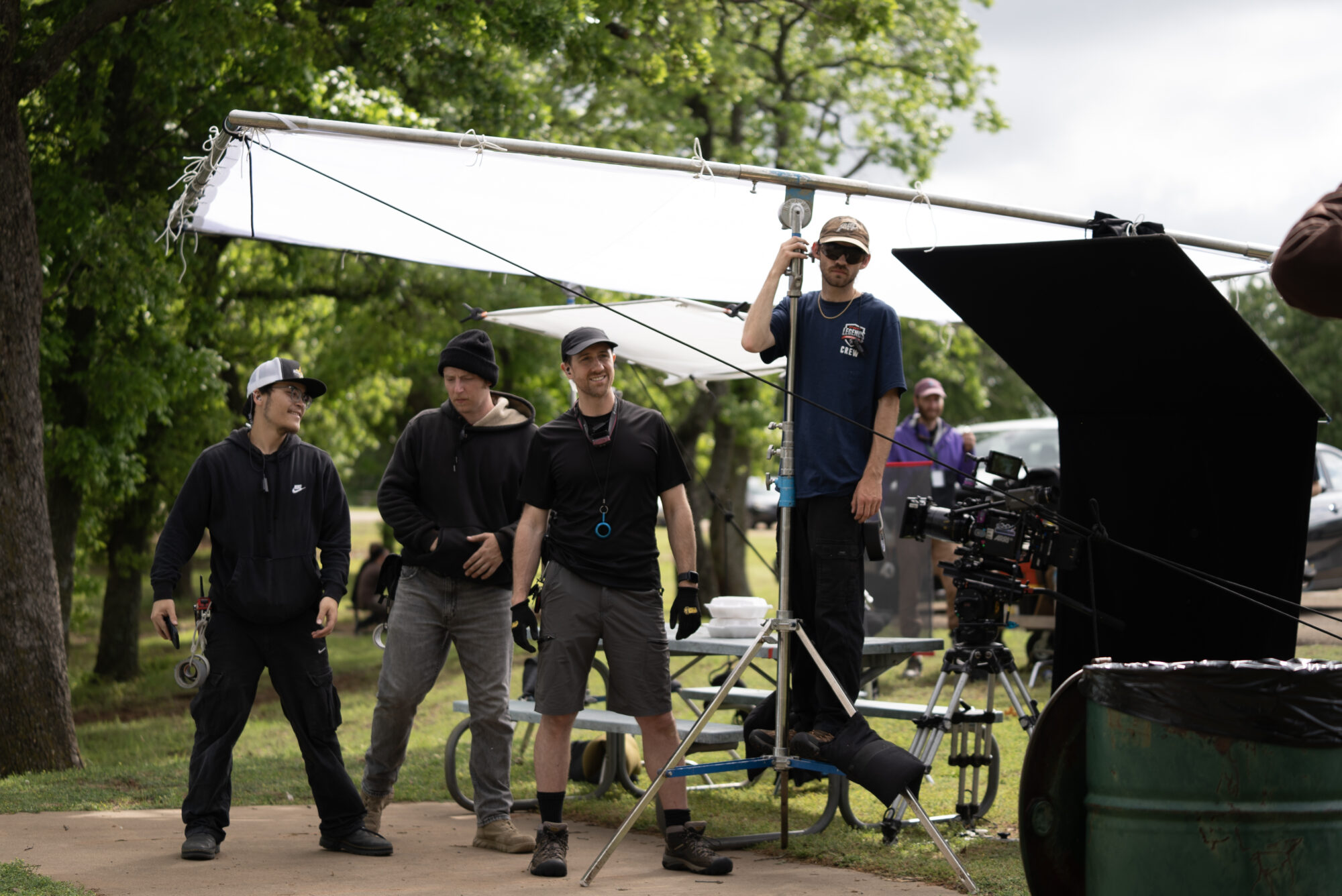
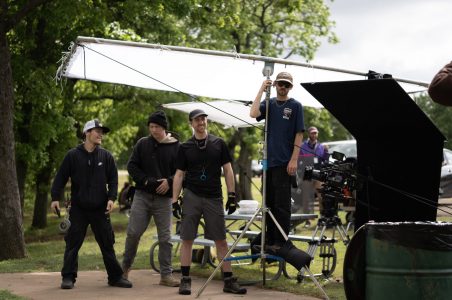
Anywhere 3 Credit Anywhere Film + Jonathan Shahan

Image Source: Oklahoma Film + Music Office

When producers of the movie Twisters were scouting out filming locations, small Oklahoma towns like Burbank, El Reno, and Okarche weren’t at the top of the list. Yet, in the end, millions of dollars’ worth of revenue were funneled into these communities.

 How did they do it?

 “Georgia was offering a better incentive than Oklahoma,” explained Jeanette Stanton, Director of Oklahoma’s Film and Music Office. “But creatively, the story was told better in Oklahoma. We had to work with Universal as to why we made the most sense. You have to sell your state.”

 Cities throughout the nation are vying to become the next Hollywood. Attracting film and television producers can pave the way for an economic development pathway that connects with local industries ranging from hospitality to catering to secondhand shops.

 In Oklahoma alone, filming streaming series and movies, including Twisters, has added up to $500 million in revenue since 2021, Stanton said. As the state — and, separately, local cities — improve their incentive packages, they expect to become even more competitive in catching the attention of film and television producers.

Image Source: Oklahoma Film + Music Office

 But as with Twisters, financial incentives are only part of the picture. Local municipalities and state film offices alike must have an in-depth understanding of the needs of the industry, support experienced and motivated crew members, and position themselves effectively to get noticed.

 “A lot of communities have seen the economic benefit with their hotels, vendors, and businesses,” Stanton said. “And there’s the notoriety of seeing your town on the silver screen. They want these productions in their towns.”

Setting Up Incentives

 More than 40 states nationwide, plus even more locations globally, have incentives in place to attract the film and television industry. These range from tax breaks to cash rebates, and they play a powerful role in bringing productions to town, said Andrew Jara, the film liaison for the nonprofit Film Las Cruces in New Mexico.

 “You get [up to] 40 percent (back) of any dollars spent in New Mexico,” he said. “The incentives definitely help to bring people here. This last year, we haven’t gone a month without having a production.”

 In New Mexico, producers start with a 25 percent state rebate. If they agree to film 60 miles outside the big cities, they can qualify for an extra 10 percent. And if they shoot in a qualified filming facility like a ranch or studio, they’ll get an extra 5 percent back. For the multi-million-dollar budgets, that adds up.

 Last year, that investment brought $10 million into Las Cruces alone, Jara said.

 Stanton agreed that incentive packages are “critical to the business development and recruitment of film.”

 For Twisters, it helped that part of the film could be produced in Oklahoma City. There, local elected officials approved a 5-10 percent cash-back incentive in addition to the 20 percent state-sponsored cash rebate for qualified expenditures.

 To receive the rebates, producers must complete a rigorous application to pre-qualify their estimated spending on labor, goods, and services. Once the shoot is wrapped, an independent CPA will review the expenditures and complete a report. The film office reviews the report and a final version of the application before working with the state tax commission to approve a payout.

 “This investment in the state helps local businesses,” she said. “We have a long list of notable mainstream productions and a lot of small productions, too. Films under $3 million also provide great impact and hire local crew.”

 Knowing the Industry

 While the economic piece is important, states and municipalities also must have a clear understanding of what’s necessary to make a film or television production run smoothly. In Las Cruces, there are two schools that train crew members. This helps producers save money since they don’t have to bring in crew from Albuquerque or other cities.

 “We constantly hear from producers that the Las Cruces crew is great to work with,” Jara said.

 That’s just the beginning. Jara constantly coordinates with different vendors and city departments. For example, a recent movie production had a car explosion in the script. That required conversations with police, fire, and emergency personnel.

 Another movie hired a local Mexican caterer to provide meals for the set. But after the second week of enchiladas for two meals a day, Jara was called in to gently encourage the caterer to mix up the menu. When a production needed a laundromat at 3 a.m., it was another call. Extra lumber and building materials from a local warehouse? More port-o-potties? A locksmith? A priest? Jara was there to pick up the phone.

 “It’s a lot of community input and reaching out,” he said. “We want to keep the productions and the municipalities happy. It helps us all.”

 In Oklahoma, a film-friendly Community certification program is offered. This ensures there is a local film liaison who can help with whatever is needed.

 “Not everyone has a film background. We provide an education,” she said. “Our office has a really great relationship with cities throughout Oklahoma. We want to be good partners to them and help them understand what will happen when a production comes to their town.”

Image Source: Oklahoma Film + Music Office

Preparing for the Pitch

 Jara said he has a large list of local vendors to share with producers interested in filming in Las Cruces. But he’s also got something else: an average of 300 days of sunshine every year.

 “That’s a big advantage of production,” he said. “But in Portland, for example, it’s rainy, and they’re setting movies there. Certain landscapes or snow, we can’t provide that. It’s all about finding what is beneficial about your community.”

 That’s where crafting your pitch comes in. In Las Cruces, Jara often highlights the diverse landscape of the nearby desert of White Sands National Park, the rocky Organ Mountains-Desert Peaks National Monument, and the green farmland of Hatch, New Mexico. Las Cruces has played California, Asia, and Texas backdrops on the screen, Jara said.

 It’s the same with Oklahoma. It’s not as flat as many think, and the state has the most bodies of water of any state in the nation. The Art Deco buildings of Oklahoma City have even stood in for New York City shots, Stanton said.

 Film liaisons, whether they work for nonprofits contracted with local cities, in departments within local governments, or within state offices, can search the IMDbPro database to connect with scouting agents in pre-production.

 To be successful with these cold calls, they need local municipalities to have up-to-date location photos, a clear permitting process, a list of available resources, and a willingness to make a production work.

 “Sometimes, a location scout will look online to find looks (locations) in a town, and they’ll make a connection with the community,” Stanton said. “You may have one hour to talk about your assets, the hotels, the restaurants that can stay open late, and the vacant property for a film production office.”

 After all, it’s a competitive industry with new incentives being launched. Wisconsin, for example, recently announced a potential 30 percent tax credit for qualified films starting in 2026.

 The question is: Is your community ready for prime time?

Latest News

AdobeStock 266588524

Discovery

Trails, Tournaments, and Tax Revenue: How Adventure Sports Are Energizing Small Towns

  • February 26, 2026
TT Official Photo July 2025

Playmaker

North Miami City Manager Theresa Therilus Turns Complexity Into Community Outcomes

  • February 17, 2026
All Wheel Park Opening 4704

Discovery

Where Play Meets Place: How Outdoor Recreation Sports Are Shaping the Next Generation of Cities

  • February 6, 2026
FY26 Ceramics Bonsaid planters

Discovery

Combating Loneliness

  • February 5, 2026
Anywhere 3 Credit Anywhere Film + Jonathan Shahan

Discovery

How Cities Are Becoming the New Hollywood

  • January 22, 2026
AdobeStock 533209425

Discovery

Relocation Incentives: U.S. Cities & States That Will Pay You to Move There

  • January 22, 2026
PLMKR Web Features Issue09 AIImpact

Feature

AI’s Expanding Footprint

  • January 22, 2026
PLMKR Web Features Issue09 CoY2025

Spotlight

​​Community Playmaker’s 2025 Community of the Year: Hays, Kansas

  • January 22, 2026
PLMKR Web Features Issue09 ThirdPlace

Feature

Building the Third Place: How Modern Recreation Facilities Are Turning Visitors into Residents

  • January 22, 2026
PLMKR Web Features Issue09 ShowUMoney

Feature

Show U the Money

  • January 22, 2026

Share This Article

More Discoveries

South Broad Stadium Progression Photos September 2025 HD 1 (1)

Over the Rainbow

  • January 22, 2026
SMTN Drone 2

From Vision to Validation: Why Feasibility is Vital for Sports, Recreation, and Event Venues

  • January 22, 2026
Arthur M Blank Hospital Ribbon Cutting with Kids

The Power of the Home Team

  • January 22, 2026
PLMKR CoY Hays27

​​Community Playmaker’s 2025 Community of the Year: Hays, Kansas

  • January 22, 2026

SUBSCRIBE

Be among the first to read the latest Community Playmaker magazine!

WEEKLY NEWS & LATEST PLAYMAKER STORIES:

SUBSCRIBE & BE INSPIRED

playmaker logo 1
Facebook Twitter Instagram

Community Playmaker is a platform dedicated to providing solutions and ideas for visionary local government leaders, AKA ‘Playmakers’.

Facebook Linkedin Instagram
  • Privacy Policy

topics

  • Feature Stories
  • Community Spotlights
  • Playmakers
  • About
  • News
  • Magazine
  • Community of the Year

Magazine

  • January 2024
  • April 2024
  • July 2024
  • October 2024

Playmaker Events

  • Summits 2024

Connect with playmaker

  • Advertising
    [email protected]
  • Stories
    [email protected]
  • News
    [email protected]
  • General Inquiries
    [email protected]

© 2026 Community Playmaker. All Rights Reserved.

playmaker logo 1
Facebook Instagram Linkedin

Main Navigation

  • Articles
    • Feature Stories
    • Trends / Innovation
    • Human Interest
    • Quality of Life
    • Community Planning
    • Economic Development
    • Community Operations
    • News
  • Community Spotlights
  • Playmakers
  • Magazine
    • Current Issue
    • All Issues
    • Advertise
    • Subscribe
  • Events
    • Summit: SC
  • Articles
    • Feature Stories
    • Trends / Innovation
    • Human Interest
    • Quality of Life
    • Community Planning
    • Economic Development
    • Community Operations
    • News
  • Community Spotlights
  • Playmakers
  • Magazine
    • Current Issue
    • All Issues
    • Advertise
    • Subscribe
  • Events
    • Summit: SC

features

AI’s Expanding Footprint

Building the Third Place: How Modern Recreation Facilities Are Turning Visitors into Residents

Show U the Money

  • 3 Grants to Help Close the Digital Divide
  • Will The Pickleball Bubble Burst?
  • From Brownfield To Brewery: How Delaware Is Revitalizing Through Redevelopment

playmakers

North Miami City Manager Theresa Therilus Turns Complexity Into Community Outcomes

Jamie Furbush Leads Frankenmuth, Michigan, to a Future Rooted in History

Standing Tall- Mayor Steven Reed, Montgomery, Alabama

  • Mayor Stan Hogeland – City Of Gardendale, AL
  • Glenn Weiss – Boynton Beach, FL

Community spotlight

​​Community Playmaker’s 2025 Community of the Year: Hays, Kansas

Boise Rising: Insights on its Decades-long Transformation

Dumfries, VA, Dreams Big

  • What Makes Naples The Pickleball Capital Of The World?
  • How One YouTuber Transformed A Small Town Through Quilting

Contact Us

  • Advertising
  • Stories
  • News
  • About

Latest news

VIEW ALL
TT Official Photo July 2025

Playmaker

North Miami City Manager Theresa Therilus Turns Complexity Into Community Outcomes

  • February 17, 2026
PLMKR Web Features Issue09 AIImpact

Feature

AI’s Expanding Footprint

  • January 22, 2026
PLMKR Web Features Issue09 CoY2025

Spotlight

​​Community Playmaker’s 2025 Community of the Year: Hays, Kansas

  • January 22, 2026
PLMKR Web Features Issue09 ThirdPlace

Feature

Building the Third Place: How Modern Recreation Facilities Are Turning Visitors into Residents

  • January 22, 2026

Subscribe

Stay In The Know

PLAYMAKER Community of the Year nomination