By
Image Source: Whitney Jackson Photography
Tucked within a picturesque valley below the iconic Flatirons, Boulder is a Colorado city dubbed the “community of endless adventure.”
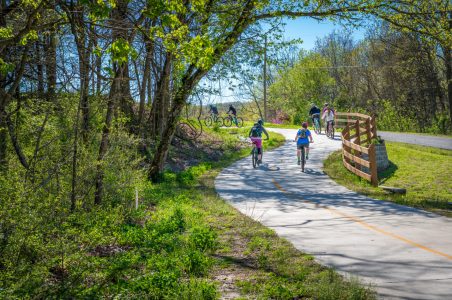
Boasting more than 46,640 acres of open space, 155 miles of open space trails, and more than 300 miles of bike and multi-use paths, the moniker is certainly justified. Boulder residents and visitors are able to enjoy this outdoor oasis year-round thanks to the region’s 300 days of sunshine annually.
These outdoor recreation spaces and amenities aren’t simply a nice-to-have for Boulder’s 107,000 residents and the 1.8 million annual visitors to Boulder Mountain Parks’ core area – they’re the city’s lifeblood.
Image Source: Jeff Haley/Boulder, CO
These outdoor recreation spaces and amenities aren’t simply a nice-to-have for Boulder’s 107,000 residents and the 1.8 million annual visitors to Boulder Mountain Parks’ core area – they’re the city’s lifeblood.
“We look at it as not an amenity, but as a way of life and foundational to our community,” said Jeff Haley, City of Boulder Open Space and Mountain Parks Deputy Director. “What we see as our parks, trails, and open spaces it’s more of a health benefit that supports physical health, mental health, and wellbeing.”
While Boulder traces its founding to the Pikes Peak Gold Rush in 1858, which sent an estimated 100,000 prospectors west to the Rocky Mountains in search of securing their fortunes, the city, named for the large number of boulders found in nearby streams, wasn’t just rich in gold and big rocks.
The peaks, valleys, mountains, streams, trails, and greenery that serve as Boulder’s blueprint have been protected by Open Space and Mountain Parks (OSMP) since preservation began in 1898 with the purchase of alfalfa fields and apple orchards of Bachelder Ranch on the present site of Chautauqua Park.
Through sales tax revenues, bond issues, private donations, and development dedications, the Open Space and Mountain Parks Department preserves and protects the natural environment and land resources that characterize the community. All acquisitions are approved by the Open Space Board of Trustees and City Council, with opportunity for public input.
“When you look at our city budget and a lot of the resources we have through taxpayer funding, grants, and other things, a lot of that goes towards parks and open spaces, trails, etc., because it’s a community priority from our residents and visitors to our leaders and elected officials,” Haley said. “Outdoor recreation is just as important and prioritized as public safety, transportation, and those sorts of things.”
Despite federal funding and budgets being tightened under President Trump, Boulder and other communities remain committed to ensuring residents and visitors can access the physical, mental, emotional, and communal benefits of outdoor spaces, sports, and recreation.
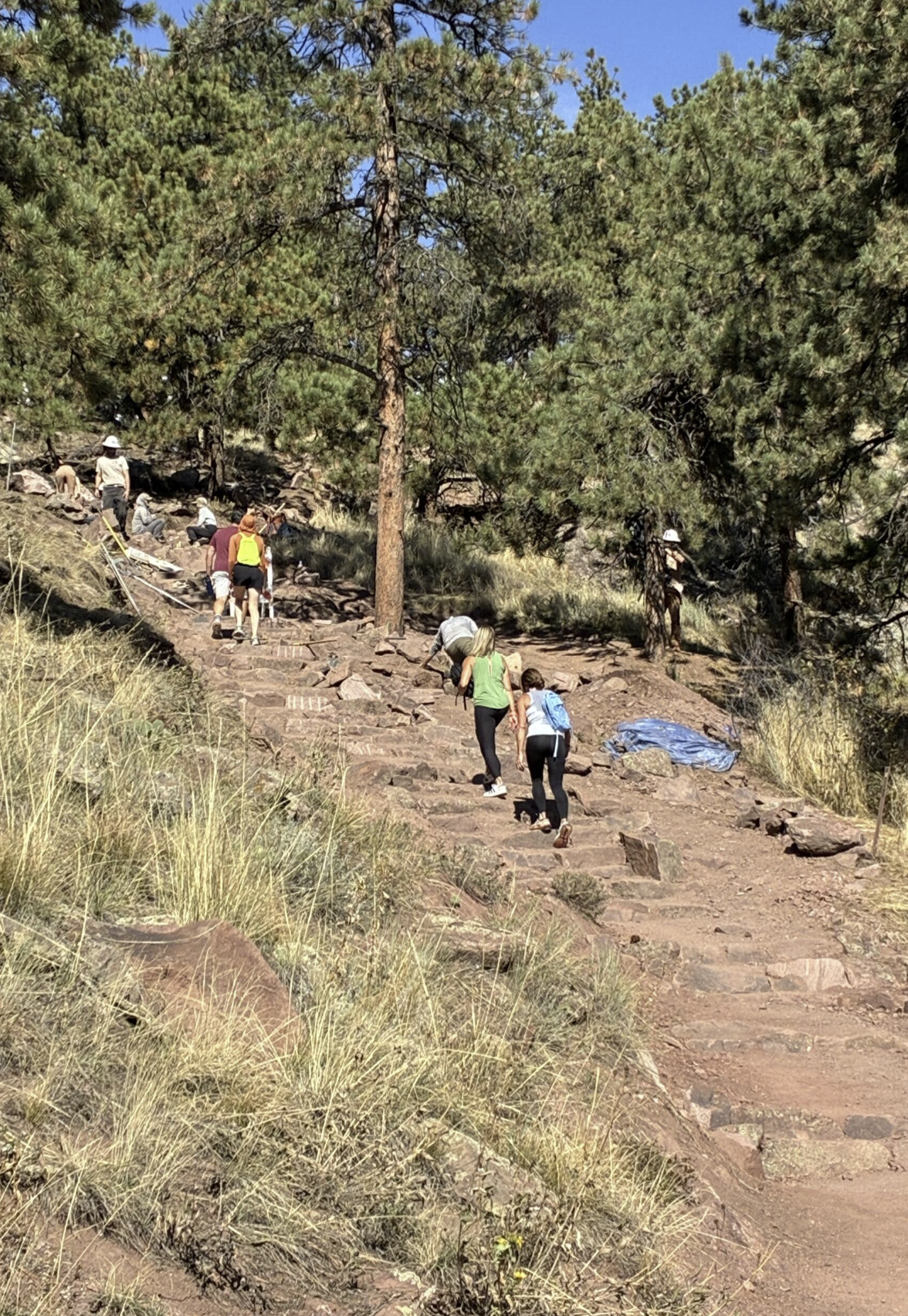
Case in point: the refurbishment of Mount Sanitas. A popular and accessible trail off of Mapleton Ave. and 4th St., this 3.2-mile round-trip trek is “loved to death” by more than 375,000 annual visitors. Since June, the OSMP is in the process of investing approximately $2 million into Mount Sanitas over the next three years for new trail development, restoration, maintenance, and the building of access areas and various infrastructure, including benches, shelters, and trailheads.
With outdoor spaces like Mount Sanitas being a priority, not an afterthought in communities like Boulder, officials and residents have joined forces to raise the necessary funding. The city received a $1.1 million grant from the Land and Water Conservation Fund, which it’s matching with local funds. Boulder has raised $30,000 to $40,000 in community donations so far to support the project.
“It doesn’t take a lot if you think about those places in your community that aren’t paved or have some natural value that you can turn into a park or trail,” Haley said. “Try to tap into any resources you have. All it takes is a little bit of vision, rolling up the sleeves, and seeing what you can do for your community.”
Image Source: Whitney Jackson Photography
More than 300 miles west of Boulder sits Vernal, Utah. Home to approximately 11,000 residents, Vernal serves as a gateway to the nearby Dinosaur National Monument, Flaming Gorge, and Uinta Mountain Range.
Seeking to revitalize and reinvent the city following the COVID-19 pandemic, officials introduced the Vernal Downtown Plan in 2021 to modernize existing utility services and create a more inviting and accessible environment. After receiving $1.2 million from the federal Community Project Funding in March 2022, the refurbishment began.
Not only has the project received praise from Utah Governor Spencer Cox, as well as being named a finalist for 2025 Mountain States Best Projects by the Engineering News-Record, but it’s also improved the quality of life and boosted community pride for residents.
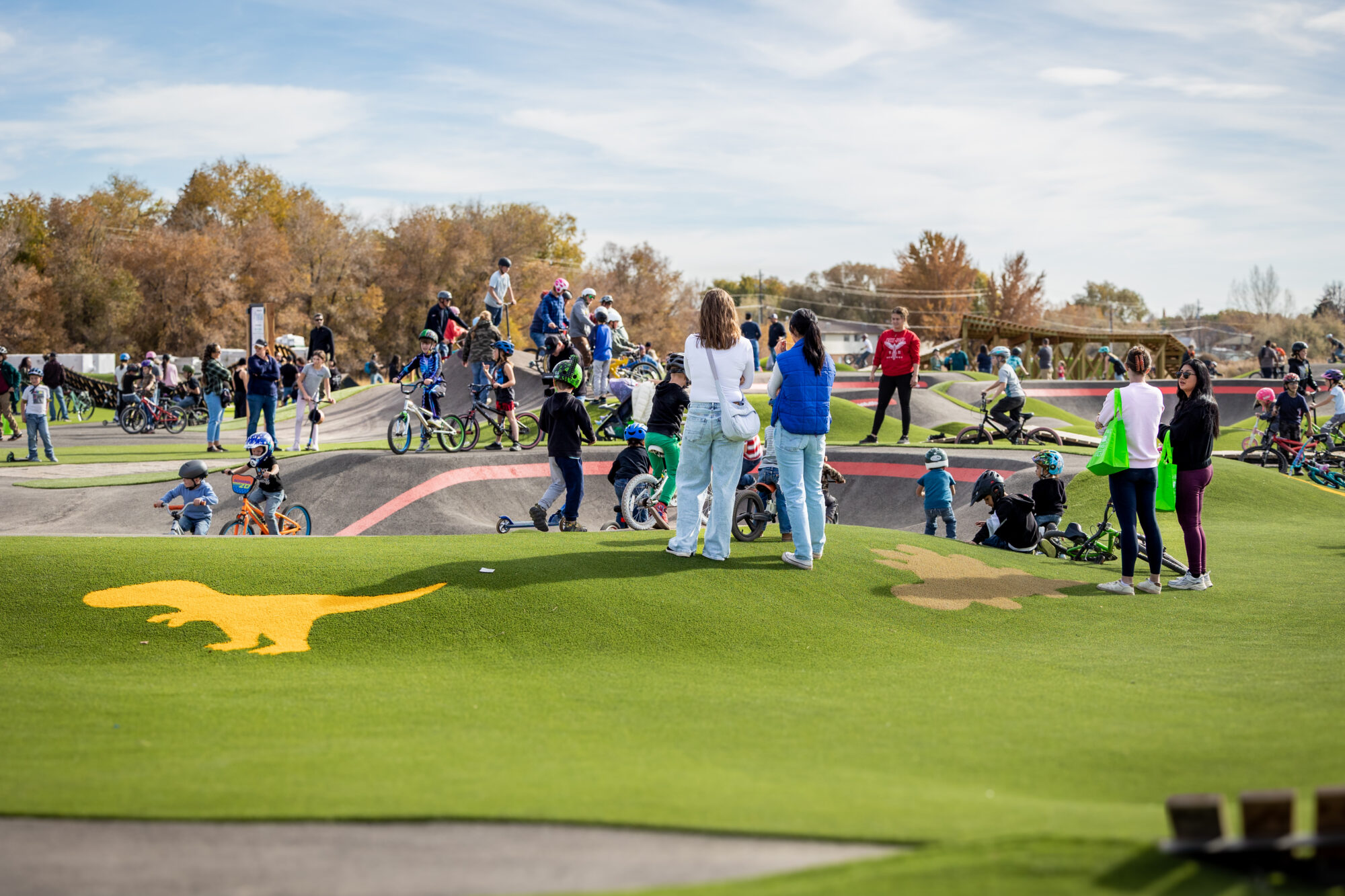
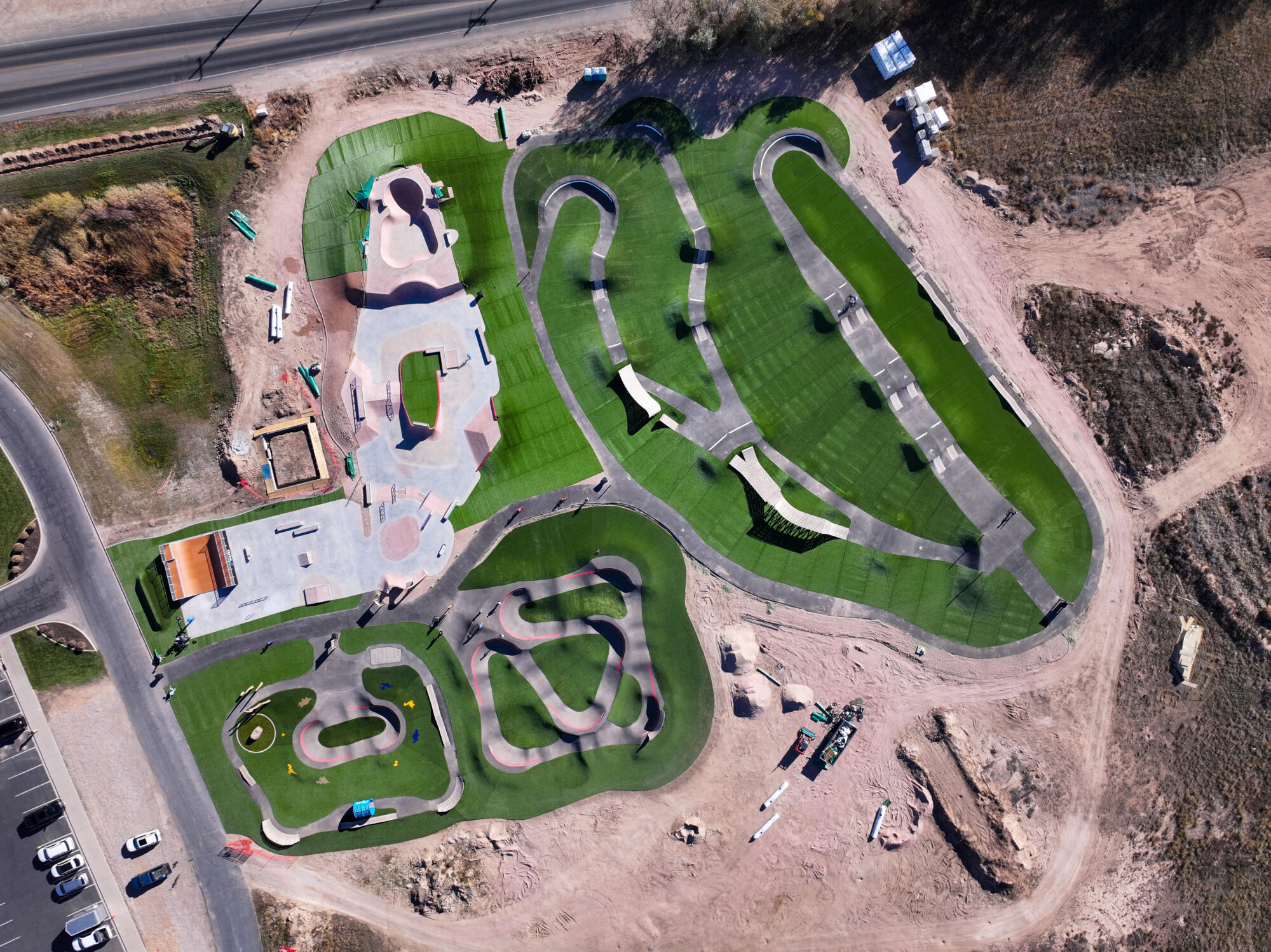
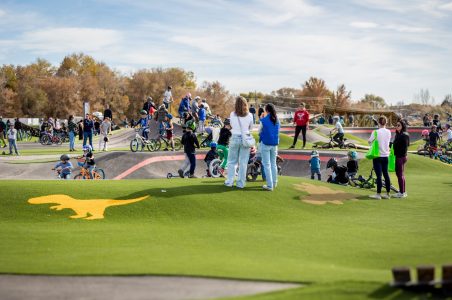
Part of the city’s upgrades includes the Uintah All-Wheels Park. Located next to the Uintah Community Center, the 4.5-acre regional attraction was created through a strong partnership between Uintah Special Service District 1, Vernal City, and Uintah County Tourism and Events; partial funding was also awarded through the Utah Outdoor Recreation Grant Regional Asset program.
Opened in November as a world-class space for skaters, BMX riders, scooter riders, and families, while encouraging outdoor recreation and promoting active, healthy lifestyles, Uintah All-Wheels Park is already a popular spot in the community despite frigid winter conditions.
“There’s not a day that goes by that I am not told of a story from somebody in town or out of town of something that the All-Wheels Park has brought to them,” said Cheryl Meier, Uintah Special Service District 1 Executive Director. “It’s so rewarding. We knew this was something big. We didn’t recognize how big. That’s why I think it’s so exciting.”
On July 16, 2020, Alabama Governor Kay Ivey announced a statewide commission on entrepreneurship and innovation to “create a more resilient, inclusive and robust economy.” Its first product was a 2021 report titled “Innovative Alabama” by the Hoover Institution, a conservative think tank based at Stanford University.
Among the report’s six sections highlighting sectors including education, advanced manufacturing, and tax policy, it argued that Alabama “needs to ramp up spending on its outdoor recreation infrastructure.” Galvanized by the report, the commission set up Innovate Alabama, a public-private partnership tasked with implementing some of the recommendations.
In June 2023, Gov. Ivey signed a bill to create Sweet Trails Alabama, a comprehensive plan to connect all of the state’s 67 counties via surface trails, waterways, and road routes. Since then, the state, which boasts more than 2,000 miles of dedicated biking and walking trails, has allocated more than $4 million to these trails. Alabama was also set to receive an estimated $93 million in federal funding for this statewide trail system, but it was rescinded as part of President Trump’s One Big Beautiful Bill Act.
Where that money will come from and whether Sweet Trails Alabama will be completed are still to be determined, though officials remain optimistic.
“While those of us in the trail community are disappointed to lose access to millions of dollars in federal funding, we are determined to keep moving forward,” Alabama Senator Andrew Jones wrote in an email to Slate.
Regardless, outdoor spaces, sports, and recreation remain a priority for placemaking among city and community leaders.