
Image Source: SFC Art Department
By

On the site of a formerly rundown parking lot in Ames, Iowa, the future of the college sports experience is taking shape—the first of what will be eight new buildings, a new 78,000-square-foot. medical facility, is nearing completion at Iowa State University. By late 2027 or early 2028, restaurants, retail, office space, an amphitheater, and a hotel should be up and running in CyTown, the nation’s first multi-use district on a college campus.
The $200 million project combines some of the top economic trends, including medical tourism, music tourism, sports tourism, and mixed-use hospitality to create an experience that university officials expect to pay for itself. In fact, 75 percent of the funds needed for the project will come from land monetization, with the balance from leasing 20 CyTown Suites and fundraising.
Among the explicit goals stated on the project’s website is to attract and retain students, university employees, entrepreneurs and innovators, and visitors.
Amid the rising costs of athletics, most apparent in the high-priced coaches and Name, Image, and Likeness (NIL) policies that allow student-athletes to be paid, universities are in an arms race to generate revenue to stay competitive. Sections of college campuses near athletic facilities are being transformed into hubs for students, residents, and visitors to congregate on game days and off-days alike.
Universities are not the only big winners in this new trend. Communities will also benefit from new amenities that enhance their hometowns, making them even better places to live, work, and play. As an extension, local companies and organizations will gain access to a larger pool of talented workers eager to lay stakes in booming municipalities.
Make no mistake, these are places to eat, drink, live, play, and work. We’re long past the tradition of hitting the pre-game tailgate and going to a game before heading home.
At Iowa State, the development began with a simple question, says Nick Joos, senior athletic director of communications. “How can we turn this land into something that can serve our community and be a place to go 365 days a year?”
If the model sounds familiar, it should. It’s the standard for professional sports franchises to create social districts around their stadiums. CyTown takes the best of Titletown in Green Bay, Wisconsin, and the Power & Light District in Kansas City, Missouri. The same model is also being adopted at many youth sports complexes, eager to create an experience for the whole family and not just the athletes.
CyTown is being developed by the Omaha-based Goldenrod Companies, the same company behind The Battery surrounding Truist Park, home of the Atlanta Braves. The Battery includes the Coca-Cola Roxy, a music hall, and a slew of restaurants and retail in a pedestrian-friendly district in suburban Cobb County.
In Winston-Salem, NC, Nelson Worldwide is designing The Grounds at Wake Forest University, a 100-acre mixed-use development that’s repurposing blighted land near where the old R.J. Reynolds Tobacco Factory once stood.
The firm’s influence is evident when studying blueprints for the new college experience.
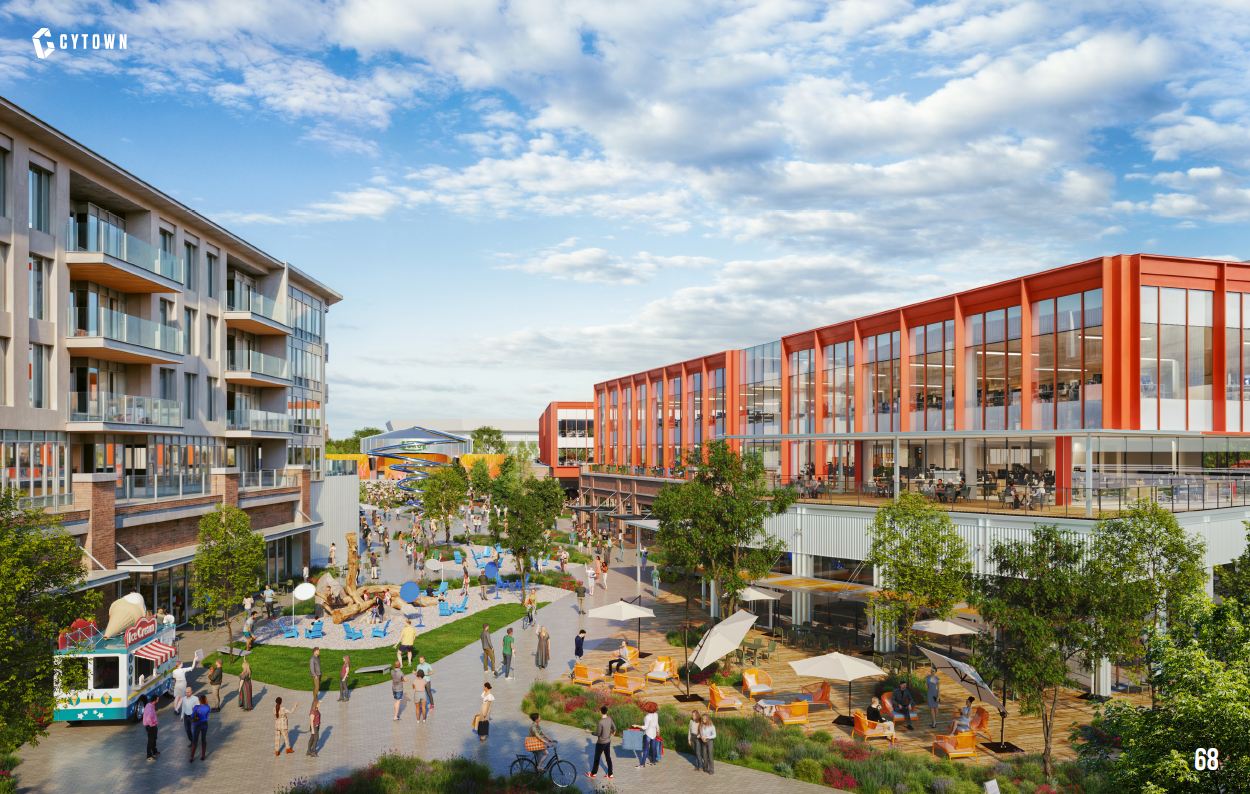
Image Credit: CyTown
Both Iowa State and Wake Forest are fortunate to own campus grounds that are already in need of redevelopment.
“The land there was generating no tax dollars for the city and the county, and also looked like crap,” says Wake Forest Athletic Director John Currie. “It’s now going to look great, and it’s going to be fun. And we’re also going to really add to the tax base for the city and the county.”
As karma and coincidence have it, two of the key principals on The Grounds are Wake Forest alumni: Coleman Team, president and managing partner at the Winston Salem-based Front Street Capital, and Adam Parker, senior vice president of Carter, a national real estate investment and development firm headquartered in Atlanta.
While both are strong businessmen knowledgeable on major projects like this, they’re eager to help Wake Forest return to the glory days of Tim Duncan and Randolph Childress, while also giving back to the city of about 250,000 residents.
“This is a really extraordinary example of public, private partnership in developing a very blighted area of a community,” says Parker.
They say the $40 million in grant funds are worth the investment, as The Grounds is projected to generate $1.3 billion in its first 10 years, to say nothing of the added tax revenue and beautification of Upper Silas Creek, including planting over 200 trees and 30,000 native plants.
A building for student housing set to open in 2027 is already under construction, and will be followed by office space for university employees. A pedestrian-friendly retail village, complete with 42,000 square feet of local and regional shops, chef-driven restaurants, and outdoor gathering spaces, will tie the project together.
If all goes well, the first phase of the project will be a “beachfront” for future development, says Team. “This is acting as a very vibrant activator for a university, but also really a vibrant activator for a community that’s in need of diversified economic development,” he says.
Such projects are harnessing the massive power of college sports, says Eric Sullivan, a partner at The Sports Facilities Companies and native Michigander. “Sports are a billboard for higher education,” he says. “What these projects are doing is creating excitement.”
Not only do games, particularly football and basketball contests, draw massive crowds to campus that drive revenue to the school, but they’re also economic drivers even without the added mixed-use developments underway.
A study conducted by Destination Ann Arbor, home of the Michigan Wolverines, found that the 2024 U-M football season generated $226.7 million in direct visitor spending from attendees residing outside Washtenaw County. On average, each home game contributed approximately $28 million in direct visitor spending to the local economy.
Likewise, Wake Forest already hosts more than 260 event days per year, with more than 750,000 patrons attending events such as university sports, the Carolina Classic Fair, Winston-Salem Thunderbirds games, the ATP Winston-Salem Open, and other concerts and shows.
Such significant numbers highlight the vast presence that institutions of higher education have in their communities, especially in mid-sized university towns like Ames, Ann Arbor, and Winston-Salem.
Lynn Spruill, mayor of Starkville, Mississippi, home of Mississippi State University and the smallest municipality within the Southeastern Conference, prides herself on the strong town-gown relationship she’s built in her three terms in office. While the football team may struggle in the standings, other sports like soccer, softball, and women’s basketball have achieved significant success, creating a buzz around town.
Without the presence of a Division I sports program in one of the country’s highest profile conferences, Starkville would not be in a position to add the new 15-acre Crossroad District featuring a boutique hotel, restaurants, and retail stores, says Spruill. The driving forces behind the master plan are Mississippi State University, in collaboration with West Side Funds Inc., a for-profit affiliate of the Mississippi State University Foundation.
Spruill says the new amenities are a win for college students, the community, and visitors.
“Athletics drives most of the energy that’s associated with the community,” she says.
“People want to be part of a winning team.”
Football and basketball may get most of the headlines, but the magnetic power of all sports shines through in Destination Ann Arbor’s marketing efforts. The convention and visitors bureau worked in conjunction with Learfield Communications, the University of Michigan’s official publicity partner, to create four videos starring student-athletes enjoying the sights, tastes, and sounds of the city.
The featured athletes play on a variety of teams, ranging from football to field hockey, and receive NIL dollars for the promotional work. Amy Karbo, Destination Ann Arbor’s vice president of marketing, says the video series attracted significantly more social media impressions than standard content.
“It didn’t matter if the athletes were from some of the bigger sports like football or played smaller sports,” says Karbo. “Our videos performed well across the board. The power of sports resonates with our followers and the people who are interested in our brand.”
In a case where what’s good for the university is also a benefit to locals, the University of Michigan has begun to host concerts with the Big House, the school’s fabled football stadium. Zach Bryan’s September 2025 performance debuted the new stadium initiative, setting a new U.S. record for the largest ticketed concert, with an attendance of 112,408 fans.
Such notable music events, including Metallica playing at Lane Stadium at Virginia Tech (the football team famously storms the field each game to “Enter Sandman”), are valuable fundraisers for the colleges. Joos adds that Iowa State is already lining up acts that would previously have played in Des Moines.
East Texas A&M, along State Highway 24 in Commerce, Texas, is getting into the act with the groundbreaking of a multi-use event center set to open in fall 2026 that will anchor an events district. The surrounding area will include a plaza, an outdoor entertainment space with a stage, and more than 800 new parking spaces. A Buffalo Wild Wings restaurant is already open in the area.
The $70 million venue will be home to the school’s basketball teams, which recently jumped to Division I. It will also host major university and community events, including graduations, concerts, conventions, and special gatherings.
“Our plan is to monetize the center to the best of our ability,” says Travis Ball, executive director of business services and chief procurement officer at East Texas A&M University.
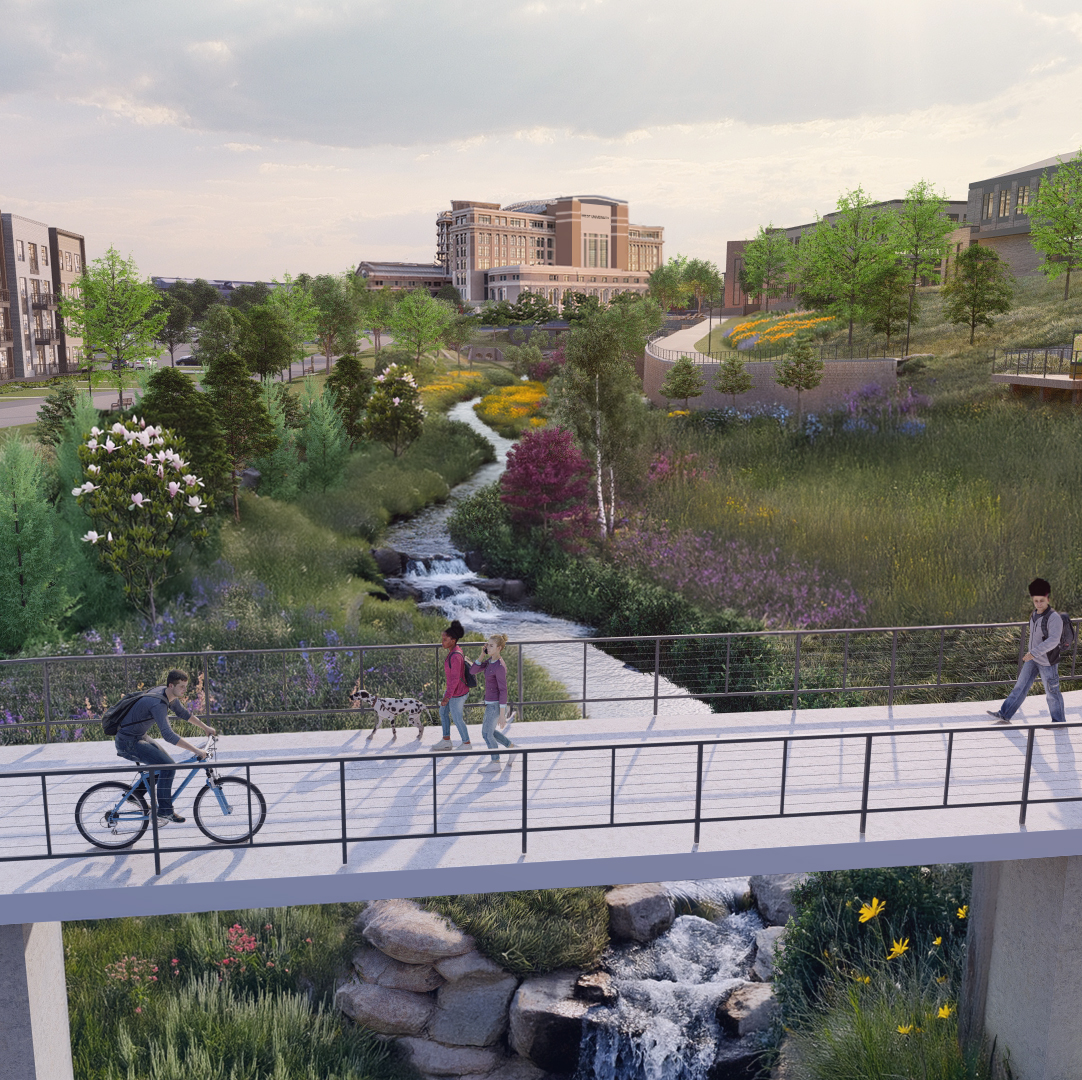
Image Credit: The Grounds
Revenue from shows, games, and incoming developments can be used in myriad ways, all of which improve school facilities, enhance the university’s reputation, and strengthen recruiting efforts.
CyTown’s funds will go toward upgrades and future maintenance of its athletic centers, which were first envisioned as major gathering hubs by former ISU President James H. Hilton in the 1950s, notes Joos. The district is expected to generate $200 million over its first 20 years.
Other upgrades include a pedestrian bridge and relocation of an RV Park to free space for community gatherings.
It’s easy for sports fans to draw a direct connection to these new revenue-generators and the new practice of paying athletes, but the reality is more complicated.
Wake Forest’s Currie says The Grounds won’t directly contribute to NIL funds, but will enhance the university’s existing revenue streams, such as tuition and grants.
“The Grounds, just like other aspects of our campus, whether it’s a really nice recreation center for our students or world-class classrooms and laboratories for our faculty, strengthen the overall business model,” he says.
“The community is the big beneficiary here. They’re the ones getting a whole new center of gravity in town,” adds Parker.
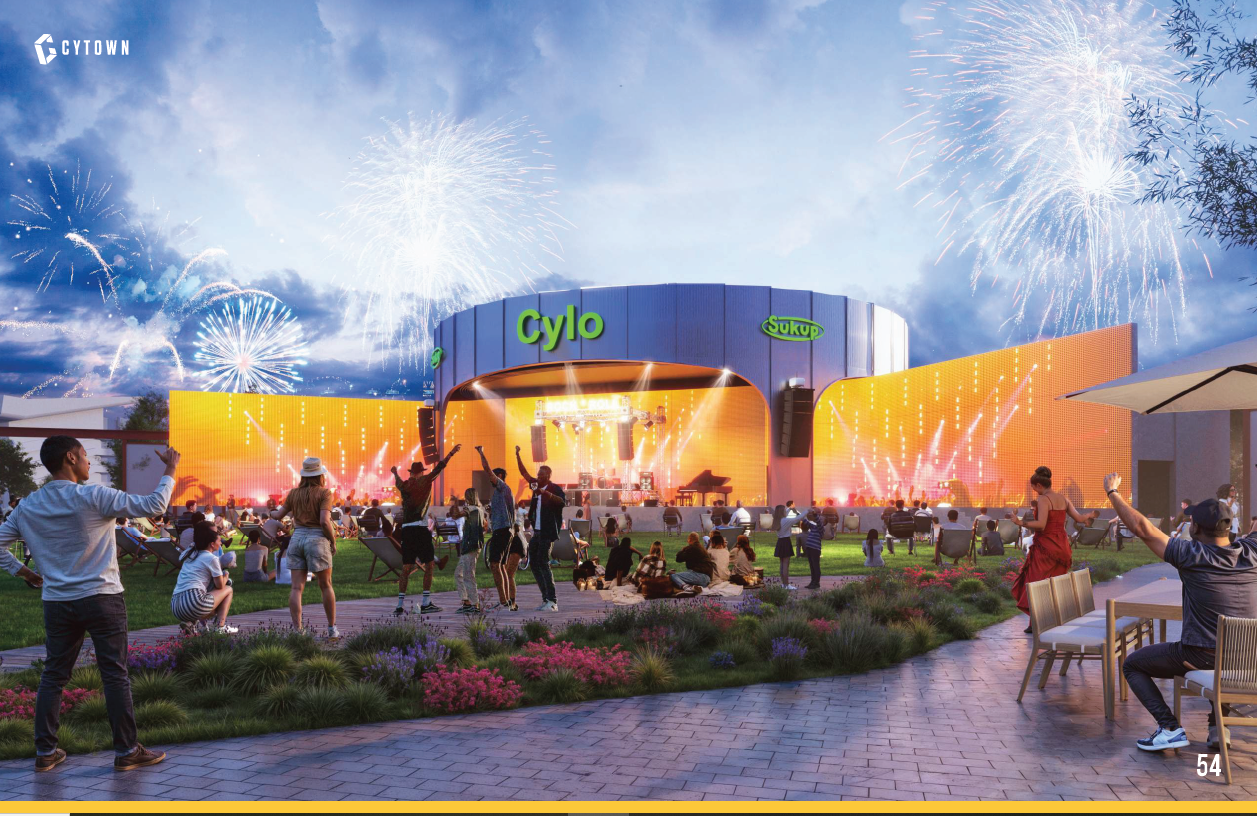
Image Credit: Cy Town
CyTown at Iowa State
The Grounds at Wake Forest
Crossroads District at Mississippi State University
East Texas A&M University’s New Events Center (Name TBD)