
Image credit: Tristan Makaroff/SFC Art Department
By

As artificial intelligence (AI) becomes more widely adopted, its rapid growth is prompting new discussions about cost, impact, and sustainability.
On one hand, AI is eliminating repetitive tasks, assisting with healthcare, enhancing cybersecurity, and elevating fraud detection for financial institutions. Beneath the surface, however, data centers powering these systems are under increasing scrutiny and pressure, sparking debate among residents in areas affected by these facilities.
While hosting a data center can create new job opportunities and generate significant tax revenues for local governments — funding schools, roads, and emergency services — communities are facing complex consequences.
The massive server farms, cooling plants, and grid connections required for each AI deployment can bring environmental and social implications for cities, neighborhoods, and the planet.
Without thoughtful governance and clear guidelines, technological progress can quickly become a source of debate in city halls.
Like much of Northern Virginia, Loudoun County was once a rural, agricultural community before it evolved into a technology corridor, with AOL establishing its headquarters there in the mid-1990s.
Today, over 70 percent of the world’s internet traffic is estimated to flow through the county, due to the presence of platforms such as Amazon, Google, and Meta, as well as over 43 million square feet of operational data-center space.
AI’s explosive growth has accelerated demand for high-performance computing infrastructure, making Loudoun a critical center for training and deploying AI models. Data centers generate more than $1 billion in yearly tax revenues, nearly a third of the county’s total revenue, while occupying less than 3 percent of its land.
According to the Northern Virginia Technology Council (NVTC), in 2023, data centers brought 78,140 jobs and $31.4 billion in economic output to Virginia. However, as Loudoun nears its data center capacity, local leaders are shifting focus toward smarter growth, zoning reform, and economic diversification.
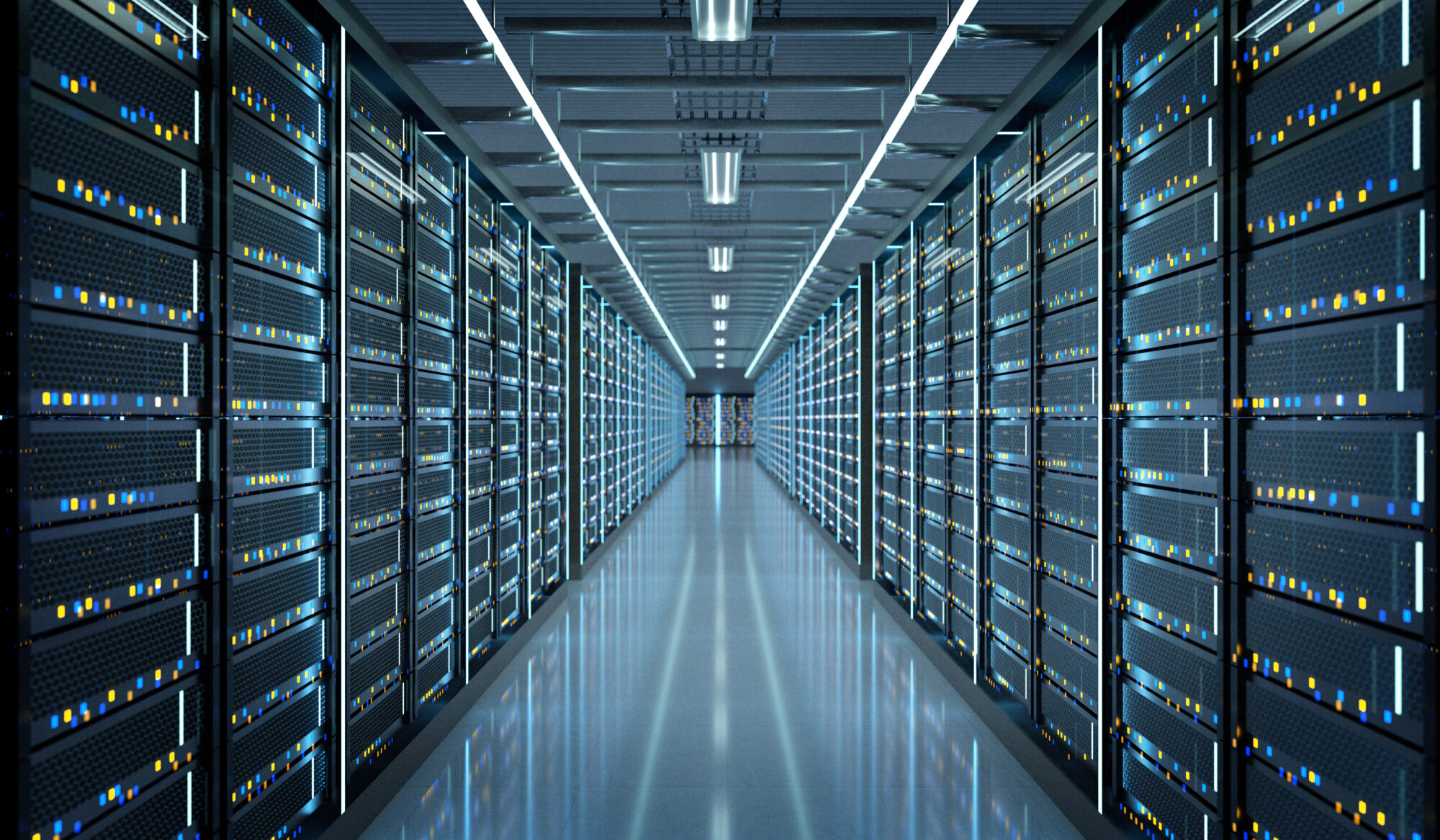
Image credit: Adobe Stock
The energy demands of generative AI are pushing data centers into a new league. Elsa A. Olivetti of MIT’s Decarbonization Mission told MIT News, “What is different about generative AI is the power density it requires … a generative AI training cluster might consume seven or eight times more energy than a typical computing workload.”
According to the 2024 U.S. Data Center Energy Usage Report by Lawrence Berkeley National Laboratory, data centers already account for more than 4 percent of national electricity consumption, a number expected to rise sharply.
Utilities are working to meet rising demand, prompting some to adjust or delay elements of their decarbonization plans. “This is adding tremendous strain to the system at a time (when) we are attempting to decarbonize,” former FERC Chair Neil Chatterjee told The Washington Post. One projection suggests that data-center-driven gas generation could soon amount to 10–30 percent of current U.S. gas demand.
When it comes to data centers, cooling is key. They often use evaporative towers, chilled-water loops, or direct liquid-immersion systems — all of which rely on local water supplies. In many cases, the water-per-kwh ratio can reach two liters, straining already water-stressed regions.
According to Bloomberg, nearly two-thirds of data centers built or planned since 2022 are in areas facing water scarcity. Most of this growth is concentrated in five states, accounting for about 72 percent of all new facilities built in regions experiencing high water stress.
The environmental footprint extends beyond carbon. The manufacturing, disposal, and cooling systems of data centers introduce pollutants like PFAS (“forever chemicals”), fluorinated-gas refrigerants, and e-waste from rapid hardware turnover.
Residents living near data center clusters have questioned the hum of fans, the sound of generators, and the aesthetics of massive cooling towers. In some suburban settings, these mechanical operations may become more noticeable.
Though most operations are electrically driven, backup generators emit pollutants like nitrogen oxides and particulate matter. A 2024 study by the University of California found that U.S. data centers could cause more than $20 billion in public health damage by 2030.
In Tennessee, qualified data centers that invest at least $100 million and create 15 new full-time jobs, paying at least 150 percent of the state’s average wage ($58,700 per year, according to the Tennessee Department of Revenue), can receive sales tax exemptions on computer hardware, software, cooling, and power infrastructure, and receive a reduced 1.5 percent rate on electricity used in their operations.
Kartik Hosanagar, co-director of the Wharton Business School’s AI Research Center, told NPR that most data centers typically employ between 100 and 200 people. In contrast, according to McKinsey & Company, a large data center, such as a 250,000-square-foot facility, can generate up to 1,500 construction-phase workers and create more than 50 long-term operational positions. Each on-site job can also spur an estimated 3.5 additional jobs in the surrounding economy through related infrastructure and service needs.
Despite the economic benefits, the city of Memphis, Tennessee, faces the broad challenge of balancing economic development with public health.[JC1] After Elon Musk’s xAI campus, Colossus, opened in South Memphis, residents in the nearby Boxtown neighborhood reported a rise in respiratory illnesses, igniting debates over corporate responsibility. In 2025, the Southern Environmental Law Center, representing the NAACP, announced its intent to sue over unpermitted gas turbines.
Soon after, the county health department cleared xAI to operate 15 temporary turbines, fueling controversy among residents. Memphis and Shelby County rank among the nation’s “most challenging” places for individuals with asthma according to the American Lung Association’s most recent State of the Air report.
While many regions are reacting to data center growth, Prince George’s County, Maryland, is working to get ahead of it. “That’s why we have a task force,” said Wala Blegay, Esq., representative from the Office of the County Executive.
“The task force is put together so we can look into infrastructure issues, environmental issues, all of those things.” The county currently has no large data centers but is proactively studying their potential impact on zoning, energy demand, and water use.
“We really don’t want the data center to be anywhere near people,” Blegay explained. “We want it to be in a remote area far away from residents.”
By establishing designated areas and setting environmental safeguards in advance, the county aims to balance competitiveness with community protection — learning, as Blegay noted, “from other jurisdictions so we won’t make mistakes that could be detrimental to the safety of residents.”

Image credit: Adobe Stock
In Santa Clara, California, home to nearly one-third of Silicon Valley’s data centers, Councilman Kevin Park is urging balance. His city earns more than $40 million a year from about 60 facilities, but he questions the long-term value. “They provide revenue without adding traffic or congestion,” Park said. “But we have to ask: what’s the real benefit to residents?”
While construction brings temporary jobs, operations require few workers and strain local resources. “We’re considering doubling our power supply, not because residents are using more, but because of data centers,” he noted. “If your power goes out, it’s inconvenient. But if your water goes out, that’s a crisis.”
Park believes cities must rethink land use. “What is a data center doing in the middle of an entertainment district? It doesn’t create community or experiences.” Would perhaps a retail space, a stadium, or a sports center better benefit the community, he asks.
Park’s thoughts mirror those of many civic leaders nationwide. “We can’t look at data centers in isolation,” he said. “They’re part of a larger system that affects energy, housing, and livability. If we don’t set clear limits, we’ll end up defining our cities by their power consumption instead of their people.”
Rapid advances in chip efficiency and cooling technology could ease the strain, but only if regulation keeps pace. Park believes local voices must guide these decisions: “I’m not here to rule, I’m here to amplify the people’s voice. If residents feel ignored, then we’re failing at democracy.”
Ultimately, the future of AI infrastructure depends on whether cities choose foresight over convenience, transforming data centers from potential burdens into engines of sustainability, equity, and resilience.